Updated Sep 2026
Most conversion rate optimization (CRO) teams know the feeling of running a handful of experiments, getting one positive result, and spending the next few weeks trying to come up with another idea.
Someone searches for a list of CRO tips. A colleague suggests redesigning the homepage. Meanwhile, the analytics data and heatmaps the team already has sit there, waiting for someone to find the patterns that could lead to a useful experiment.
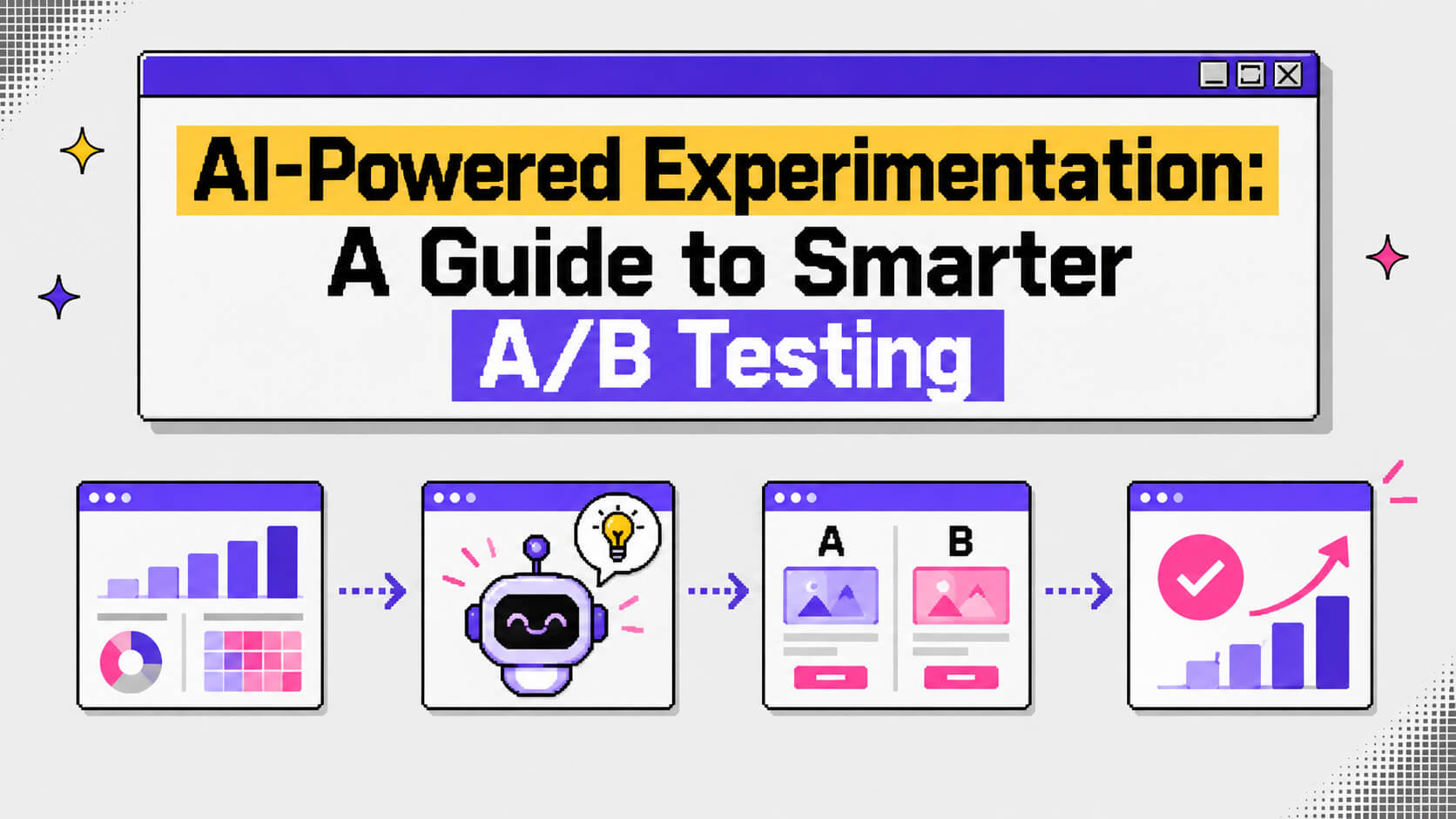
AI-powered experimentation gives teams a way to work through that backlog. Machine learning and language models can help identify problems, develop test ideas, create variations, monitor experiments, and interpret the results. Tasks that once required several people working across different tools can now happen within a much shorter workflow.
The statistical principles behind A/B testing remain the same. Teams still need reliable measurements, enough traffic, and a sound way to compare results. AI changes how much work goes into getting from an observed problem to a decision the team can act on.
This guide explains how AI-powered A/B testing works, where it fits into CRO, what teams need to watch out for, and which tools can help them run experiments.
On This Page
What Is AI-Powered Experimentation?
AI-powered experimentation brings machine learning and language models into the process of planning, building, running, and analyzing tests.
The term covers a fairly broad range of capabilities. Some platforms use AI to suggest experiments based on website data. Others can generate page variations, help configure campaigns, or interpret results after a test finishes. A smaller group also uses algorithms to adjust how visitors are assigned to different variations while an experiment runs.
That last capability is important because AI features can serve very different purposes. A tool might use a language model to write headline alternatives while running a conventional A/B test underneath. Another might use machine learning to allocate traffic based on how each variation performs.
A traditional experiment usually starts with someone spotting a potential problem. They write a hypothesis, create a second version of the page, configure the test, and divide traffic between the variations. Once enough data has accumulated, they examine the results and decide what to do next.
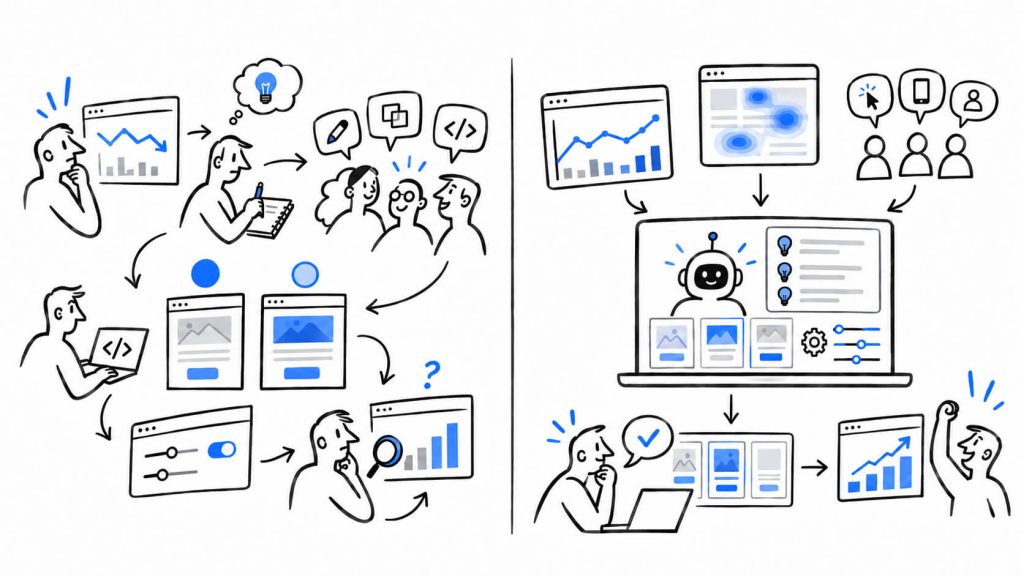
AI can take on parts of that workload.
For example, a team could connect its analytics data and heatmaps to an AI-powered CRO platform. The system might identify a form where visitors frequently abandon the process, suggest a hypothesis about the cause, and draft an alternative form layout. A marketer could then review the proposed change and launch the experiment through the platform.
Some tools also monitor the experiment as it runs. They may flag measurement problems, summarize performance, or recommend changes to traffic allocation.
The objective remains familiar: determine whether a change to a webpage, email, or customer journey improves the outcome the business cares about. AI helps teams get through the work involved in testing those changes.
Why You Need AI A/B Testing
Search traffic has become harder for many businesses to turn into website visits. Search engines increasingly answer questions directly in their results, while AI tools can give people information without sending them to the original source.
That puts more pressure on the visitors who do arrive. Businesses need to understand what those people want and give them a clear path toward taking action. A structured experimentation program can help teams learn from that behavior and improve their conversion rates over time.
Consider the scale of experimentation at Booking.com. The company runs upwards of 25,000 A/B tests annually, according to a breakdown of its program by VWO founder Paras Chopra. That’s close to 70 experiments a day. Its experimentation culture has also been credited as a contributing factor in the company’s stock performance relative to the S&P 500 over more than a decade.
Smaller teams have reported gains from increasing their testing activity, too. Spot Pet Insurance doubled its testing volume in 2024, reached a 30% win rate, and increased conversion rates by 22%, according to the Experimentation Culture Awards.
AI can help teams increase their experimentation output without requiring a corresponding increase in manual work. Optimizely’s analysis of 47,000 Opal interactions across 900 companies found that teams using AI agents throughout the experimentation lifecycle ran 78.7% more experiments and launched 24.1% more personalization campaigns. Their win rates also increased by 9.3%.
Those figures come from Optimizely’s own customer data, so they describe the results of that analysis rather than a guaranteed outcome for every team adopting AI.
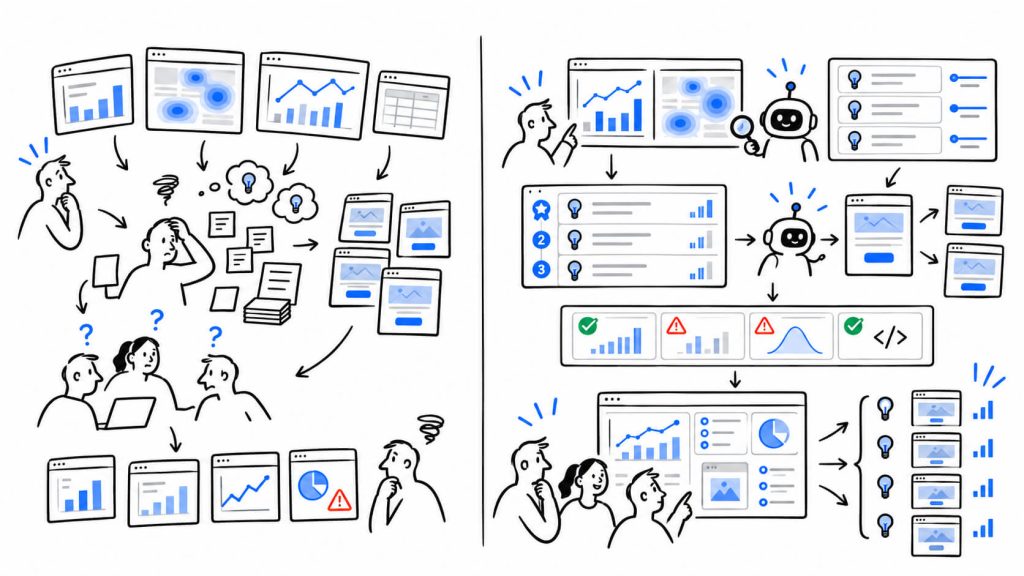
There’s another reason to bring AI into the process: measurement quality.
An experiment can produce misleading results when the analytics behind it are unreliable. Speero, a CRO and experimentation agency, found critical flaws in 90% of the analytics setups it audited. That creates a problem before the team even begins testing. Decisions based on faulty tracking can send an entire optimization program in the wrong direction.
AI tools can help identify tracking problems, sample ratio mismatches, and experiments that lack enough statistical power. Catching those issues early can save teams from spending weeks collecting data they cannot confidently use.
For teams with limited time and resources, that kind of assistance can make a practical difference to how they plan their work.
Spend less time searching for your next test idea
CROLabs’ AI Advisor helps you identify potential conversion issues and find opportunities to improve your website. Turn those insights into experiments and see how your changes perform.
Cancel anytime.
How AI A/B Testing Works
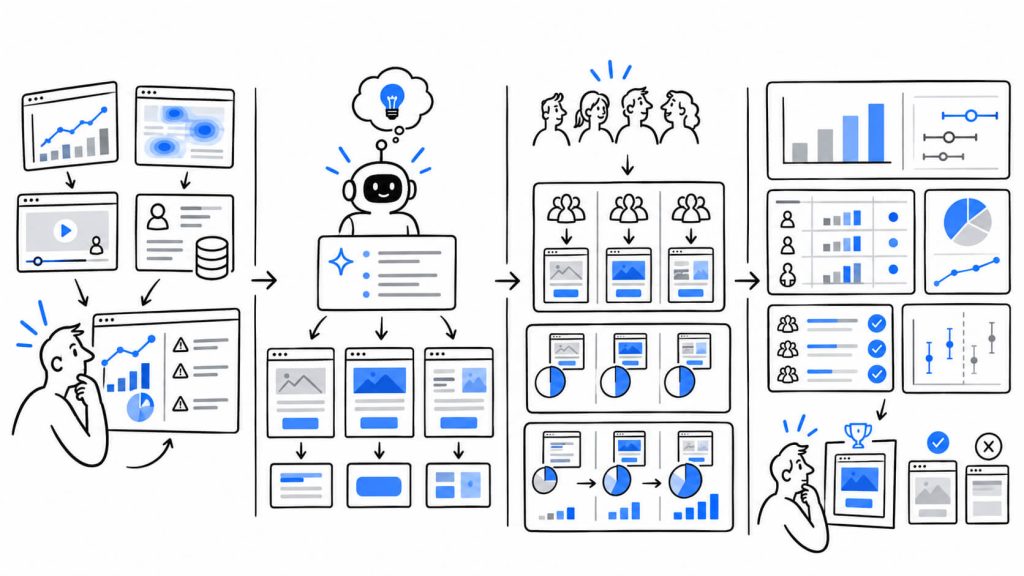
AI can contribute at several points during an experiment. Here’s how those pieces fit together.
1. Data collection and pattern detection
The process starts with information about how visitors use a website.
Depending on the platform, AI tools can analyze data from analytics software, heatmaps, session recordings, CRM systems, and revenue reports. They look for patterns that might point to a problem worth investigating.
For instance, an AI system might notice that visitors frequently click a non-interactive element near a form, repeatedly return to a previous step, or leave a checkout page before completing their purchase.
These patterns give the team a place to investigate. The system uses the available data to identify unusual behavior or recurring friction, then surfaces findings that might otherwise take hours of manual analysis to uncover.
The quality of those findings depends on the information the tool can access. Incomplete tracking or poorly configured analytics can affect what the system identifies.
2. Hypothesis and variant generation
Once the team identifies a potential problem, a language model can help turn that observation into a testable hypothesis.
Suppose visitors reach a pricing page but rarely click the main CTA. The AI might suggest testing whether a more prominent button or a different message helps visitors understand what happens next.
It can also draft the actual variation. That might involve rewriting a headline, changing the CTA text, or rearranging fields in a form.
Some platforms can generate several alternatives for a multivariate experiment. Others focus on producing a single variation for a standard A/B test.
The team should review these suggestions before launching anything. The hypothesis needs to fit the observed behavior, and the proposed changes need to make sense for the business and its customers.
3. Traffic allocation
Traffic allocation determines how visitors are distributed between the versions being tested.
In a conventional A/B test, the platform usually assigns visitors to a fixed split, such as 50% to the original page and 50% to the variation. That allocation stays in place throughout the experiment.
Some AI-powered platforms use adaptive allocation methods. One common approach is a multi-armed bandit algorithm, which adjusts traffic distribution as performance data comes in.
The name comes from the familiar slot-machine problem: an algorithm has several options and needs to decide where to direct its next attempt. In an experiment, each option represents a different variation.
As results accumulate, the algorithm can direct more visitors toward a version that’s performing well while continuing to send some traffic to the others. This allows the team to reduce the number of visitors exposed to a weaker variation during the test.
Stanford Graduate School of Business researcher Mohsen Bayati has studied adaptive experimentation for more than a decade. His work describes how these methods can help researchers identify a better-performing option while allowing more participants to receive that option during the experiment.
For a business testing a checkout flow or a time-sensitive offer, this approach can help limit the commercial cost of showing visitors a weaker version.
Adaptive allocation is not available in every AI A/B testing platform. Some tools use AI for analysis and content generation while retaining fixed traffic splits.
Take your experiments from idea to launch with CROLabs
Cancel anytime.
4. Statistical analysis and reporting
When an experiment finishes, the team needs to establish whether the results are reliable and understand what they mean.
AI can help by checking for issues such as sample ratio mismatch, summarizing the results, and identifying differences between audience segments.
A platform might explain that a new CTA increased completed sign-ups among mobile visitors, for example, while desktop performance remained largely unchanged.
This can save analysts time when they need to examine several segments or interpret a large volume of experiment data.
The underlying statistical requirements still apply. A language model cannot make an underpowered experiment conclusive simply by producing a confident-sounding report. Teams need enough data and a valid testing setup before acting on the findings.
Where AI A/B Testing Still Needs You
AI can take on much of the repetitive work involved in experimentation. Teams still need people who can assess the evidence, understand the business, and decide whether a proposed change makes sense.
Statistical validity
A sample ratio mismatch occurs when the actual distribution of visitors differs from the split configured for an experiment.
For example, a test set up to send half of its visitors to each variation might end up sending significantly more visitors to one version. Bots, caching problems, broken redirects, or issues with the testing setup can contribute to this.
The discrepancy can undermine the experiment’s results.
Some AI-powered platforms flag these problems automatically. Others provide limited checks, and even automated systems can miss issues specific to a website’s technical setup.
Someone on the team should understand how the experiment was configured and investigate unexpected patterns before accepting the reported result.
Novelty effects
Visitors sometimes respond differently to a new design or message simply because they haven’t seen it before.
A redesigned CTA might attract more clicks during the first few days, for example, while its performance settles down as visitors become familiar with it.
This can complicate experiments that use adaptive traffic allocation. An algorithm might direct more traffic toward a variation based on its early performance, even when that initial lift doesn’t last.
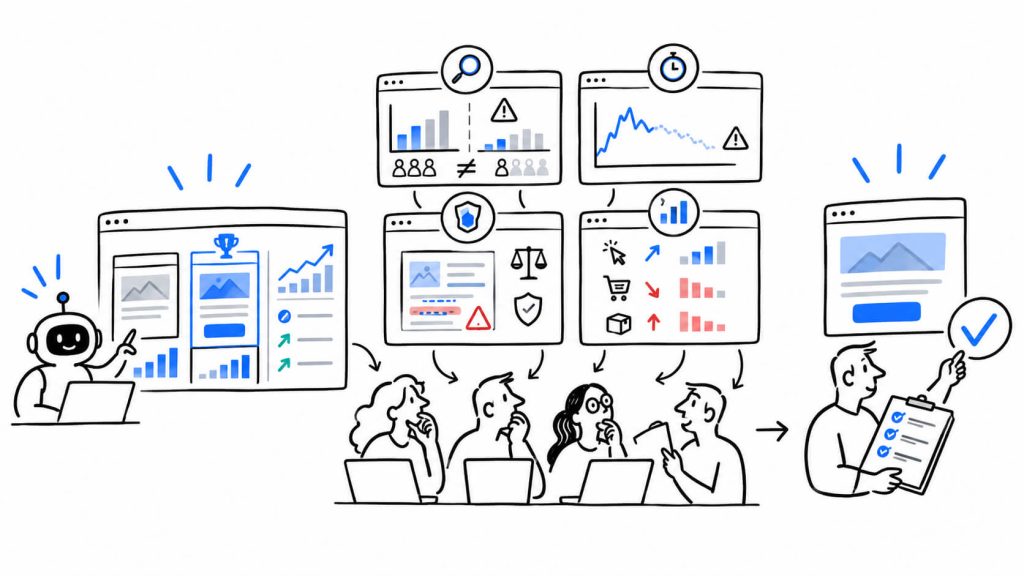
Teams need to examine how results change over time. A temporary increase in clicks may have a different business impact from a sustained improvement in completed purchases.
Brand and legal review
AI-generated copy can introduce claims or wording that don’t fit the company’s brand or legal requirements.
A variation might increase clicks by promising an outcome the product cannot guarantee. Another could use language that conflicts with how the business communicates with its customers.
Those problems require someone who understands the company’s products, audience, and obligations to review the proposed content before it goes live.
Guardrail metrics
The primary metric tells the team whether an experiment achieved its main objective. Guardrail metrics help reveal other effects the change may have on the business.
Imagine a store testing a redesigned product page. The new version increases add-to-cart activity, but the average order value falls. Refund requests might also rise over the following weeks.
Looking only at the primary metric would leave out information that could change the decision.
AI tools can track and report on secondary metrics, depending on their integrations and capabilities. The team still needs to choose which measurements matter and determine how much change it can accept.
How To Run AI-Powered A/B Tests
A structured workflow helps teams use AI while keeping their experiments grounded in real customer behavior.
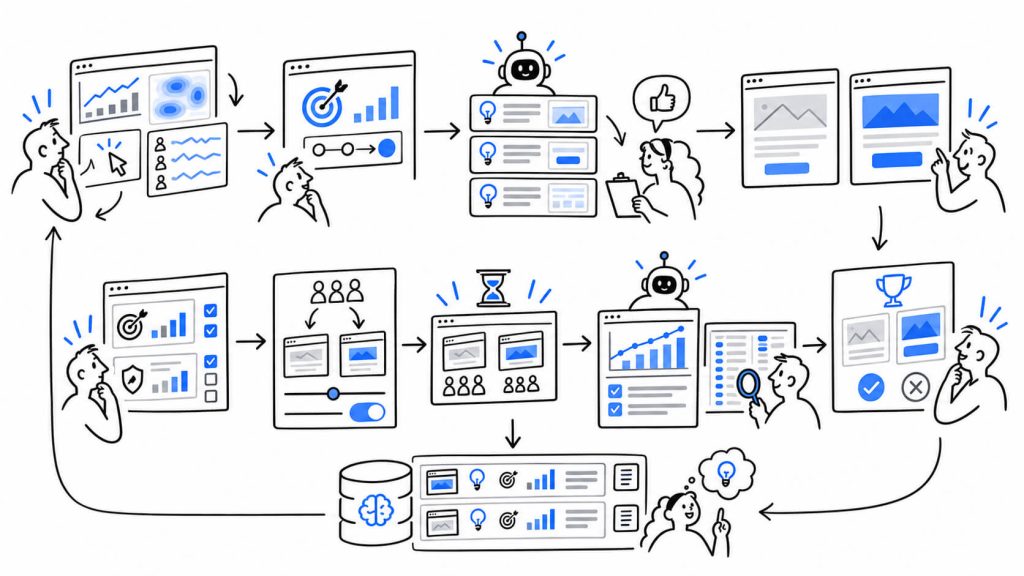
1. Audit your funnel before testing
Start by examining how visitors move through your website.
Look at page-level drop-offs, scroll depth, click maps, and session recordings. If you have access to revenue or CRM data, use that information to understand what happens after visitors complete a conversion event.
An AI CRO advisor can crawl your website and identify potential friction points, sometimes comparing them with industry benchmarks. You can also conduct this review manually with your existing analytics tools.
The important part is to identify a specific problem that gives your experiment a clear starting point.
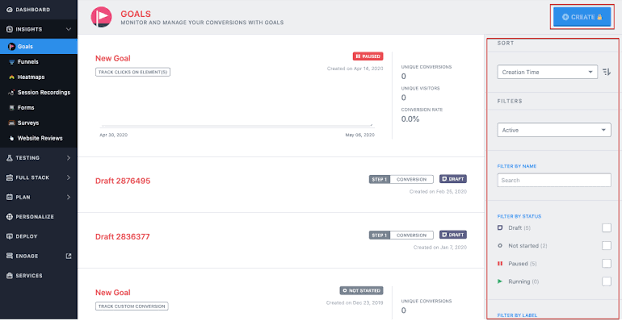
2. Give each experiment one specific goal
A goal such as “improve conversions” leaves too much room for interpretation.
A more useful hypothesis connects an observed behavior with a proposed change. For example, you might suspect that mobile visitors leave the pricing page because the main CTA appears too far down the screen.
That gives you something concrete to investigate. You can test a more prominent CTA and measure whether it changes the behavior you’re concerned about.
AI tools can produce more relevant suggestions when you provide a clear objective and explain what you’ve observed.
3. Use AI to generate hypotheses, then review them
Many AI A/B testing platforms can suggest experiments after you provide a URL, conversion goal, or website data.
Review the ideas before adding them to your testing queue. Check whether the suggested changes address a problem your visitors experience, whether the evidence supports the hypothesis, and whether the experiment fits your current priorities.
You can also use your knowledge of the audience to refine the proposed variations.
The tool can help you explore possibilities while you decide which ones deserve traffic.
4. Build the variation and define guardrails
Once you’ve chosen a hypothesis, create the variation and decide how you’ll measure its effects.
Set a primary metric that corresponds to the goal of the experiment. Then identify any secondary metrics that could reveal an unwanted consequence.
For an ecommerce test, those might include average order value, refund rate, or revenue per visitor. A lead generation experiment might track lead quality alongside form submissions.
Choose these measurements before launching the test. That gives the team a consistent basis for interpreting the results.
5. Choose how to allocate traffic
A fixed 50/50 split is a common choice for conventional A/B testing. It gives each variation an equal share of traffic and makes the experiment straightforward to explain.
Adaptive allocation can be useful when the cost of showing visitors a weaker variation is particularly high. A limited-time promotion, for instance, may leave little room for a lengthy test.
The allocation method should suit the experiment’s purpose and the kind of decision you need to make. Consider how the platform’s approach affects the data you’ll collect and how you’ll interpret the outcome.
6. Let the experiment collect enough data
Decide how much data you need before launching the test.
The required sample size depends on factors such as your existing conversion rate, the amount of traffic you receive, and the smallest improvement you want to detect.
Some platforms calculate this for you and display progress as the experiment runs.
Checking the dashboard every day can be useful for monitoring technical problems. Calling a winner based on an early performance spike, however, can lead to unreliable conclusions.
Follow the experiment’s statistical requirements before making a decision.
7. Examine the AI summary and the underlying data
An AI-generated report can make experiment results easier to understand, particularly when several metrics or audience segments are involved.
Read the summary, then inspect the data behind it. Look at how different groups responded and check whether the result holds across the segments that matter to your business.
A variation might increase conversions overall while performing poorly among mobile visitors or returning customers.
That difference could affect how you roll out the change. Depending on the findings, you might choose to deploy it more broadly, refine the variation, or run another experiment.
8. Record what you learned
Keep a record of each experiment, including the hypothesis, the changes you made, the metrics you tracked, and the outcome.
Add notes about unexpected behavior or differences between audience segments. These details can help you develop more informed hypotheses for future tests.
A documented testing history also gives the team a way to revisit earlier findings when the website, audience, or product changes.
Tools To Run AI-Powered A/B Tests
Several platforms now include AI features that support different parts of the experimentation process. The right fit depends on the type of tests you run and the capabilities your team needs.
CROLabs
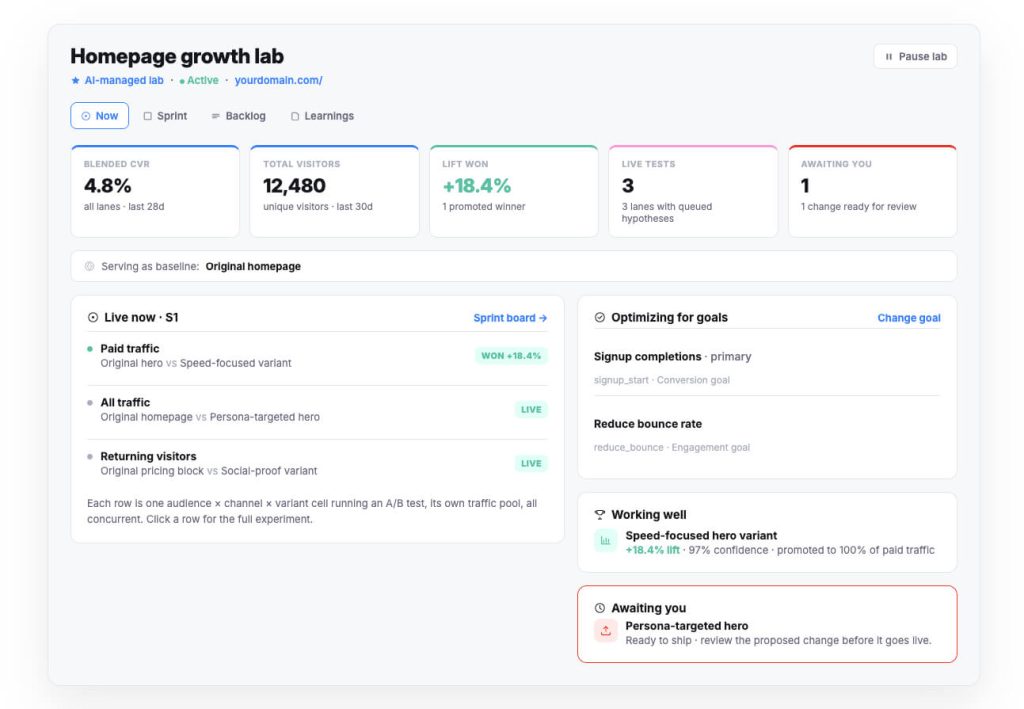
CROLabs brings AI-assisted analysis and experimentation into the same workflow. Its AI Advisor audits website pages against industry benchmarks and identifies potential conversion issues. The platform also provides tools for launching A/B tests and making changes through a visual editor, without requiring a developer for every adjustment.
This setup can suit teams that are building an experimentation program and want to move from identifying a problem to testing a solution within one platform.
VWO Copilot
VWO’s AI features work across its experimentation suite. Copilot can help analyze heatmaps and session recordings, generate hypotheses from a URL, and set up campaigns from plain-language prompts.
Its Copilot Learnings feature summarizes completed experiments, helping teams review findings without manually working through every part of the report.
Teams already using VWO for testing may find these features useful within their existing workflow.
Optimizely Opal
Opal is Optimizely’s AI orchestration platform. It supports tasks across the experimentation lifecycle, including idea generation, variant creation, and result summaries.
The platform is designed to work within broader experimentation, content, and personalization operations. Its range of capabilities can make it relevant to enterprise teams managing experiments across different markets and workflows.
Setup and pricing are important considerations for teams evaluating the platform.
Intelligems
Intelligems focuses on ecommerce experimentation, particularly for Shopify and Shopify Plus stores. Its features include testing product prices and offers, where a change needs to remain consistent across product pages, carts, and checkout.
The platform helps coordinate those changes for visitors assigned to different variations. Its AI features can also recommend sample sizes and experiment timelines.
Stores looking to test pricing strategies or promotions can explore Intelligems .
These platforms have overlapping capabilities, though their intended workflows differ. A small team running its first few experiments may need a different setup from an enterprise organization coordinating tests across several markets.
When evaluating tools, consider the data sources they can access, how they handle experiment configuration, and which parts of the workflow they automate. It also helps to check how much technical support you’ll need to get a test live and interpret its results.
Conclusion
AI is changing the amount of work teams can put into experimentation and the time it takes to move through the process. Tools can help analyze website behavior, draft test ideas, create variations, and report on results.
The quality of an experiment still depends on how well the team defines its hypothesis, measures visitor behavior, and interprets the evidence. Statistical validity, brand review, and business priorities remain part of the work.
For teams dealing with limited resources, AI-assisted experimentation can make it easier to investigate more opportunities and keep a testing program moving. That can be especially useful when every website visit matters and the team needs to learn from the traffic it already receives.
CROLabs brings those tasks together through its AI Advisor and visual experimentation tools. Teams can use the advisor to identify potential conversion issues, then build and test changes without waiting for a developer to make every adjustment.
Ready to make your next experiment count?
Use CROLabs to audit your website, uncover conversion opportunities, and test changes with an AI-assisted experimentation workflow. Get started and find out what works for your visitors.
Cancel anytime.
FAQs
Is AI A/B testing the same as multivariate testing?
No. A/B testing compares different versions of a page or experience, while multivariate testing examines how changes to multiple elements perform together.
AI tools can support both methods. Their role is to help with tasks such as generating variations, configuring experiments, and analyzing results.
Do I need a lot of traffic to use AI experimentation tools?
You need enough traffic to collect a statistically meaningful sample for a formal A/B test. AI doesn’t remove that requirement.
For websites with limited traffic, qualitative tools such as heatmaps, session recordings, and on-page surveys can help teams understand visitor behavior while they gather enough data to run controlled experiments.
Can AI pick winning variants without human review?
Some platforms automatically adjust traffic allocation based on how variations perform during an experiment.
A team still needs to review the results and consider guardrail metrics, brand requirements, and legal obligations before rolling out a change across its website.
What’s the difference between a multi-armed bandit and a standard A/B test?
A standard A/B test typically maintains a fixed traffic split between variations throughout the experiment.
A multi-armed bandit adjusts traffic allocation as performance data accumulates, directing more visitors toward variations that appear to perform better. This can reduce exposure to weaker versions during the test, while making the analysis and interpretation of results more involved.
How long should an AI-powered A/B test run?
The duration depends on the amount of traffic the experiment receives, its current conversion rate, and the minimum improvement the team wants to detect.
Use a sample size calculation to establish how much data you need. Many testing platforms provide sample size and duration estimates based on your inputs.
Allow the experiment to collect enough data to support a reliable conclusion before declaring a winner.