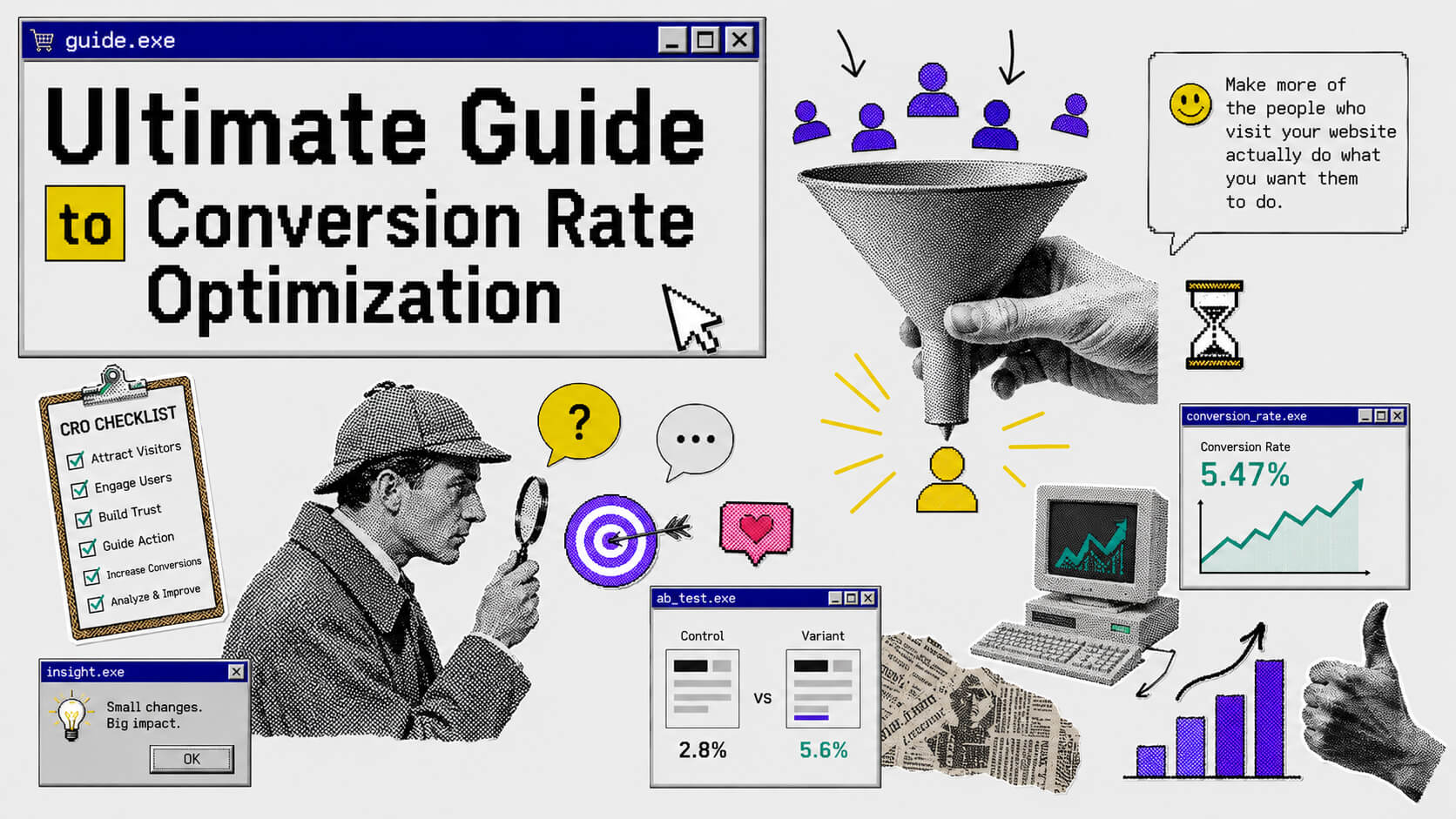
Conversion rate optimization sounds like jargon but it’s actually the most straightforward thing a business can do: make more of the people who visit your website actually do what you want them to do.
That’s it. That’s CRO.
There’s also a common view that it’s a complex, expensive endeavor reserved for large enterprises with dedicated development teams. Luckily, that’s not true anymore.
In this guide, you’ll learn all about CRO and how modern solutions, specifically CROLabs, empower you to identify conversion blockers, launch A/B tests, and significantly boost your revenue without needing developers or enterprise budgets.
On This Page
What Is Conversion Rate Optimization?
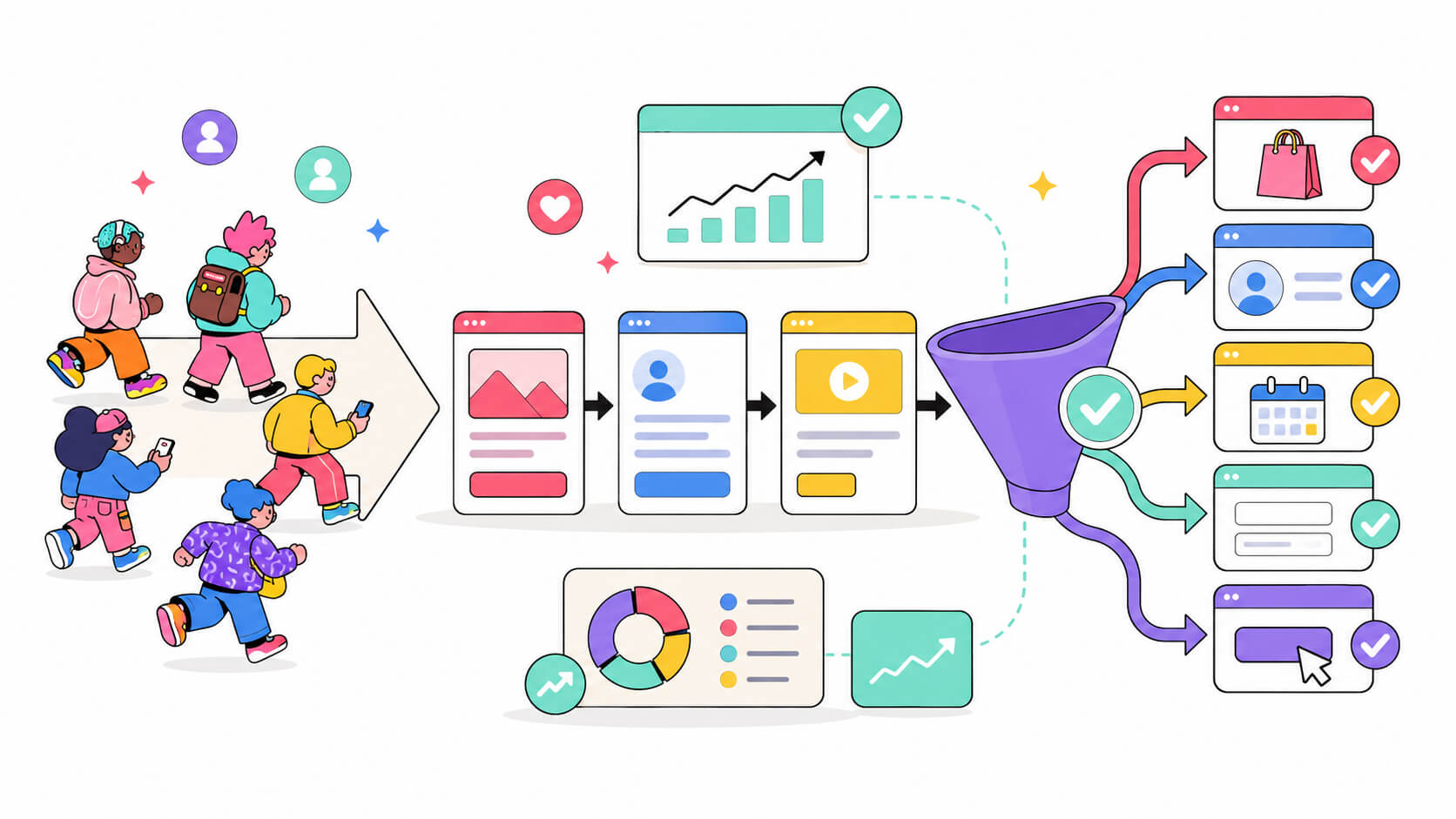
Conversion rate optimization (CRO) is the process of increasing the number of website visitors that complete a desired goal.
That goal could be:
- Completing a purchase
- Signing up for your email list
- Booking a demo or call
- Downloading a resource
- Filling out a form
- Clicking a button that leads to the next step
The moment someone takes any of these desired actions on your website is called a conversion, while the percentage of visitors who complete these desired actions is the conversion rate.
Conversion Rate = Conversions ÷ Total Visitors × 100If your website gets 10,000 visitors and 250 of them buy something, your conversion rate is 2.5%. CRO is all about increasing this percentage.
Now, something like a 0.5% improvement might not sound dramatic, but here’s the math: if you’re getting 100,000 visitors per month with a 2% conversion rate, that’s 2,000 conversions. A 0.5% improvement brings you to 2.5%, which is 2,500 conversions. That’s 500 additional conversions per month from the exact same traffic.
Why Is Conversion Rate Optimization Important?
Let’s say you’re running ads and paying $50 per visitor. You get 1,000 visitors a month, spend $50,000, and make 20 sales at $5,000 each ($100,000). You’re breaking even.
Now, what if you could get 25 sales from those same 1,000 visitors without spending more on ads? That’s 5 extra sales × $5,000 = $25,000 in new revenue. Completely new profit.
Most businesses are obsessed with traffic. “We need more visitors.” “Let’s increase our ad spend.” “We need a bigger audience.” But traffic without conversion optimization is expensive and inefficient. You’re essentially buying visitors and hoping some of them convert, rather than making sure your website actually converts the visitors you already have.
Consider two businesses:
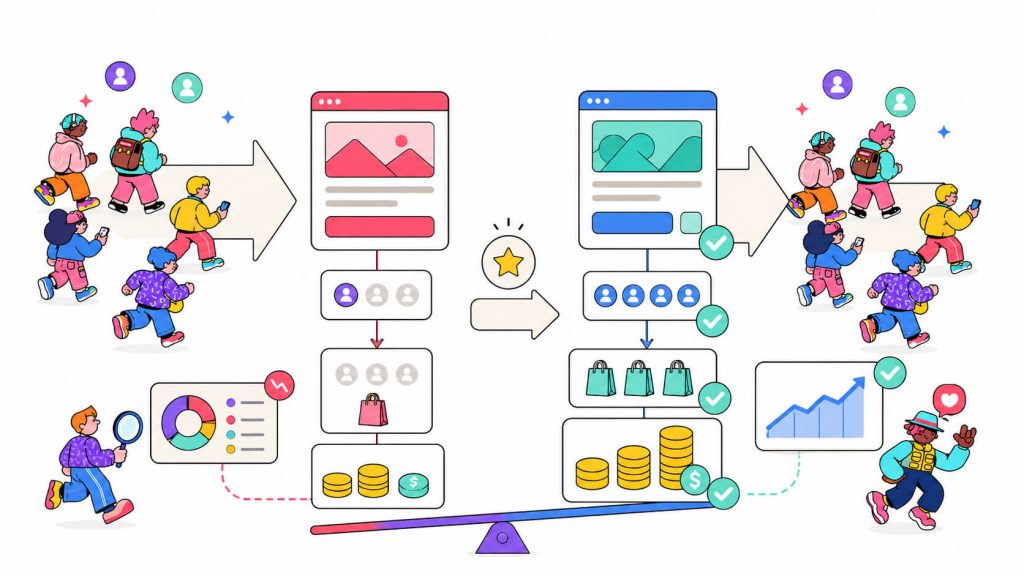
Business A: Gets 50,000 visitors/month with a 1% conversion rate = 500 conversions/monthBusiness B: Gets 20,000 visitors/month with a 5% conversion rate = 1,000 conversions/monthBusiness B is crushing Business A despite having 60% less traffic. Business A is probably spending more on customer acquisition to get those extra 30,000 visitors. Business B is doing more with less.
This is why CRO matters. It’s direct revenue from the visitors you’re already getting.
Turn Existing Traffic Into More Revenue
You don’t always need more traffic. Sometimes you just need a website that converts better.
CRO vs SEO
These two are often mentioned together but they’re fundamentally different strategies.
SEO is about getting people to your website. It’s traffic generation. You optimize for search engines and keywords so when someone searches for “best CRO tools,” they find your website instead of a competitor’s.
CRO is about what happens after people arrive. It’s conversion generation. You optimize your website experience so that when those people land, they actually do what you want them to do.
CRO Metrics You Need to Understand
Before you start optimizing, you need to measure. Here are the metrics that matter:
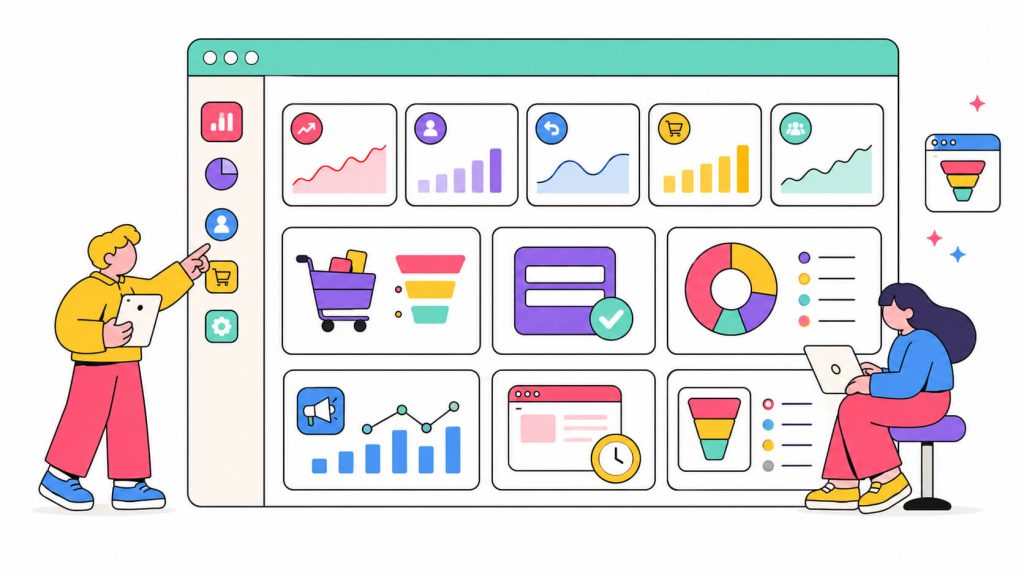
Conversion Rate (CR)
The percentage we discussed above. Everything else serves to understand what’s affecting this number.
Cost Per Conversion (CPC) or Cost Per Acquisition (CPA)
If you’re spending money on traffic, this one’s important. It’s your ad spend divided by conversions. Track this by channel (paid search, social, email, organic, etc.) because different channels will have different CPAs.
Bounce Rate
The percentage of visitors who land on a page and leave without taking any action. High bounce rates indicate a problem with page relevance or messaging. A 50% bounce rate on an e-commerce homepage might be normal; a 50% bounce rate on a product detail page is concerning.
Tip: CRO can help to reduce this.
Average Order Value (AOV)
For e-commerce, this is crucial. You might have a decent conversion rate, but if your average order is $30, you need to increase it. AOV improvements can come from upsells, cross-sells, or pricing adjustments.
Customer Lifetime Value (CLV)
How much a customer is worth over their entire relationship with your business. A CRO improvement that increases sign-ups for a free trial has different value than one that increases purchases if those sign-ups don’t convert to paying customers.
Cart Abandonment Rate
For e-commerce specifically, this tells you what percentage of people who start checkout don’t finish. High abandonment indicates friction in your checkout experience.
Form Completion Rate
This is very important for lead generation. What percentage of people who start a form actually finish it? High abandonment mid-form is a signal.
Return on Ad Spend (ROAS)
For paid traffic, this is revenue generated divided by ad spend. CRO improvements show up here immediately because you’re getting more revenue from the same ad spend.
Time on Page
How long visitors spend on your page. This doesn’t tell you everything (some people spend a long time scrolling without converting; others convert quickly), but it indicates engagement.
The key is tracking these metrics over time and understanding which ones connect to your business goals. If you’re optimizing, you should see multiple metrics improve simultaneously.
What Is A Good Conversion Rate?
The average website conversion rate hovers around 2-3%, depending on which studies you look at. E-commerce sites tend to be on the lower end (1-3%), SaaS platforms are typically higher (3-7%), and B2B lead generation sits somewhere in the middle (2-5%).
Types of CRO
Because anything that contributes to improving your conversion rate is essentially conversion rate optimization, categorizing CRO is a bit messy.
Some sort by tool, others by industry (because what you’ll end up optimizing varies by industry), and so on. The closest to the most complete way we could think of to categorize CRO splits it into two separate axes.
The first axis is how you optimize, which is your methodology. The second is where you’re applying it, i.e the structure of your business or page. If a SaaS company is running AI CRO on its pricing page, then it’s using one methodological type and one structural type at the same time.
So let’s actually pull those two apart.
Methodological Types of CRO
As we stated above, this is the how. It’s less about what you’re optimizing and more about the engine doing the optimizing. That can be a person with a spreadsheet or a machine-learning model.
- Traditional CRO:
This is the CRO of manual audits, hypothesis-driven CRO tests, and some (nay, a lot of) waiting. Someone reviews the analytics, forms a hypothesis, builds a variant, splits traffic 50/50, and sits with it for two to four weeks until the results reach statistical significance. Then the cycle starts over with the next item on the backlog.
Yes, it’s slow, but it’s also the foundation everything else builds on, and it still works. The whole process usually kicks off with a proper CRO audit to figure out what’s actually broken before you touch anything.
- AI CRO:
AI CRO is simply using AI to improve your conversion rate. It involves using an AI-powered CRO tool to quickly but effectively analyze your website for conversion blockers.
The AI-powered CRO tool ingests behavioral data continuously, generates multiple variants, and shifts traffic toward whichever one is winning while the test is still live.
This type of CRO tool also gives you predictive and actionable analytics which takes your normal analytics to another level.
We wrote an entire guide on this because the before-and-after numbers are the kind of thing you don’t believe until you see the source. One brand doubled message conversion rates just by swapping generic discount blasts for AI-personalized offers. Read the full breakdown in our complete guide to AI CRO if you want the receipts.
One thing to note is that AI CRO just compresses the distance between noticing a problem and fixing it. You still need a human deciding what’s worth testing in the first place.
- Heuristic / UX-Driven CRO:
This one skips the traffic-splitting entirely, at least at first. Instead of running a test, an expert (or a structured framework, like Nielsen’s usability heuristics) walks through your site like a first-time visitor and flags what’s confusing, inconsistent, or just plain broken.
A proper UX audit will usually surface the same conversion killers a six-week testing program eventually finds.
Structural Types of CRO
Now for the where. It’s the same optimization principles but wildly different execution depending on what kind of page or business you’re actually running CRO on.
- Ecommerce CRO: Optimizes product pages, shopping carts, and checkout flows to reduce cart abandonment and increase average order value.
Most of the wins here come from trust signals, faster load times, and killing unnecessary form fields (looking at you, “Company Name” field nobody needed). You can read up more on how to reduce cart abandonment rate if that’s where you’re bleeding the most.v
- B2B / Lead Gen CRO: Focuses on maximizing form submissions, whitepaper downloads, and demo requests to feed the sales pipeline.
The conversion is a demo request, a form fill, a “book a call” click, which means the whole game for B2B CRO is trust and clarity.
- Landing Page CRO: Enhances single-focus standalone pages tied to specific paid ad campaigns to match visitor expectations and boost immediate signups.
Landing pages are their own animal because, unlike a homepage, they’re built for one job, which is to match the promise of the ad someone just clicked. When a visitor clicks a Google ad about “waterproof running shoes” and lands on your generic homepage, you’ve already lost them.
This is exactly the problem dynamic landing pages solve, by automatically matching page content to what actually got someone there in the first place.
- SEO-Driven CRO: Balances search engine visibility with user experience to ensure high-ranking organic traffic actually converts upon arrival.
With AI answer engines increasingly summarizing your content before a visitor ever clicks through, conversion starts before the click, in how you’re being cited and represented.
- Mobile CRO: Adapts responsive designs, mobile-specific layouts, and app interfaces for faster loading times and tap-friendly navigation.
More than half of web traffic is mobile, and yet mobile conversion rates are consistently lower than desktop across almost every industry. If your mobile bounce rate is meaningfully higher than desktop, that’s a UX problem, and our guide on how to reduce bounce rate is a good place to start pulling that thread.
- Enterprise CRO: Scales optimization programs across massive websites using advanced governance frameworks, deep personalization engines, and cross-department data sharing.
At enterprise scale, CRO is a program with stakeholders across design, dev, and marketing, all needing to agree on priority before anything ships. A documented CRO roadmap is very useful for this type of CRO.
How To Improve Conversion Rate [With CROLabs]
This is the bottleneck for most businesses. They know their conversion rate is lower than they’d like. But they don’t know why. Is it the headline? The form? The page speed? The lack of reviews?
Without knowing the actual problem, you’re just guessing, and that wastes time and money.
Traditionally, finding these issues meant hiring someone (or a team) to:
- Review heatmaps
- Watch session recordings
- Dig through analytics
- Spot patterns
This is tedious and time-consuming. And for smaller teams, it’s just not realistic. But some of the best CRO tools today are changing this. Let’s look at quick strategies to improve your conversion rate and how CROLabs (one of those modern CRO tools) can help you accomplish this.
1. Analyze Your Website
You need to start with this to understand where you currently are. This’ll help you establish a baseline so you can measure improvement from there.
Some questions to ask during the analysis are “what’s my current conversion rate?”, “which pages are losing the most visitors?”, “where do bottlenecks exist?”
Analytics can help you answer some of these questions. Use it to understand:
- Which traffic sources convert best
- Which pages have the highest bounce rates
- Where do visitors drop off in your funnel
- Which devices/browsers show different behavior
- Which audience segments behave differently
With CROLabs:
Imagine having someone who could instantly scan your entire website, analyze how visitors interact with every element, and hand you a prioritized list of what’s actually stopping conversions.
That’s what CROLabs’ AI Advisor does.
It crawls your site and examines:
Layout: Is the page structured in a way that makes sense? Can visitors find what they need?
Copy: Are your headlines clear? Does your messaging actually explain what you’re selling?
Calls-to-Action: Is your CTA visible? Does it say something specific like “Get Your Free Trial” or just generic like “Submit”?
Page Speed: Is the page loading fast enough? Does it time out on mobile?
and much more.
Once the AI identifies potential issues, it doesn’t just stop there. It validates them. It checks if other websites in your industry see better results when they fix that problem. It looks at actual user behavior to confirm this is something that matters.
The output is specific, data-backed recommendations that have an impact.
Get AI-Powered CRO Recommendations
Let CROLabs analyze your website, identify conversion blockers, and prioritize the fixes most likely to increase revenue.
2. Identify Your Biggest Opportunity
Don’t try to optimize everything at once. Find the biggest bottleneck and fix that first.
If 50% of visitors never make it past your homepage, optimizing your product page won’t matter. If 20% of people who start checkout don’t finish, that’s your lever.
With CROLabs:
CROLabs shows you the exact journey visitors take through your website. You can see where they scroll, where they click, where they get stuck, etc. You can also see if abandonment is happening because people can’t find something, because the page loads slow, because the CTA isn’t clear, or because something is confusing.
For example, most CRO tools will show you aggregated numbers. Something like “20% of visitors drop off on your checkout page.”
Okay. But where on the checkout page? After they see the shipping costs? When they notice you’re asking for their phone number? When the page takes 5 seconds to load?
Without the specific moment, you can’t fix it.
Better tools like CROLabs let you see the actual paths visitors take. You can follow someone from entry point → product page → cart → checkout → exit.
When you see that someone consistently abandons right after entering their address, that tells you something. Maybe your shipping costs are a surprise. Maybe you don’t show the expected delivery date. Maybe you ask for too much information at that step.
This visibility transforms your CRO from guesswork into informed decision-making.
3. Design & Run A Test
Alright, so you know what to fix. Your next step should be experimentation. And it’s way simpler than most people think.
Start with a hypothesis.
Before you make any changes, you need a clear hypothesis. Not “improve conversions”, that’s too vague.
Instead: “Changing the CTA button color from blue to red will increase click-through rate by 8% because red creates more urgency.”
This specificity matters because i tells you exactly what you’re testing and what success looks like.
Then run the test.
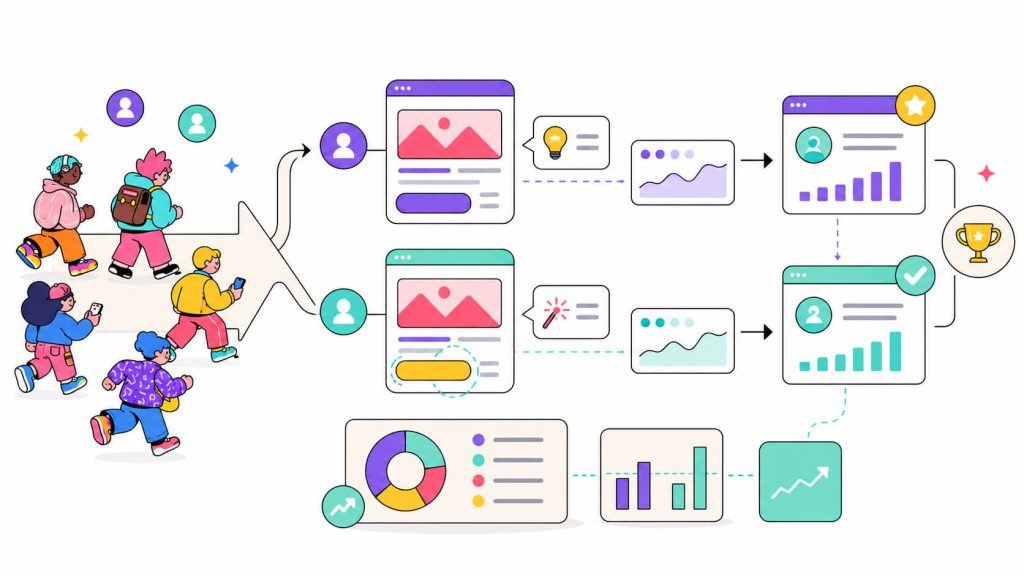
Use A/B testing to compare your original page (control) against your new version (variant). Run it long enough to get statistically significant results (usually 1-2 weeks minimum, but depends on your traffic volume).
A/B testing is the gold standard for experimentation in CRO because it isolates the variable you’re changing. You know that any difference in conversion is caused by your change, not by random variation or external factors.
With CROLabs:
With most CRO tools, you need the assistance of a developer to even begin designing an experiment, but CROLabs gives you the entire experimentation process (from design to launch) free of developer (and a free trial too, if you want).
With CROLabs’ visual editor, marketers can set up A/B tests directly on the live website. And you see the change instantly. You don’t have to deploy to staging or wait for code review.
This speed is crucial because speed = more tests = faster learning.
Launch Your First A/B Test Today
Design, edit, and run experiments directly on your live website without waiting on developers or code deployments.
4. Measure & Learn
Did your hypothesis prove true? Great, implement it. Did it not work? That’s also valuable data. You learned something that doesn’t work, which informs your next test.
The worst outcome is a test that doesn’t reach statistical significance. That just means run it longer or adjust the change.
With CROLabs:
You don’t have to wait 2 weeks to see if your test is working. CROLabs shows you real-time results so you can make faster decisions. If a test is going badly, you can stop it early rather than wait for the full duration.
5. Optimize Responsibly
A lot of businesses worry that better analytics means more tracking, more cookies and more invasive data collection. But modern CRO platforms can respect privacy and still give you the insights you need by collecting behavioral data without collecting personal data.
With CROLabs:
The rule is this: No personally identifiable information (PII).
CROLabs is hosted in the EU, which means we are GDPR-compliant. We don’t store names, emails, phone numbers, or IP addresses. None of that. You learn about visitor behavior (where they click, how long they spend, where they drop off) without knowing who they are.
This has practical benefits:
You don’t need annoying cookie banners
You stay compliant with GDPR and other privacy regulations
Your visitors aren’t worried about their data being sold
It’s actually better for everyone.
Setup is quick. Usually just a single line of code and you’re ready to go.
CRO Insights Without Invasive Tracking
Understand visitor behavior, reduce friction, and optimize conversions while staying privacy-friendly and GDPR-compliant.
Common CRO Mistakes (And How to Avoid Them)
Mistake 1: Optimizing the Wrong Metric
A common trap is optimizing for CTR (click-through rate) when you should be optimizing for conversions.
A headline that screams “FREE MONEY!” might get a 20% CTR, but those clicks might all be people who leave immediately (high bounce rate) because they realized it’s not actually free money.
Mistake 2: Testing Without a Baseline
You change something, conversions go up, and you claim victory. But did they go up because of your change, or because it was a good sales week? Did external factors play a role?
You should always have a control group and always establish statistical significance, otherwise you’re just guessing.
Mistake 3: Testing Too Many Things at Once (For A/B Tests)
Change the headline, the button color, the form fields, and the image all at the same time. Conversions go up 8%. But which change caused it? You have no idea.
Changing one thing per test is the core principle of A/B testing. If you want to do more, look at multivariate testing.
Mistake 4: Making Big Changes Based on Small Sample Sizes
If you ran a test for 3 days and 50 people visited, then conversion went up 15%… that’s not statistical significance.
You need to run your tests long enough. For most websites, that’s a minimum of 1-2 weeks and 100+ conversions in each variant.
Mistake 5: Ignoring the “Why”
Your conversion rate is 2%. But why? Do people think your product is too expensive? Can’t find what they’re looking for? Don’t trust your brand? Overwhelmed by options?
Use surveys, session recordings, and user feedback to understand the “why” before you test solutions.
Mistake 6: Assuming What Works for Competitor Works for You
Your audience, traffic source, product, and context are still different in some ways from that of your competitors. Test for your situation, not for industry best practices that might not apply to you.
Building a Sustainable CRO Program
CRO is an ongoing process. You’ll run a test, see a 3% improvement, implement the winner, and move to the next test. Then a 2% improvement. Then a 4% improvement.
Over a year, you stack ten of these experiments on top of each other. That’s a 20-30% overall lift in conversions.
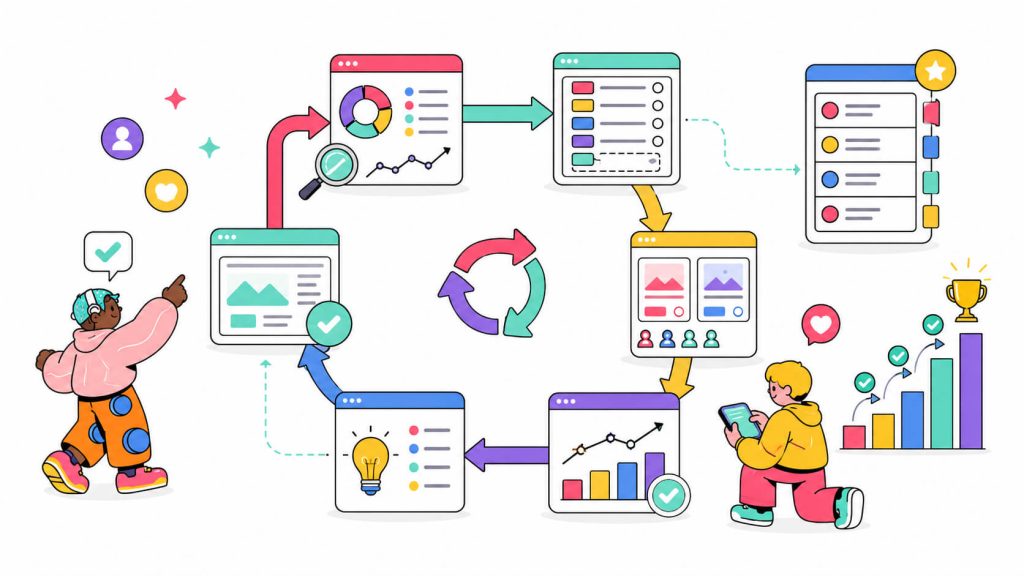
Small improvements compound into big gains
Let’s say you improve your conversion rate by just 0.5% per month. Over a year, that’s 6%. Over two years, it’s 12%.
For that $100,000-per-month business we mentioned earlier, 12% is an extra $12,000 monthly. That’s $144,000 per year from consistent, compound improvements.
You don’t need an enterprise budget
CRO used to be expensive and only for big companies. You’d need to hire a consultant, pay for enterprise-level tools, and have a dedicated analyst. Cost was about $20,000+ per month.
Platforms like CROLabs changed this. Now you can run sophisticated A/B tests, get AI-powered recommendations, and optimize your site for a fraction of that cost. For many businesses, the entry price is free.
Prioritization framework: Do the high-impact tests first
You have 50 ideas for improvements. Which should you test first?
Use something called the ICE score:
Impact: If this test wins, how much will it improve conversions? (1-10)
Confidence: How confident are you this will improve things? (1-10)
Ease: How easy is this to implement? (1-10)
Multiply them together. Run the test with the highest score first.
This prevents you from wasting time on easy changes that won’t matter or high-impact ideas that are too risky or complicated.
CRO Best Practices by Channel
Some CRO best practices to implement based on your channel:
E-Commerce
Focus on:
- Checkout friction (unexpected costs, complicated process)
- Product pages (better images, clearer descriptions, more social proof)
- Cart abandonment (email recovery, on-site retention)
- AOV (upsells, cross-sells, free shipping thresholds)
Common wins: Removing form fields, showing shipping early, adding product reviews, simplifying checkout.
SaaS
Focus on:
- Free trial conversion (who signs up, how many convert to paid)
- Onboarding (new users completing first valuable action)
- Feature adoption (users actually using key features)
- Upgrade rate (free-to-paid conversion)
Common wins: Better onboarding, clearer value proposition, social proof (logos/testimonials), usage-based CTAs.
Lead Generation (B2B)
Focus on:
- Form completion (what percentage of people who start finish)
- Lead quality (not all leads are equal; focus on high-intent visitors)
- Cost per qualified lead (not just cost per lead)
- Sales team follow-up efficiency (some leads are easier to close than others)
Common wins: Reducing form fields, pre-filling known data, progressive profiling (asking more questions over time), clearer value proposition.
Content/Publishing
Focus on:
- Content engagement (do people read or just bounce)
- Email signups (converting readers into subscribers)
- Time on page (deeper engagement)
- Click-through to next content
Common wins: Better headlines, email signup placement, internal linking, content upgrade offers, above-the-fold value proposition.
Conclusion
As you’ve seen here, you don’t need an enterprise budget or developers to do CRO. Get started with CROLabs today to improve your conversion rate.
Stop Guessing Why Visitors Don’t Convert
Find the friction points costing you conversions and launch data-backed experiments without developers or enterprise complexity.
Frequently Asked Questions About CRO
Why should I do CRO instead of just buying more traffic?
Traffic is expensive and gets more expensive. A 25% increase in click prices isn’t uncommon over a few years. CRO flips the script: the more you optimize, the lower your cost per conversion, and you never have to buy that traffic again.
How much traffic do I need to run a test?
It depends on your conversion rate. A high-traffic website with a decent conversion rate could run a conclusive test in days. A lower-traffic site might need weeks or months. Most platforms tell you when you have enough data.
What if I see a winner quickly? Can I stop the test early?
Generally, no. Running a test early introduces something called “peeking bias.” You think you have a winner, you stop early, but actually the winner just got lucky. Run the test until you have statistical significance. The platform handles this automatically.
Can I test on mobile and desktop separately?
Absolutely. In fact, you should. Mobile and desktop users behave differently. Something that wins on desktop might lose on mobile. Test them separately.
Is CRO only for e-commerce?
Nope. Any site with a measurable goal benefits from CRO. SaaS platforms, lead generation sites, nonprofits, B2B services. If you want more people to do something on your site, CRO applies.
How do I improve conversion rate?
The tried, tested and trusted way is by using CRO tools. That’s the best way to get specific data instead of just guessing.
How quickly will I see results?
Some tests show results in days (if you have high traffic). Some take weeks. The key is that you’re getting reliable data, not fast data. A result that takes three weeks but is actually true is better than a result that’s fast but wrong.
Will CRO work for my specific situation?
Almost certainly. The frameworks we’ve covered here work across industries, page types, and traffic levels. The specific tactics might change, but the process is the same: identify friction, test a solution, measure results, repeat.