Updated Oct 2026
Google maintains a help page titled “Minimize A/B testing impact in Google Search”. The page runs only a few paragraphs, and the title alone tells you where Google stands. However, what the page leaves unsaid is how many ways a test can go wrong when the setup is careless, and that’s what we’ll cover here.
The short answer: A/B testing that follows Google’s published guidance has no known ranking penalty attached to it. Trouble begins with how a test gets implemented, and four implementation mistakes account for most of it.
On This Page
What Google Says About A/B Testing and Search Rankings
Google describes website testing as trying out different versions of a site, or a part of it, and collecting data on how users react to each version. It also points out that, depending on the content you’re testing, it may not matter much if Google crawls or indexes some of your variations while the test runs.
The same page lists the practices Google wants you to follow:
- Don’t cloak your test pages. Show Googlebot the same content a regular visitor would get.
- Use rel=”canonical” on alternate URLs when a test runs across several URLs, so the original is marked as the preferred version.
- Use 302 redirects, not 301. A 302 tells search engines the redirect is temporary.
- Run tests only as long as needed, then update your site with the winning version and remove the testing elements.
Each of these maps to a specific way things go sideways, so let’s take them one at a time.
Four Ways A/B Tests Cause SEO Problems
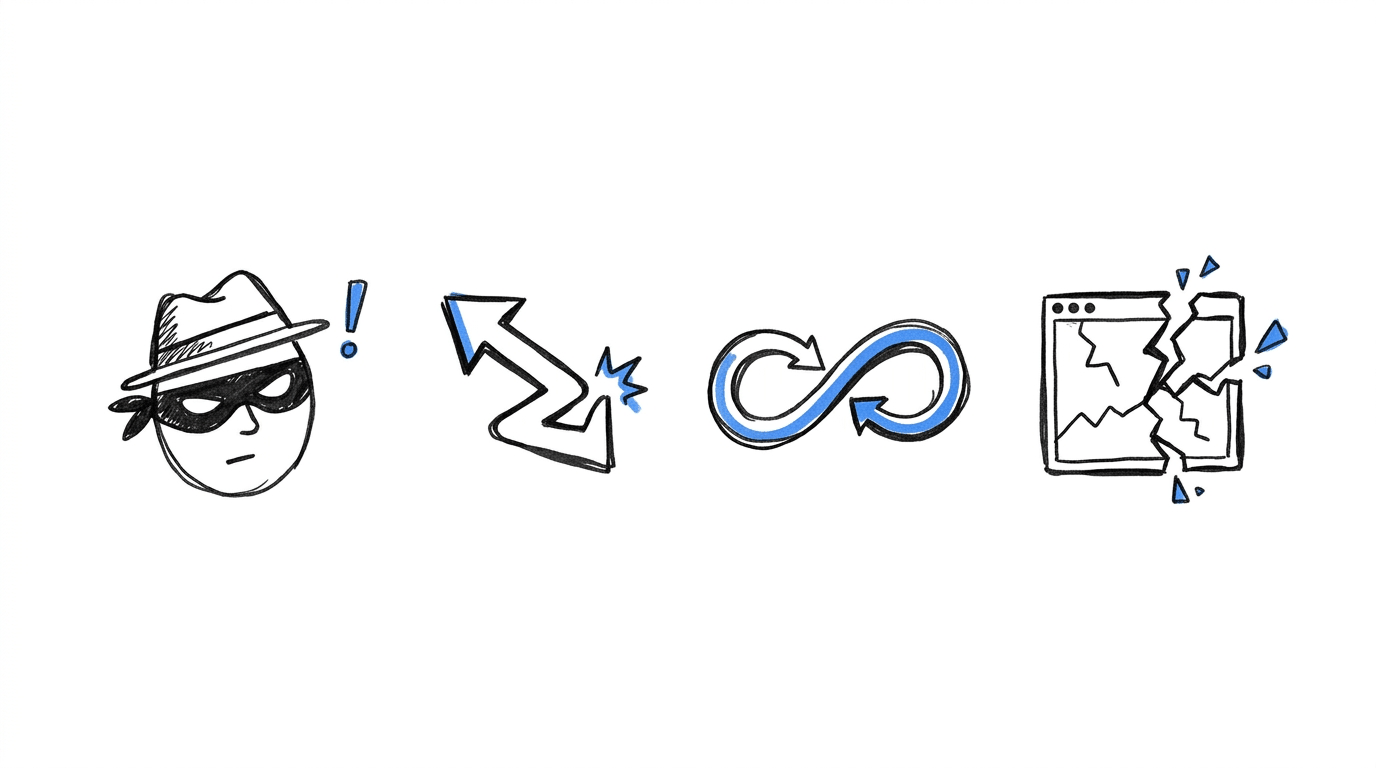
| Mistake | What goes wrong | Fix |
|---|---|---|
| Cloaking | Googlebot sees one version and visitors see another | Serve the same variations to crawlers that any visitor could get |
| 301 redirect on a variant | Search engines treat the move as permanent | Switch to a 302 |
| noindex on test pages | The wrong URL can drop out of search | Use rel=”canonical” pointing to the original |
| A test that never ends | Google may read it as deception | Set an end date before launch |
Cloaking
Cloaking means showing search engines different content from what users see. Google says it counts as cloaking whether the difference comes from server logic, a robots.txt rule or any other method, and that it breaks the spam policies whether or not a test is running. A site found in violation can be demoted or removed from results. Most A/B testing tools assign variants randomly and treat crawlers like any other visitor, so this one mostly happens when someone writes custom rules to “protect” the crawler from the test.
Redirects and canonicals
Split-URL tests send visitors from the original page to a variant. A 301 says the original has moved for good, which invites search engines to index the variant URL in its place. A 302 says the move is temporary, and that’s what a test is.
Canonicals work the same way in the other direction. Google recommends rel=”canonical” over a noindex tag because a noindex that lands on the original URL would pull that page out of search, and nobody wants a homepage test to delete the homepage.
Tests with no end date
Google says the time a reliable test needs depends on your conversion rate and traffic, and that a good testing tool tells you when you’ve gathered enough data. A test left running for months after it has a winner serves no purpose and, according to Google’s guidance, can eventually look like an attempt to deceive search engines. Scheduling matters here, which is why experiment scheduling deserves a few minutes of planning before you hit launch.
Ready to run your next A/B test?
Use CROLabs to create page variants, test different elements and measure which version drives more conversions. Check your SEO safeguards before launch, and give each experiment a clear end date.
How Page Speed and Core Web Vitals Come Into It
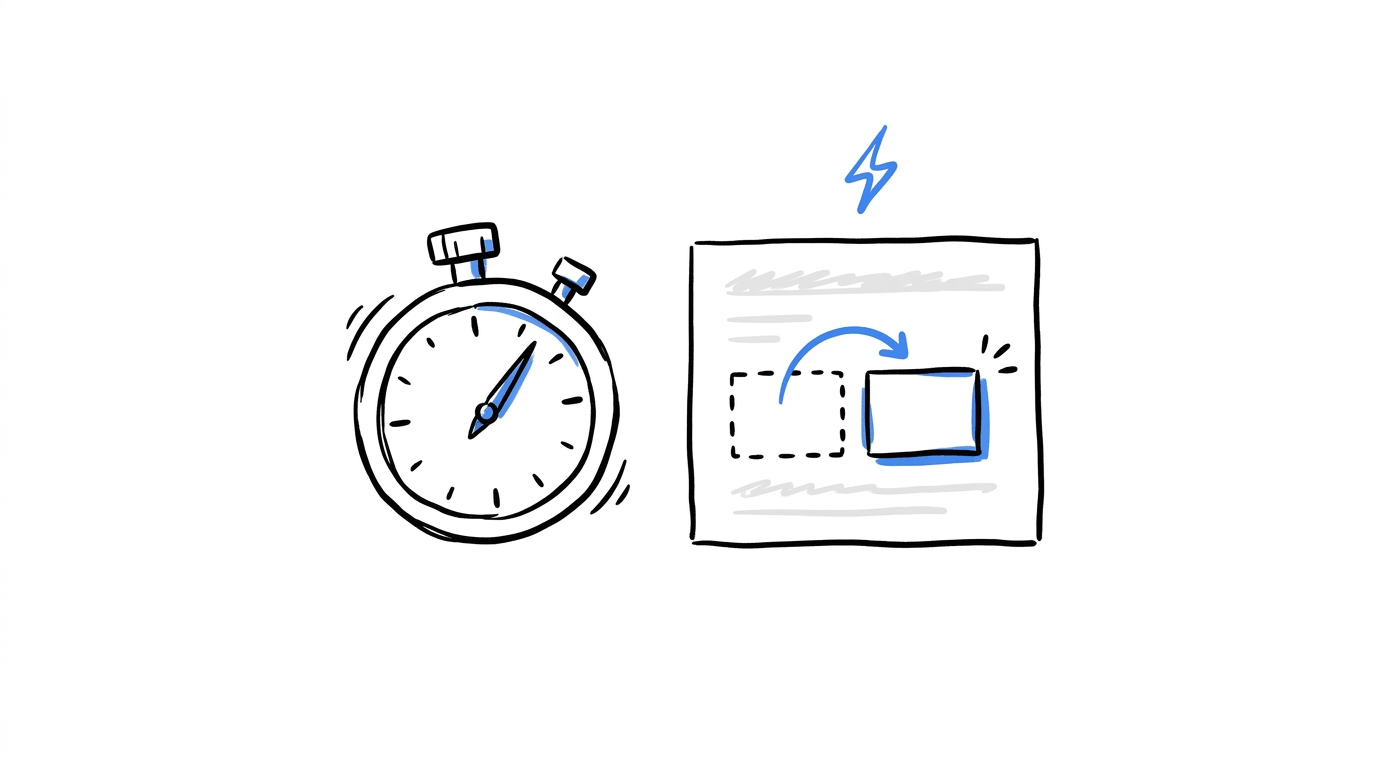
Search engines don’t penalize a test for being a test, but they do notice a slow page, and many A/B testing tools can slow a page down. Client-side tools load a script, wait for the page to build, then swap elements in the browser. Depending on how that swap happens, visitors may see the original headline for a split second before the variant replaces it.
Google measures page experience through Core Web Vitals, and a test can touch two of them directly:
- Largest Contentful Paint (LCP) should land within 2.5 seconds. A test that swaps the hero image delays the point at which the biggest element finishes loading.
- Cumulative Layout Shift (CLS) should stay at or below 0.1. A variant that injects a banner above existing content, or changes a font so the headline wraps onto a second line, pushes everything below it downward.
Both problems show up as a flicker on the page, and visitors feel it before any metric does. A slow, jumpy page also hurts the conversion rate you’re trying to improve, so the test works against its own goal. If you’re running experiments on pages where load time is already tight, the guidance on the post-click experience is worth reading before you build the variant.
A/B Testing vs. SEO Split Testing: Two Experiments, Two Different Subjects
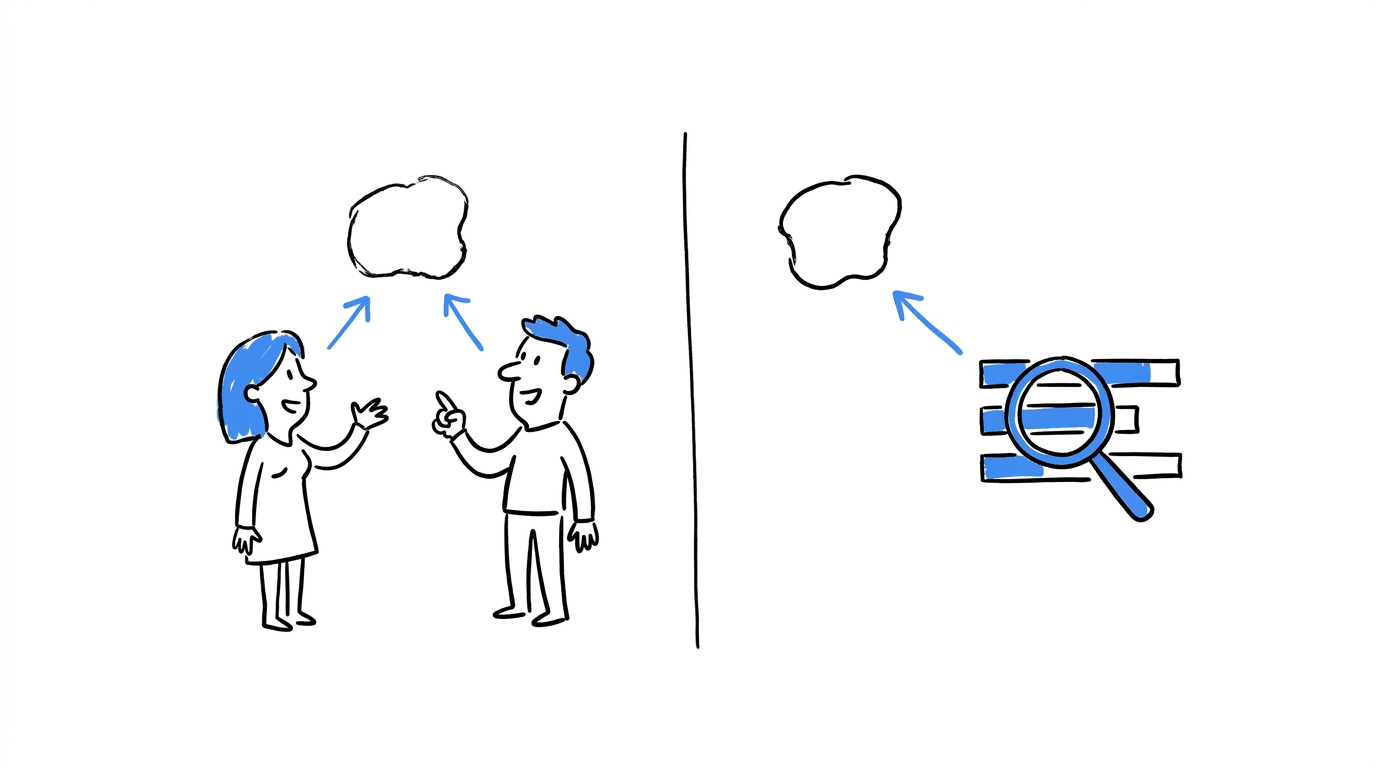
Here’s a distinction that clears up much of the confusion around this topic. A conversion test and an SEO test sound alike but answer separate questions.
SearchPilot, a platform built for SEO experiments, describes the split like this: an SEO test divides pages rather than people, applies changes on the server side, and judges the outcome over time because only one Googlebot exists to compare against itself.
| Conversion A/B test | SEO split test | |
|---|---|---|
| What gets split | Visitors | Pages |
| Question answered | Which version converts more? | Which change moves organic traffic? |
| Where changes happen | Usually in the browser | On the server |
| How results are judged | Direct comparison of variants | Actual traffic against a predicted baseline |
So when someone asks whether A/B testing hurts SEO, the answer depends on which experiment they mean. A conversion test on a landing page measures what visitors do after they arrive. It says nothing about how Google ranks the page, and it was never built to.
The reverse also holds. SearchPilot’s published case studies show how unpredictable search outcomes can be. In one test, adding the phrase “Near You” to a customer’s title tags was a sensible-looking change that still had an unexpected effect on organic traffic. If a change as small as a title tag can swing results, the pages you test deserve some thought.
Which Parts of a Page Deserve a Second Look Before You Test
Some elements carry search signals and others don’t. A button color rarely tells Google anything about what a page covers, while a headline does. The table below sorts a few common test targets by how closely they connect to what search engines read.
| Element | Why it matters for search | A test idea to approach carefully |
|---|---|---|
| Title tag and H1 | Both help search engines understand the page topic | Rewriting a pricing page headline from a feature list to a benefit statement |
| Body content | Search engines index it and rank pages on it | Collapsing a long product description into tabs |
| Navigation links | They pass internal link signals across the site | Removing a category from the main menu |
| CTA buttons, form fields, trust badges | Little direct relationship to indexed content | Shortening a signup form from five fields to three |
Tabs make a good case study. SearchPilot published a split test on a grocery retailer in which moving content out of tabs produced results that ran against what Google had said publicly about hidden content. Whether that holds on your site is a question for your own data, which is the whole reason these experiments exist.
For most conversion tests, the bottom row of that table is where the work happens. Forms, buttons and social proof can all be changed with very little exposure to search, and they tend to move conversion numbers as well.
A Pre-Launch Checklist for SEO-Safe Experiments
Run through these before any test goes live:
- Confirm the crawler sees what visitors see. If a rule treats bots differently, remove it.
- Check the redirect type on any split-URL test. It should be a 302.
- Add rel=”canonical” to every variant URL, pointing to the original.
- Look at what you’re changing. Titles, H1s and body copy deserve more caution than buttons and forms.
- Measure load time and layout shift on the variant before real traffic arrives.
- Set an end date and remove the test code the day you implement the winner.
Running Experiments in CROLabs
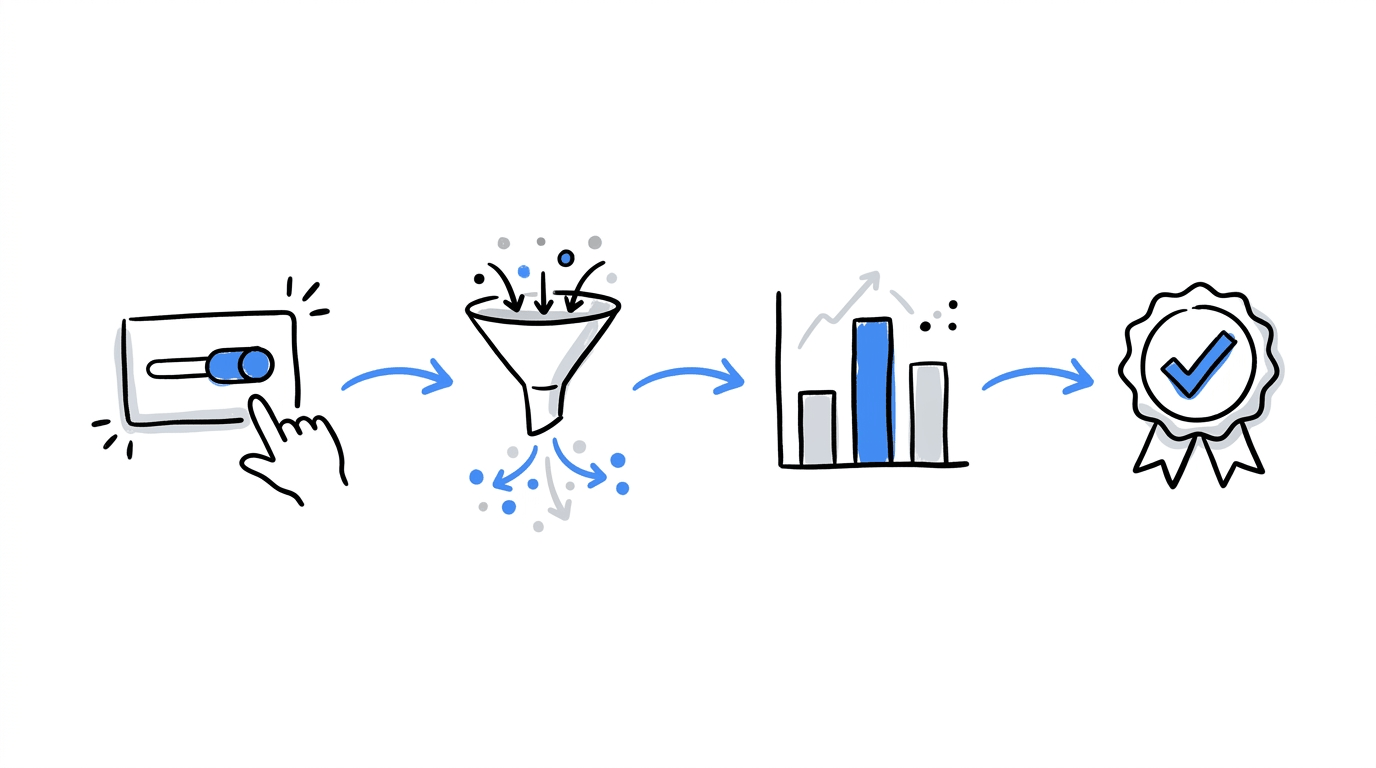
CROLabs is built for the conversion side of this picture, so the features most relevant to a search-conscious test setup are the ones that give you control over what changes and for how long.
- A/B testing splits traffic between your control and a variant and reports which one drives more of your target action.
- Visual Editor lets you build variants without code, which keeps changes to forms, buttons and layout quick to make and quick to remove once a winner is chosen.
- Multivariate testing tests combinations of elements on one page, so you can work out which pairing produces the lift.
- Analytics and heatmaps show where visitors stop scrolling or clicking, which helps you pick test targets that sit away from your ranking content.
- CRO Advisor crawls your site and prioritizes the issues costing you conversions, so you start from a list instead of a guess.
Before launching a test on a page that earns organic traffic, check the CROLabs documentation for how variants are delivered and apply the checklist above. If you’re still choosing a platform, the roundup of best CRO tools covers how different options compare. Newcomers to experimentation can start with what A/B testing is and then fit each test into a longer CRO roadmap.
Conclusion
A/B testing and SEO get along well when you follow the rules Google has published: no cloaking, canonicals on alternate URLs, 302 redirects and a defined end date. Speed deserves attention too, since flicker and layout shift hurt both rankings and conversions. The other half of the answer is knowing what you’re testing. Changes to buttons, forms and trust elements carry little exposure in search, while changes to titles, headings and body content are worth treating as SEO decisions as well.
Ready to test with those guardrails in place? Start a free 14-day trial of CROLabs and run your first experiment on a page where the risk to your rankings is low.
Keep your experiments focused on conversions
You don’t need to change ranking-critical content to find ways to improve conversions. Test forms, buttons and page layouts with CROLabs, then use the results to decide what to change next.
FAQs