Updated Nov 2026
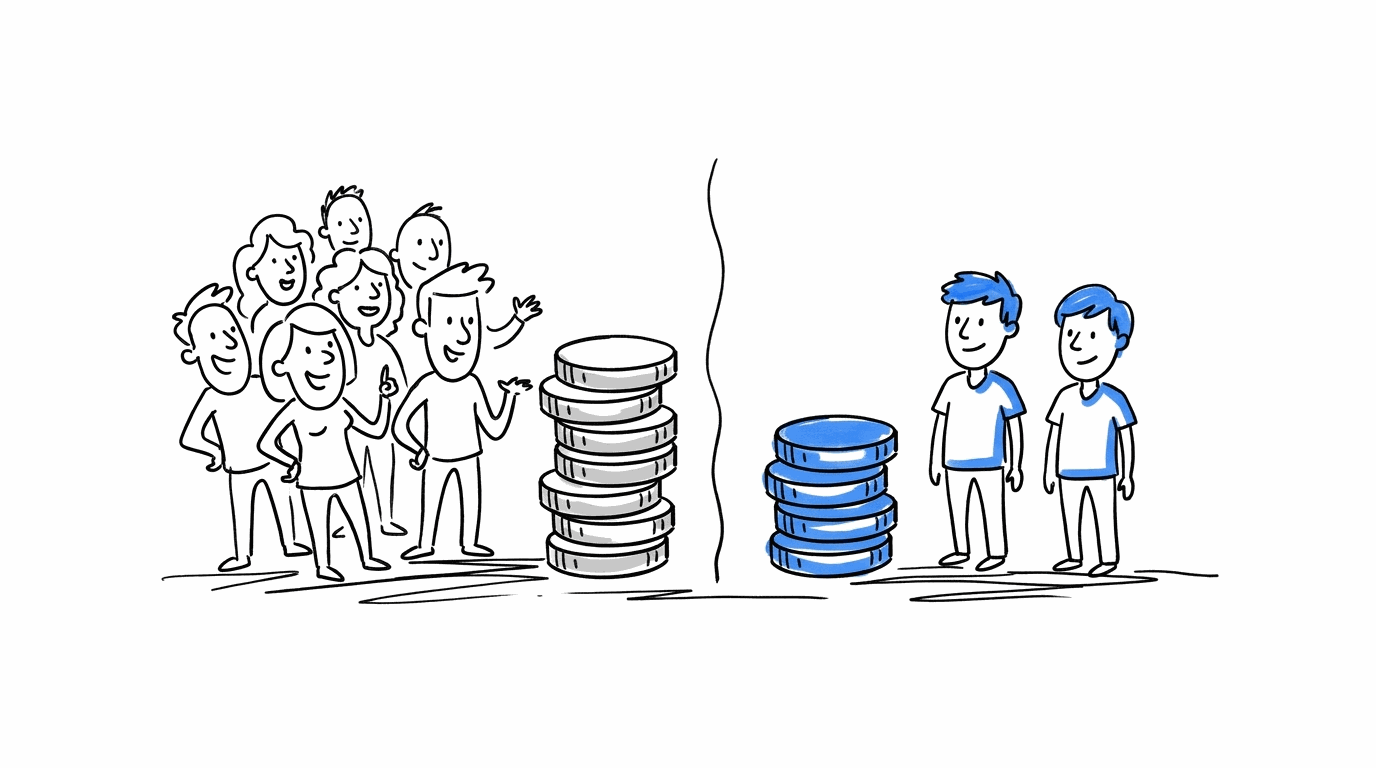
Keeping your customers coming back for more, aka retaining existing customers, is significantly more cost effective than customer acquisition. A benchmark of 24 direct-to-consumer stores found that returning visitors converted at a median of 2.17% and new visitors converted at 0.85%.
Returning visitors also made up a median of 18.8% of sessions and 36.5% of revenue. So you can see how a second purchase is often easier to secure, especially because the customer has already bought from you and experienced your service.
At this point, you need to give them a good reason to shop with you again and make it easy for them to do so. Your website and the follow-up messages they receive after checkout both play an important role in bringing them back.
This article covers ten strategies for building that second order, grouped by where they sit after the first sale. Each comes with an example you can adapt and a way to test it.
On This Page
In short
- Repeat purchases come from decisions on the checkout page, in post-purchase emails, on your homepage and in your returns process.
- Timing matters more than discounts for products that run out, so match reminders to how long the product lasts.
- Returning visitors respond to pages that recognize them, and a personalized homepage is a good place to start.
- Every change on this list can be tested, and CROLabs lets you run those tests without a developer.
What Repeat Purchase Behavior Means for Your Store
Okay, let’s start with what to measure. Repeat purchases can mean a few different things, and each metric tells you something about how customers shop with you.
| Metric | Formula | What it tells you |
|---|---|---|
| Repeat customer rate | Customers with 2+ orders ÷ all customers × 100 | How much of your customer base comes back |
| Repeat purchase rate | Orders from returning customers ÷ all orders × 100 | How much of your order volume is repeat business |
| Returning share of revenue | Revenue from returning customers ÷ total revenue × 100 | How much money repeat buyers bring in |
| Days between orders | Average gap between a customer’s first and second order | When your reminders and offers should land |
Choose one metric to focus on first. The benchmark panel mentioned earlier uses returning customers’ share of revenue as its main retention KPI. This makes it easier to compare stores, and because the figure changes gradually, reviewing it every quarter should give you a useful picture of how retention is progressing. You should also keep track of the number of days between orders, as you’ll need that information when working on strategies 3 and 4.
If you already use Google Analytics 4 or an analytics platform like CROLabs, you can check how returning customers behave compared with new visitors. Once you have a clear picture of your current figures, you can decide which of the strategies below deserves your attention first.
Find out what's stopping customers from coming back
Your store may already have opportunities to increase repeat purchases. CROLabs helps you identify friction across your website, understand how visitors interact with your pages and test changes that encourage customers to return.
A. Strategies Built Into Checkout and the Account
The opportunity to bring someone back for a second purchase begins with their first order. The following two strategies focus on that early stage, when a shopper has just become a customer.
1. Offer the Account After the Order Is Placed
Requiring customers to create an account before they can pay adds another step to the checkout process, which can cause some of them to abandon their orders. Baymard’s research found that 19% of users leave checkout because a store forces them to create an account. To address this, Baymard recommends offering guest checkout and giving customers the option to register after completing their purchase.
This approach also makes it easier to encourage future purchases. Once someone has placed an order and received their confirmation, they’re more likely to consider saving their details for next time. You can then use the account to recognize them when they return. Since they’ve already entered their email during checkout, prefill that field and ask them to choose a password.
For example, imagine you sell 250g bags of single-origin coffee. After a customer places an order, your confirmation page could say, “Save your address and make ordering your next bag easier.” Place a single password field below that message. This gives customers a clear idea of how creating an account will help them when they shop again.
How to test it: Run an A/B test on the confirmation page with two versions of the prompt, one with a benefit line and one with the plain button.The visual editor in CROLabs lets you change that copy without code, and the account sign-up rate is your result. If cart drop-off is also on your mind, our guide on reducing cart abandonment covers the earlier part of the funnel.
2. Put the Order Confirmation Page to Work
Most confirmation pages say “Thank you” and list the items. That leaves a lot of attention unused, since the buyer is looking at the page and feeling good about the purchase.
Here are some things the page can hold:
- Delivery expectations: the expected date and a tracking link, which cuts down on “where is my order” emails.
- How to use the product: a short guide or video, so the first use goes well.
- A companion item: one product that goes with what they bought, with no discount attached.
Keep the page short. One companion item sells better than a grid of six, and the buyer’s main job on that page is to feel that the order went through.
B. The Days Between Delivery and the Second Order
Many stores stop communicating with customers once they’ve sent the shipping notification. However, there’s still an opportunity to encourage another purchase after the order arrives, and much of that communication happens through email.
3. Time Replenishment Reminders to the Product’s Use Cycle
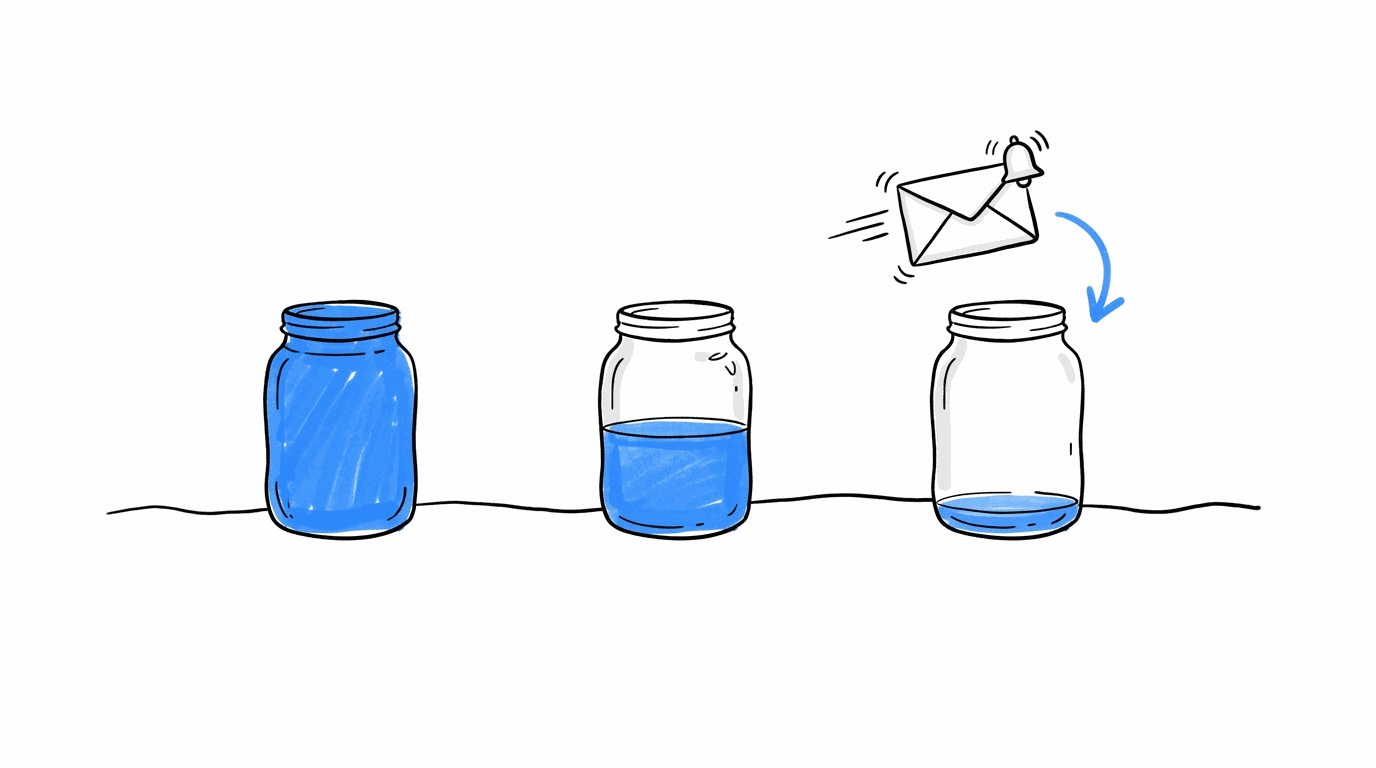
Customers are more likely to appreciate a reorder reminder when it arrives around the time they’re running low on a product. If the email comes too early, they may ignore it, and if it arrives after they’ve already ordered from another store, you’ve missed the chance to bring them back.
For products that customers use regularly, timing your emails around their expected consumption period can make a difference. An analysis of direct-to-consumer email campaigns found that successful brands often send replenishment reminders 25 to 35 days after delivery when selling products with a one-month supply. The analysis also found that brands using these emails recorded repeat-purchase rates roughly 1.4 times higher than similar brands without them.
You can begin with a fixed number of days based on the product’s expected usage. As you collect more customer data, use their previous orders to adjust when each reminder goes out. For example, Hello Retail’s guide to replenishment emails explains that someone who buys a 500ml bottle will need a refill later than someone who orders the 250ml version.
Inputs worth using when you set the timing:
- The pack size or quantity in the order
- The delivery date, since the clock starts when the product arrives
- The customer’s own gap between earlier orders, if they have any
- The gap your store sees across all buyers of that product
Take loose-leaf tea in 100g tins. If most customers reorder at around five weeks, a reminder on day 30 with a one-click reorder button is better timed than a “we miss you” email on day 14.
Consent note: Reminder emails need a lawful basis for sending. Our piece on GDPR-compliant marketing tools covers what to check before you automate this.
4. Send Care and Usage Content That Carries a Reorder Interval
Products that are not consumables still wear out or need replacing, only on a longer schedule that most stores have never written down. Ecommerce Fastlane makes this point in its piece on care content that carries a reorder interval, and it applies to a wide range of catalogs.
Suppose a store sells water filter pitchers. A care email two weeks after delivery explains how to rinse a new cartridge and states when the first swap is due. A second email near that date links to the replacement cartridge. The content is useful to the buyer on its own, and the reorder prompt sits inside it, which gives the second order a reason that has nothing to do with a promotion.
Work out the interval for your top ten products and write it into the content. The interval can come from the manufacturer’s guidance, from your own order data, or from both.
Make every post-purchase interaction count
The emails customers receive after checkout can influence when and where they place their next order. Use CROLabs to study how visitors interact with your store and experiment with changes that make the buying experience more useful.
C. What Returning Visitors See When They Come Back
A returning visitor arrives with history, and the site can use it. Strategies 5 through 7 change what that visitor sees.
5. Personalize the Homepage for People Who Have Bought Before
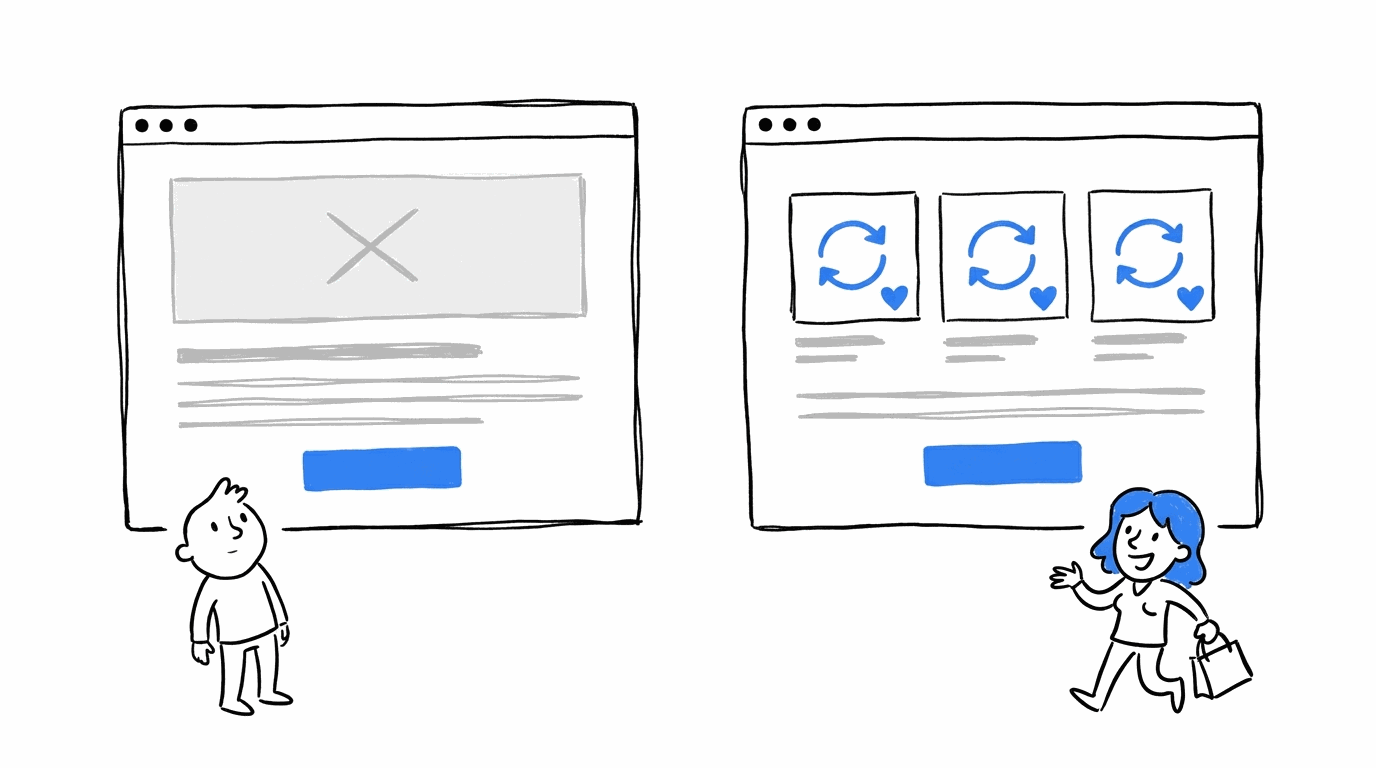
A first-time visitor needs to understand what you sell. A returning customer already knows, so a homepage built for newcomers makes them scroll to find what they came for.
Changes that fit returning visitors:
- A “Buy again” row showing their previous purchases
- A hero banner that points to the next product in a routine, such as the matching conditioner for someone who bought shampoo
- Shipping and returns reassurance swapped for loyalty or account information
Audience personalization in CROLabs adapts a page to the audience viewing it, so returning visitors can see a different hero section from first-timers while the rest of the page stays the same. You can build the rule once and keep refining the content as results come in. For a closer look at how the personalization tools work, see the personalization feature page.
6. Make Reordering a One-Click Path
A customer who wants the same item again should reach checkout in as few steps as the platform allows. Every extra page between “I need more” and “order placed” gives them time to reconsider or get distracted.
Pieces to build:
- A “Buy again” button on each past order in the account area
- Order history that lists products first, with order numbers second
- Saved address and payment details, which the strategy 1 account makes possible
- A reorder link inside replenishment emails that lands on a pre-filled cart
A pet food store is a good example. The customer’s last order was a 12kg bag of the same kibble, so the reorder link opens a cart with that bag in it and the saved address ready.
7. Ask One Question After the First Purchase
You learn a lot from a single post-purchase question, and the answer can feed your personalization rules and emails. Something like “What will you use this for?” gives you a segment to work with.
A store selling camera straps could ask “What do you shoot most?” with four answers: travel, events, wildlife and everyday. A buyer who picks wildlife gets a follow-up on lens cloths and rain covers, and an everyday buyer gets a different set. Because the buyer volunteered the answer, the later recommendations come from something they told you.
Keep the question to one, make it optional and place it on the confirmation page or in the first post-purchase email.
Give returning customers a more relevant experience
Customer preferences can help you decide which products, offers and messages to show when someone visits again. With CROLabs audience personalization, you can create different page experiences for returning visitors and test which versions lead to more conversions.
D. Returns, Rewards and the Experience Around the Product
Customers weigh the whole experience when they decide whether to come back, and that includes what happens when something goes wrong.
8. Make Returns Easy to Start
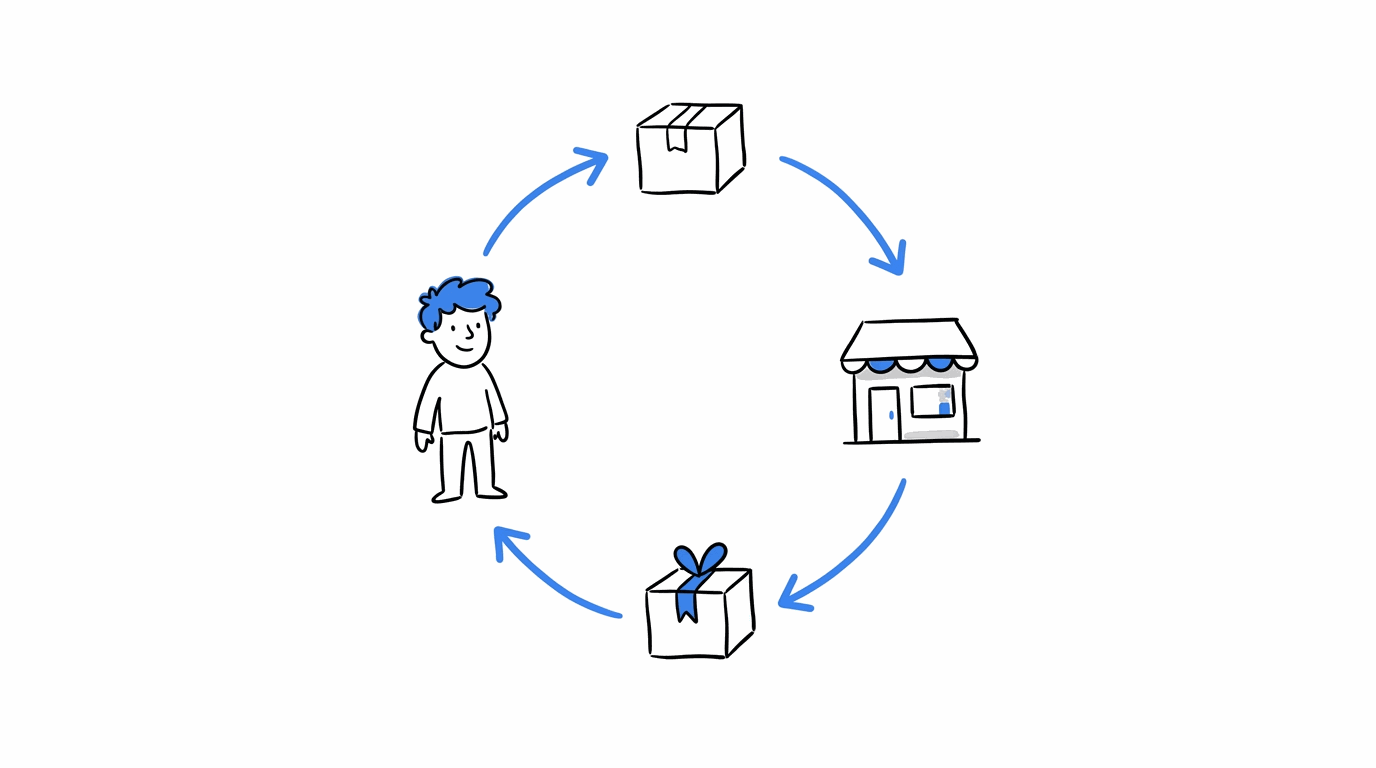
Returns feel like a cost center, but they shape the next order. In a Harris Poll survey reported by Retail Brew, 78% of respondents said they were likely to shop with a retailer again after an easy returns experience. The more recent NRF and Happy Returns report found that 82% of shoppers say free returns influence where they shop, and that 71% are less likely to buy again after a bad return.
Ways to improve the experience without changing your policy:
- Put the returns policy in plain words on the product page, since shoppers read it before buying
- Let customers start a return from their account or from a link in the order email
- Offer an exchange or store credit as the first option, which keeps the revenue in your store
- Send a message when the return is received, so the customer knows what happens next
A shop selling running shoes can handle size exchanges this way, with a “Wrong size? Swap it here” link in the shipping email.
9. Reward the Second Order Specifically
Loyalty programs that ask for ten purchases before anything happens give a first-time buyer little to aim at. Set the first reward within reach of the second order.
Some forms that work for small stores:
- Points that are enough to cover shipping on the next order
- A members-only price on the product they already bought
- Early access to restocks or new releases
- A free sample added to the second order
If you sell skincare, a free travel-size product with order two gives the customer a concrete reason to return within the window you set. The reward level is a number you can test, so run it against a higher and a lower version and compare second-order rates.
E. How to Test Which Strategies Work for Your Store
Nine strategies give you plenty to build. This last one decides which of them stay.
10. Test One Change at a Time and Measure the Second Order
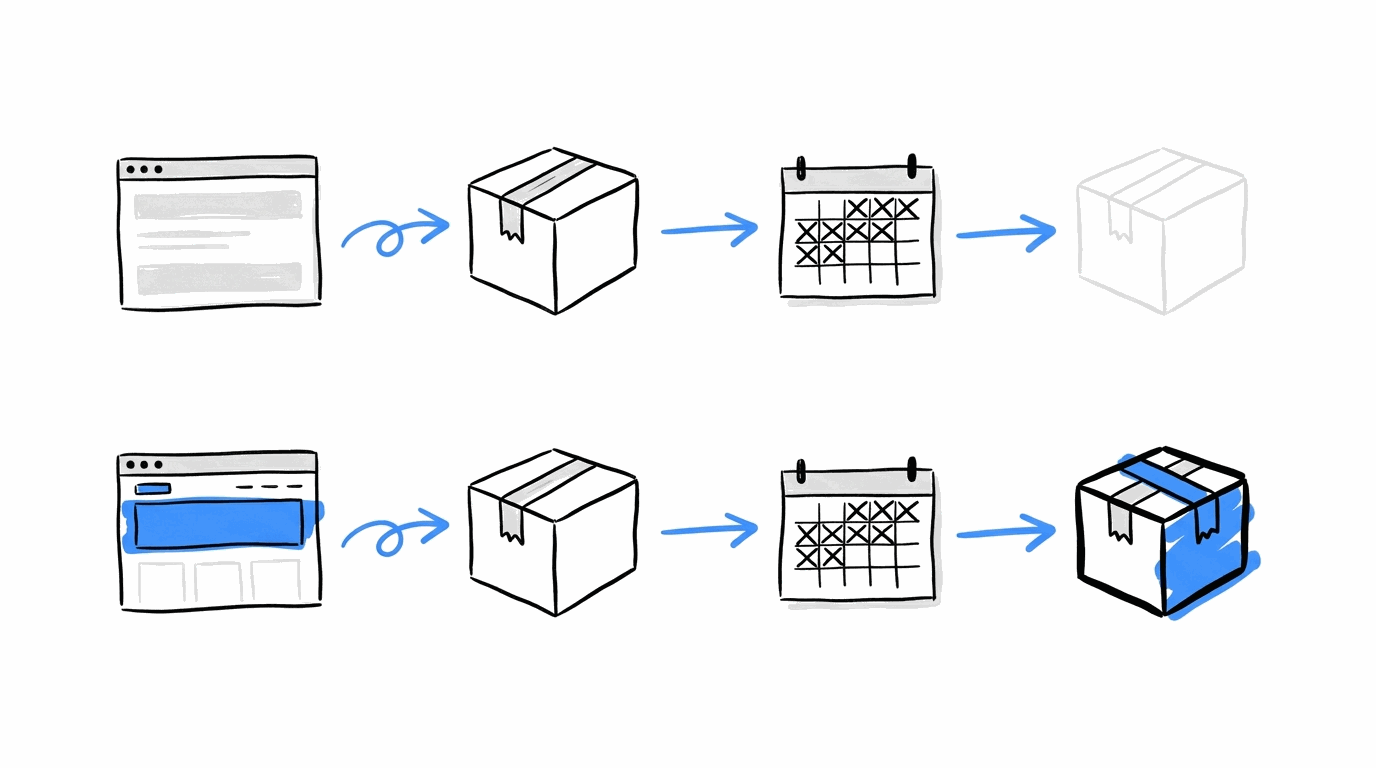
Repeat purchases arrive weeks after the change that caused them, so a test has to follow the customer past the first visit. Choose the result you want to track, such as an account sign-up for strategy 1 or a second order within 45 days for strategies 3 and 9, and run the test long enough to collect it.
Sample size also needs attention. A test that ends early can produce a result that disappears later, and our article on avoiding false positives in A/B tests covers how to handle that. If you are new to the method, what A/B testing is explains the basics, and the CRO roadmap article shows how to order your tests.
Here is how the pieces fit together in CROLabs:
| Step | CROLabs feature | What you do |
|---|---|---|
| Find what to fix first | CRO Advisor | Get a prioritized list of issues across your pages |
| Watch returning visitors | Analytics & Heatmaps | See where they click, scroll and leave |
| Run the comparison | A/B Testing | Split traffic between your current version and the new one |
| Test combinations | Multivariate Testing | Try several elements on a page together |
| Track the outcome | Conversion Tracking | Record the actions that count as a win |
If your homepage test is for a returning-visitor banner, build the variant in the visual editor, send it to the audience you defined and compare second-order rates after the window closes. Winning changes stay live, and the next test starts from the new baseline.
Conclusion
Repeat purchases build up from small decisions made after the first sale: when the account prompt appears, how soon a reminder arrives, what the homepage shows a returning visitor and how a return is handled. Each of the ten strategies above sits at one of those points, and each can be tested on its own.
A good place to begin is the confirmation page and the replenishment timing for your best-selling product, since both can be live within a week. CROLabs offers a 14-day free trial if you want to set up the first test and see how your returning visitors respond.
FAQs