Updated Aug 2026
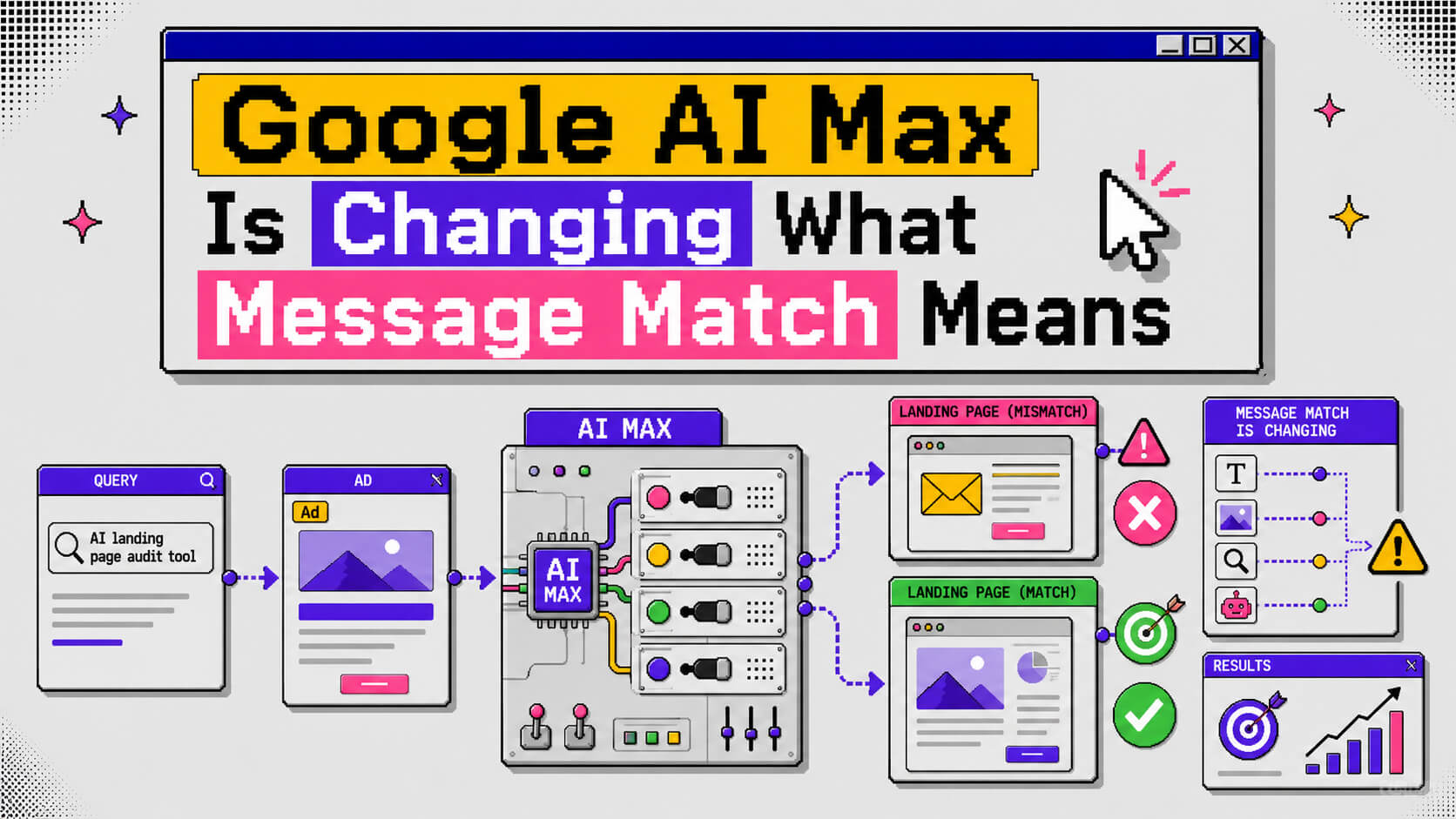
Someone on our team searched “AI landing page audit tool” a couple of weeks ago. Shockingly, the first paid result that they clicked on led to a page about email newsletter automation. It was a signup form for a product line that had absolutely nothing to do with the ad.
A mismatch like this used to be a one-off that could usually be traced back to somebody forgetting to swap a destination URL, mostly after a campaign got repurposed for a different offer. However, in 2026, it’s closer to a built-in possibility.
Google’s AI Max for Search can pick the landing page itself, write the headline itself, and decide which query gets paired with which message. Sometimes, it does this without a person reviewing the combination before it goes live. That shifts what message match actually requires from anyone spending money on paid search.
On This Page
What Message Match Really Means
If you’re newer to paid traffic, message match is the term for how closely your landing page mirrors the promise in your ad. Take for example, someone searching “affordable CRM for small teams” and clicking an ad about exactly that. If they land on a page that opens with a headline about affordable CRM software for small teams, that means the message on the ad matches the message on the page they landed on (i.e message match).
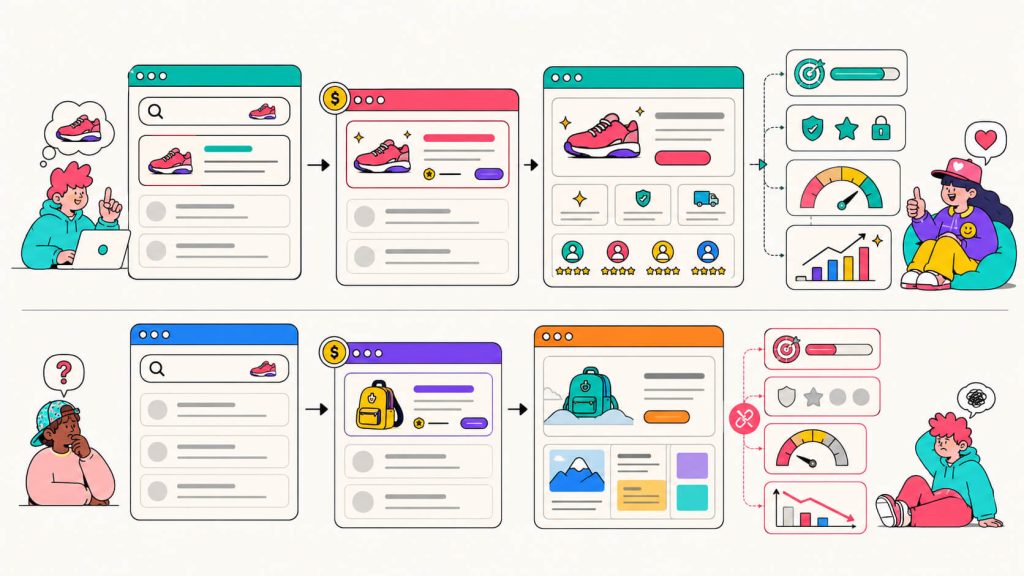
Because of this message match, the visitor puts more trust in what they see and is more likely to convert, since their brain confirms the click was worth it within a couple of seconds. If you swap that headline for something generic, like “The Platform That Grows With You”, you’re less likely to get a result as impactful.
Google directly builds message match into Quality Score. Landing page experience sits alongside expected click-through rate and ad relevance as one of the three inputs that decide your score. Quality Score is important because it shapes what you pay per click and where you rank. A weak match on one campaign spreads beyond that campaign. It teaches Google’s system that your account produces low-relevance experiences, and that reputation follows you into future auctions.
What Google AI Max For Search Actually Does
AI Max bundles two main pieces, and they are search term matching and asset optimization.
Search term matching uses broad match and keywordless technology to find queries you haven’t explicitly added as keywords. Asset optimization covers text customization and final URL expansion together.
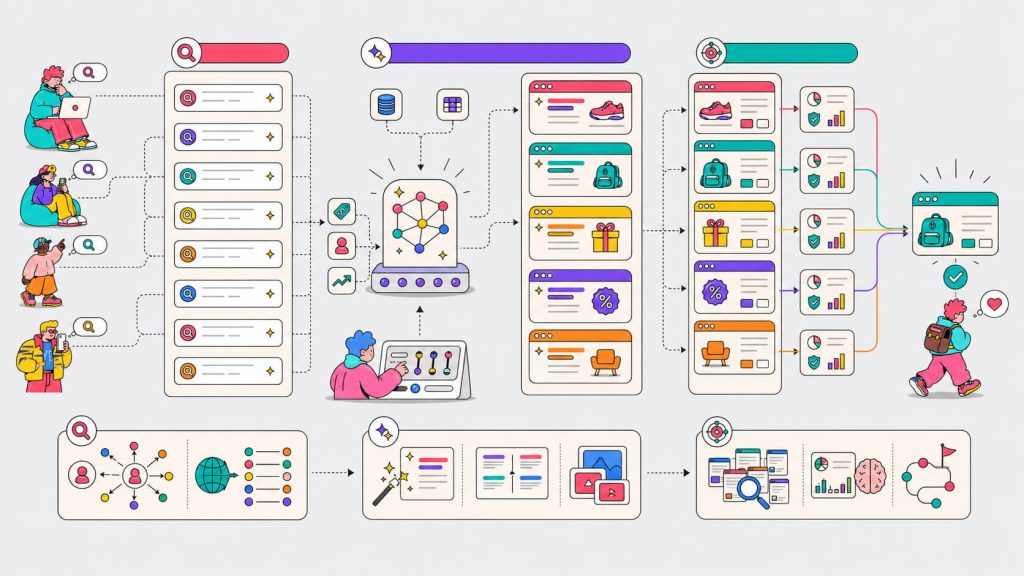
Text customization pulls from your existing ads, your landing page copy, and generative AI to build new headlines and descriptions on the fly while Final URL expansion sends visitors to whichever page on your site the system judges most relevant to their specific search, rather than the one manually set in your ad.
One thing you should note is that AI Max is not an optional add-on anymore. Google announced in April 2026 that it would phase out Dynamic Search Ads entirely and move every advertiser to AI Max instead. The migration starts in September 2026, upgrading older Dynamic Search Ads and broad-match campaigns automatically, and Google has said the older tools will be fully retired by February 2027. After that point, you won’t be able to build a new DSA campaign even if you wanted one.
Control whether your page is ready to convert.
Find out which pages on your site could be hurting conversions before AI Max sends more traffic their way.
Cancel anytime.
Why AI Max Changes The Rules Of Message Match
The old version of message match assumed one person, or at least one team, controlled both halves of the equation. You would write the ad and pick the landing page and if the two didn’t line up, that was a mistake you could trace and fix.
AI Max hands both decisions to the same system, but not necessarily to a matched output. Google’s own Ads Product Liaison has explained that the matching logic blends signals pulled from your landing pages, similar to how Dynamic Search Ads used to work. The signals are pulled with everything already sitting in your ad group, keywords and assets included.
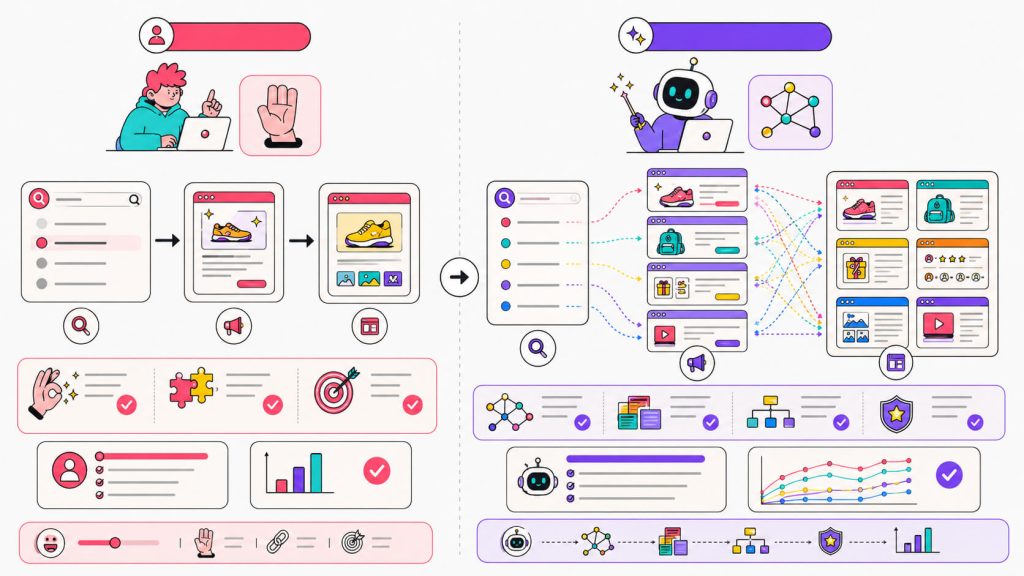
This means that your ad copy gets generated from text scraped off your site and your landing page gets picked from a pool of URLs based on what the system predicts fits a given query. Both halves come from the same source material and run through the same model, but they don’t always land on the page you’d have chosen yourself.
When final URL expansion is switched on, pinned assets in your responsive search ads stop being respected the way they normally would, unless the system decides a different page fits better.
If you sit with all this for a second, you realize that the headline you wrote specifically for a specific page can get overridden the moment Google decides your traffic belongs somewhere else on your site.
This isn’t necessarily a bad thing. To put the overall message simply, the responsibility for message match has moved. It used to sit on one ad matched to one page, now it spreads across every page on your site that could plausibly get selected as a destination.
What Final URL Expansion Means For Your Landing Pages
Final URL expansion matters most for accounts with uneven page quality, which describes most sites we’ve audited. A SaaS company might have a sharp, benefit-driven pricing page sitting next to a thin, half-finished integrations page that hasn’t been touched since launch. With AI Max, content across your entire site is evaluated to make its routing decisions, so a page you never intended for paid traffic can suddenly become one.
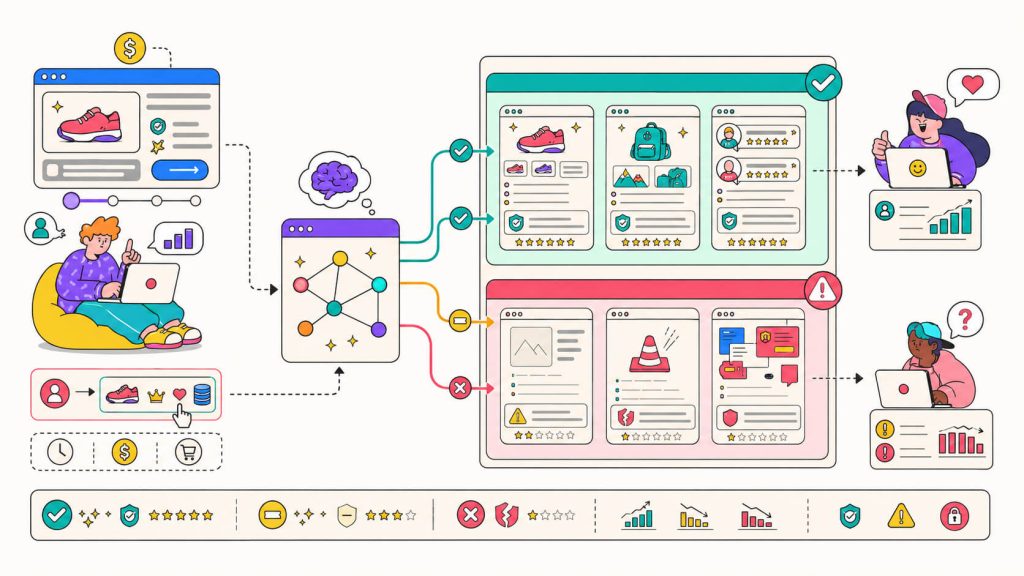
Google gives you a few levers here. One of those is URL inclusions and exclusions. URL inclusions and exclusions let you specify which pages are eligible to be selected as a landing destination and which ones stay off limits. You can also use text guidelines, which opened up to all advertisers in February 2026, to set exclusions for terms/keywords and messaging restrictions so generated copy stays inside brand boundaries. Neither one is on by default so you have to go in and switch them on yourself.
If you sell anything regulated, or if your brand voice depends on exact language, treat this step as mandatory. Strict messaging requirements, like legal disclaimers or compliance language, are one of the clearest situations where AI Max creates real risk, since final URL expansion disables the asset pinning that used to protect specific wording.
How To Protect Message Match When AI Is Choosing The Page
A few things are worth doing before AI Max picks a page for you instead of you picking one for it.
a. Audit every page that could get pulled into rotation
Don’t limit your page audits to just the ones you actively promote. If it exists on your domain and it’s crawlable, treat it like it could become a landing page tomorrow. Our guide to reducing bounce rate walks through how to spot pages already losing visitors before paid traffic makes the problem more expensive.
b. Write landing page copy that can stand on its own outside the ad that sent someone there
Remember that text customization falls under one of the two main pieces that AI Max bundles. It pulls language straight from your page so if your page’s copy is vague, that’ll produce vague ad copy downstream. Specific, benefit-led headlines give the system better raw material and give visitors a clearer signal once they land, which lines up with the clear-headline principle we’ve covered before.
c. Set your URL exclusions before you turn expansion on
Choose the URLs you’d like to be excluded as landing pages before you turn final URL expansion on. Pages like docs pages, internal tools, half-finished blog posts, and anything mid-redesign shouldn’t be eligible for cold traffic.
d. Segment what different visitors see once they land
AI Max is already sending different queries to different (mostly matched) intents, so it’s best to segment what visitors see before they land. Ad-to-page personalization can help with this, since it matches landing page content to the audience that a specific ad or query brought in. This way, the message stays tight even when Google is choosing the destination.
Pro Tip: Our roundup of landing page personalization examples shows the pattern in practice if you want to see it applied.
e. Keep testing
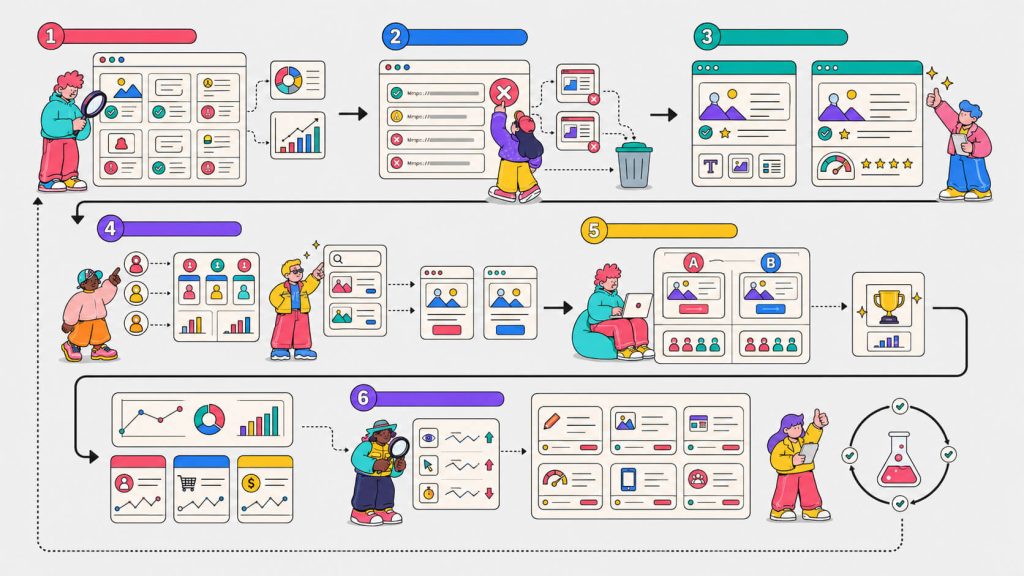
The scope of your experiments just got bigger. It now covers whether your whole page inventory holds up once Google starts choosing which pages get traffic on its own, not just whether one headline beats another on one page. A/B testing against that wider pool tells you more than testing a single funnel in isolation.
f. Watch your search terms report for the new match type label
Google surfaces the queries AI Max is matching you to separately from your existing keywords, so you can see what’s driving the expansion and catch anything off-target before it burns through budget.
Where CRO Fits Into An AI Max Search Strategy
The query and the ad copy are already decisions the system makes for you and now, the landing page is heading that direction too. That’s a lot of the front half of the funnel handed to a model working off probability instead of a person double-checking the combination.
The back half, what happens once someone actually lands, is still the one part of this whole equation you fully control. Whatever page a visitor ends up on, whether you picked it or AI Max did, the question stays the same: does it convert?
That’s the layer CRO tools sit on. If you want a clearer read on which pages in your own site are ready to absorb more paid traffic, CROLabs’ CRO Advisor crawls your site and flags what’s likely costing you conversions, before Google’s AI Max decides to send a click there on its own.
Your landing pages shouldn’t have to guess what visitors want.
Use CROLabs to identify conversion issues, uncover optimization opportunities, and see where your pages may be losing potential customers.
Cancel anytime.
FAQ
What is message match in paid search?
Message match is how closely the promise made in an ad aligns with the content visitors see after they click. Strong message match reassures visitors that they’ve landed in the right place, while a mismatch can reduce trust and conversions.
How does Google AI Max affect message match?
Google AI Max can automatically generate ad copy and choose which landing page a visitor sees based on their search query. This means advertisers have less direct control over the ad-to-page combination, so message match now depends on the quality and relevance of a broader set of pages across the site.
How can I prevent Google AI Max from sending paid traffic to the wrong landing page?
Audit the pages across your site that could be selected, then use URL exclusions to prevent unsuitable pages from receiving paid traffic. You can also use text guidelines to place restrictions on generated messaging and keep ad copy within your brand or compliance requirements.
Does CRO still matter when Google AI Max controls the landing page?
Yes. AI Max may influence which query triggers an ad and which page visitors land on, but CRO determines how effectively those visitors convert once they arrive. Optimizing and testing your pages becomes even more important when a wider range of pages can receive paid traffic through AI Max.