Updated Aug 2026
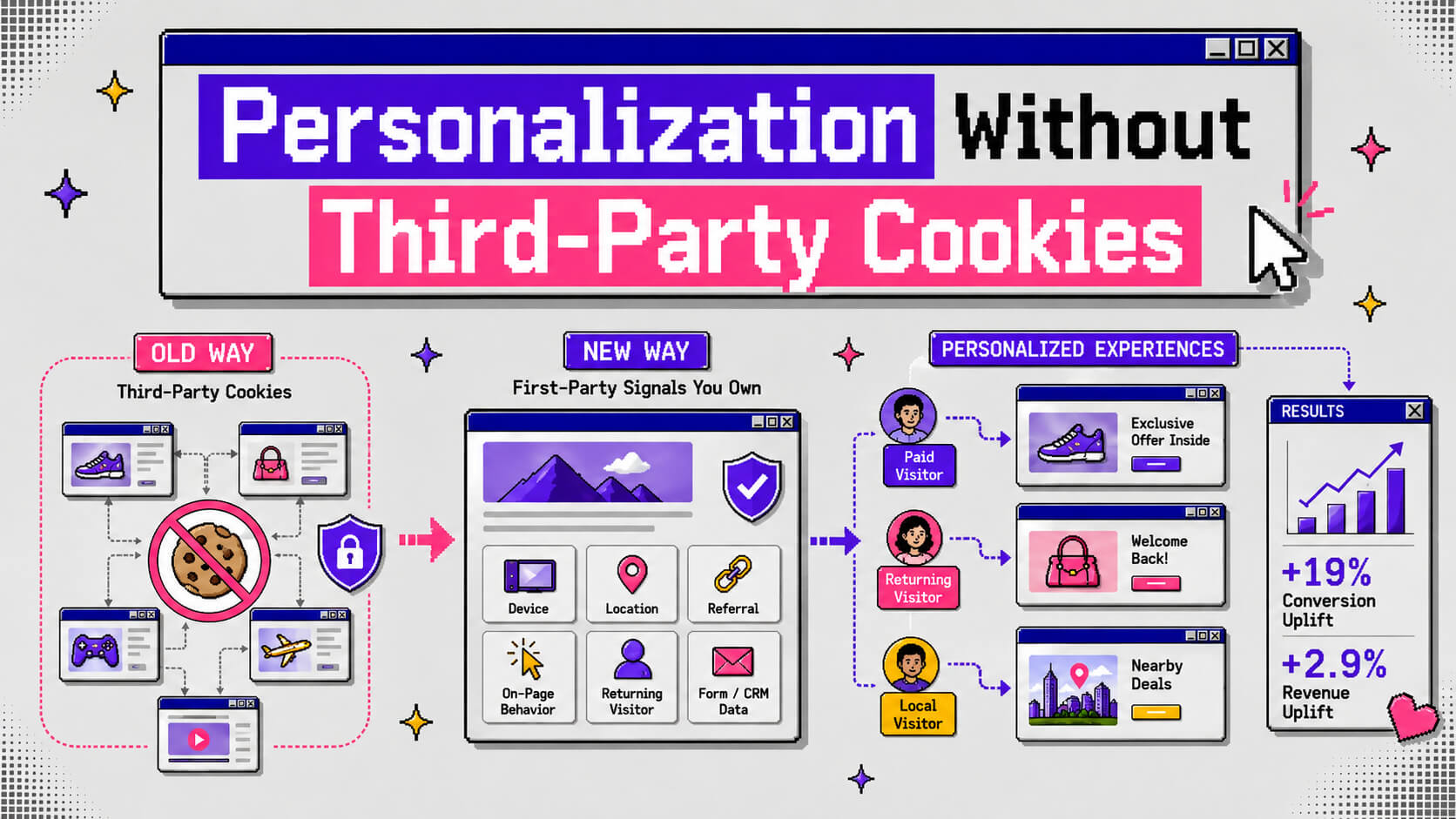
According to Monetate’s research, websites with personalized content convert at 19% on average compared to 2.9% for sites that show every visitor the same page. This means there’s 6.5 times more conversions on personalized or dynamic pages than on static pages.
This gap used to depend almost entirely on third-party cookies tracking people across the internet. But in recent times, Safari and Firefox now block those cookies by default and Chrome has shifted the decision to a privacy setting most users never touch. Google has also shut down most of the Privacy Sandbox APIs built to replace these third-party cookies.
The businesses still hitting that 19% conversion number in 2026 are doing it through cookieless personalization that is built on data they collect and own directly.
Here, we’re covering what cookieless personalization is, why it matters, and the alternatives to cookie-based personalization you can put to work immediately.
On This Page
Why Are Cookies Going Away?
Cookies are disappearing due to a handful of separate forces stacking on top of each other. Here’s what’s driving the shift.
a. Safari and Firefox already block them by default
Safari has blocked third-party cookies through Intelligent Tracking Protection since 2020, and Firefox has done the same through Enhanced Tracking Protection since 2019. Between the two, roughly half the web is already cookieless, regardless of anything Chrome decides to do.
b. Chrome’s plan collapsed into a user-choice model
Google spent four years promising to phase out third-party cookies. They delayed the plan repeatedly and then abandoned the forced deprecation entirely in July 2024. Instead of a hard cutoff, Chrome hands the decision to each user through a privacy setting. Google has also confirmed it won’t roll out a standalone prompt nudging people toward blocking cookies either.
c. The replacement technology got shut down
Privacy Sandbox, the suite of APIs that Google built specifically to replace third-party cookies, shut down most of its components in October 2025. The tool meant to soften the transition is largely gone, which leaves cookies standing on a setting that users rarely open and no real successor waiting in the wings.
d. GDPR and the ePrivacy Directive keep tightening the noose on consent
The EU’s ePrivacy Regulation was meant to replace the older 2002 Directive and harmonize cookie law across member states. However, it was formally withdrawn by the European Commission in February 2025, so the patchwork of national rules stays in place.
That didn’t stop enforcement from getting sharper though. France’s CNIL fined Google €325 million and Shein €150 million in a single day in September 2025 for cookie consent violations. In addition to that, EDPB guidance now covers fingerprinting and pixel tracking, not just cookies. None of these care whether the cookie is first-party or third-party, which means the compliance bar keeps rising regardless of what Chrome does.
e. CCPA and state-level US privacy laws close the same loophole from another angle
California’s “sale” and “share” definitions under the CCPA cover transferring personal data to a third party for cross-context advertising, whether or not money changes hands. That catches most third-party cookie use cases directly, and other states are writing similar language into their own laws.
So a large share of traffic already blocks third-party cookies. The ones that don’t can flip that switch at any moment and the regulatory cost of relying on them keeps climbing on both sides of the Atlantic.
The practical outcome for anyone building a website personalization program on a signal this fragile means building on ground you don’t control.
What Is Cookieless Personalization?
Cookieless personalization is the practice of tailoring a website’s content, offers, or layout to each visitor using data collected without third-party tracking cookies. You rely instead on first-party behavior, zero-party input, server-side records, or contextual signals like location and device.
For comparison, cookie-based personalization works by tracking a visitor across different websites through a third-party cookie, building a behavioral profile over time, and using that profile to decide what to show them. For example, a shoe brand’s site can drop a cookie, which a news site reads a week later. The visitor then sees running shoe ads next to an unrelated article.
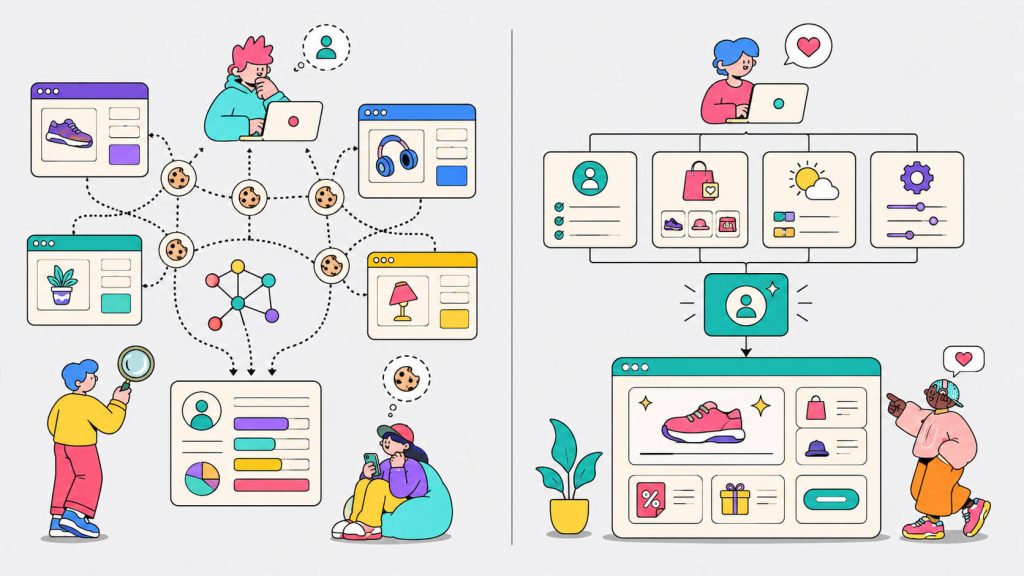
Cookieless personalization skips this cross-site tracking step entirely. It relies on data your own website collects directly, like what pages someone visits, what they click, what device and location they’re browsing from, and what they tell you outright through a form, quiz, or preference center. Server-side data like account history or purchase records is then layered in, which gives you a complete picture of the visitor without a single third-party tracker involved.
Personalize Without Third-Party Cookies
Third-party cookies are becoming less reliable, but that doesn’t mean personalization has to go away. CROLabs lets you create personalized website experiences using the visitor signals and data you already have.
Cancel anytime.
Data Collection In Cookieless Personalization
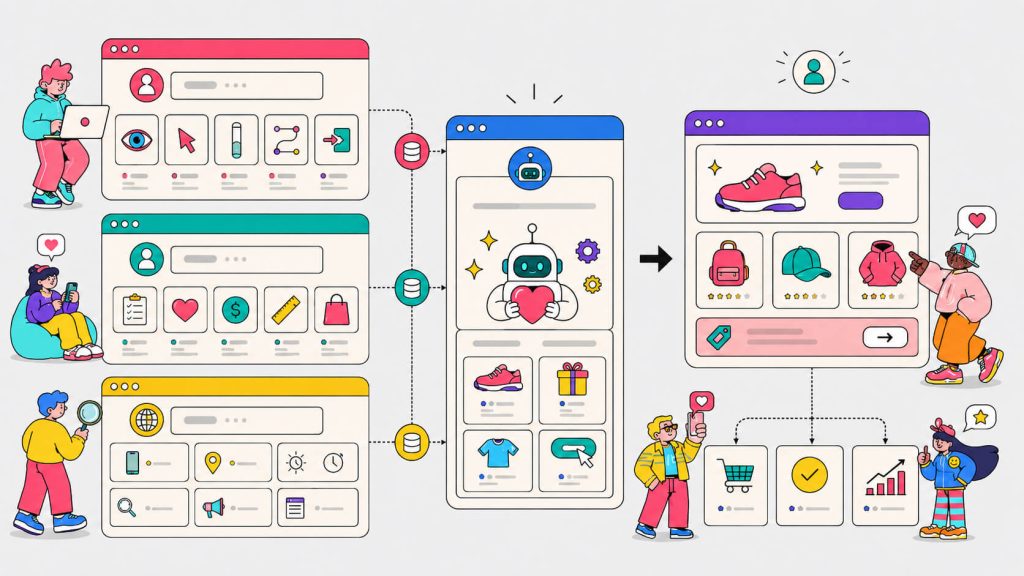
For cookieless personalization, the key data collection approaches are first-party, zero-party, and contextual data collection.
First-party data comes from normal site behavior, page views, session length, click paths, etc.
Zero-party data is what a customer volunteers on purpose, like a size preference or a budget range. Forrester Research coined the term specifically to describe that intentional sharing.
Contextual data comes from the page or the moment itself, like the search query that brought someone in, the referring campaign, or the time of day.
For a deeper breakdown of how this works in practice, our guide to website personalization walks through the mechanics in more detail.
Why Does Cookieless Personalization Matter?
Cookieless personalization isn’t just a workaround for or alternative to a shrinking tracking signal. It’s worth the investment because it solves real problems on its own.
a. It converts, with numbers to prove it
Monetate’s research found that websites with personalized content convert at 19% on average, compared to 2.9% for sites that show every visitor the same page, a gap of roughly 6.5x.
Personalized product recommendations increase conversion rates by 26% and lift average order value by 11%, and AI-driven personalization adds another 15 to 20% on top of baseline conversion rates in some studies, according to Rivo’s research roundup.
b. It stays ahead of privacy regulation instead of scrambling to catch up
Regulators don’t care so much about where the data technically comes from as much as they care about consent.
GDPR, the ePrivacy Directive, CCPA, and a growing list of state and national privacy laws apply to first-party data collection too. Building a personalization program around data you collect transparently, with a clear opt-in, puts you ahead of that requirement. We’ve covered how to stay compliant while still running effective campaigns in our post on GDPR-compliant marketing tools.
c. It doesn’t break every time a browser vendor changes a policy
Third-party cookie behavior depends on decisions made by Chrome, Safari, and Firefox, none of which you control. First-party data lives in systems you own, and it keeps working no matter what any of those browsers decide next.
d. It tends to be more accurate than inferred, cross-site data ever was
Zero-party data comes straight from the customer and first-party behavioral data comes from what someone does on your own site. These are unlike data from third-party cookies, which are most times guesses pieced together from fragments collected elsewhere.
If you want to see this in action across different industries, we’ve documented real examples of website personalization from brands doing it well right now.
Ready To Put Cookieless Personalization Into Practice?
Cancel anytime.
Alternatives To Cookie-Based Personalization
None of this requires ripping out your stack and starting over. Here’s where to put your effort.
1. Build on the first-party data you already have
Your analytics tool is already collecting behavioral signals such as pages visited, time on page, scroll depth, referral source, and device type.
Instead of simply collecting these and only ever using them for reporting, you can turn it around. If someone arrives from an ad about enterprise pricing, show them enterprise-focused messaging on your dynamic pages.
2. Match dynamic content to your ad campaigns
This is what ad-to-page personalization does. Rather than sending every visitor from every ad to one landing page, you swap the headline, hero image, or CTA depending on the campaign that brought them there.
When you implement this, you can have a visitor who clicks a holiday-sale ad seeing holiday-sale messaging, which is exactly the tailored experience personalization brings. You can also have a visitor who clicks a case study ad seeing proof points tied to that specific case study.
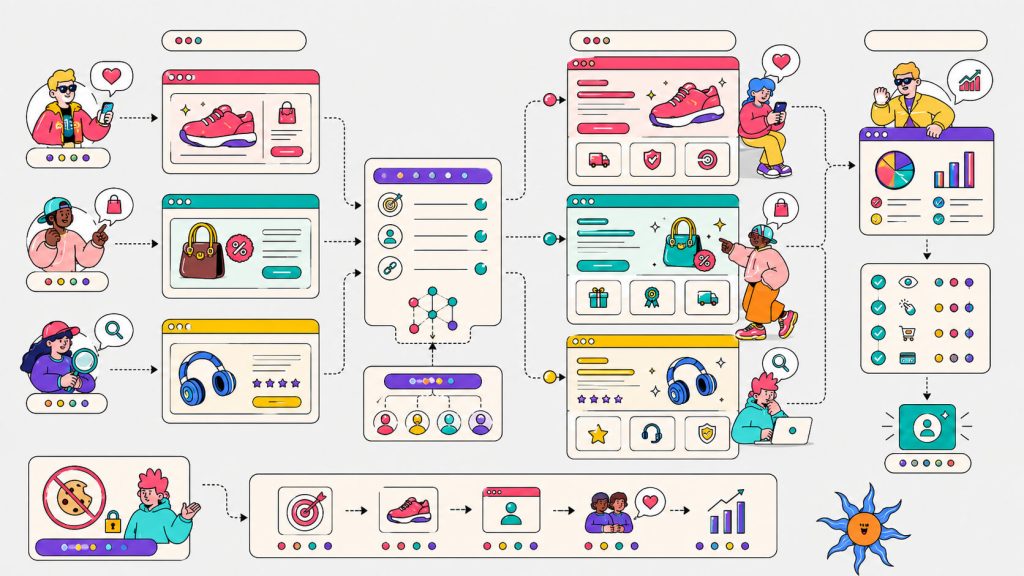
It’s a direct way to improve landing page conversion rate without a single third-party identifier involved. CROLabs’ ad-to-page personalization feature handles this matching automatically.
3. Collect zero-party data through direct questions
A quiz, a preference center, or a simple “what are you shopping for” prompt gets you data a visitor hands over willingly. It tends to be more accurate than inferred behavioral data because the customer told you directly, and it builds trust instead of eroding it. Some funnel tests even show that a short onboarding quiz can lift profile completion and email capture by 10 to 20%.
4. Use server-side and CRM data for logged-in visitors
Once someone logs in or submits a form, you have first-party data tied to a real account. Purchase history, subscription tier, and support tickets are data that already live in your CRM. Feed them into your personalization setup and you can boost landing page conversion rate for returning visitors without needing a cookie to identify them again. It’s functionally close to what cookie-based personalization used to offer.
5. Lean on contextual and geo-based signals
Contextual personalization needs to know where visitors are and what they’re doing right now. Things like location, language, time of day, device, or referring content fall under contextual data. If you have a visitor searching for winter coats in Chicago in January, they don’t need a tracked profile for your site to start showing them cold-weather copy.
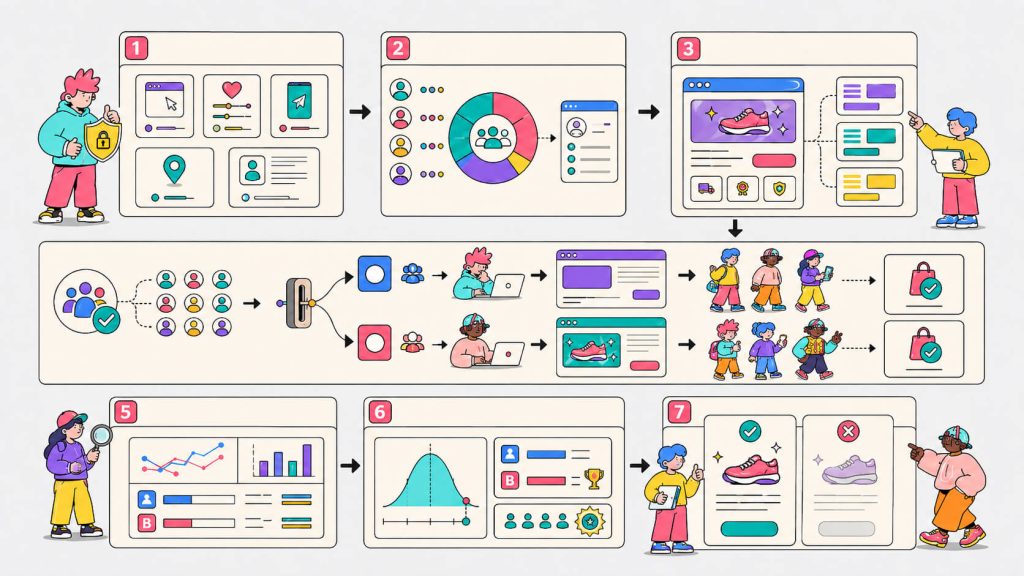
6. Test everything through experimentation
None of the above works if you guess your way through it. Cookieless personalization still needs the same rigor as any CRO program i.e run A/B tests, measure against a control, and let the results decide what stays live. Our guide on what A/B testing involves covers the fundamentals if this is new territory for your team.
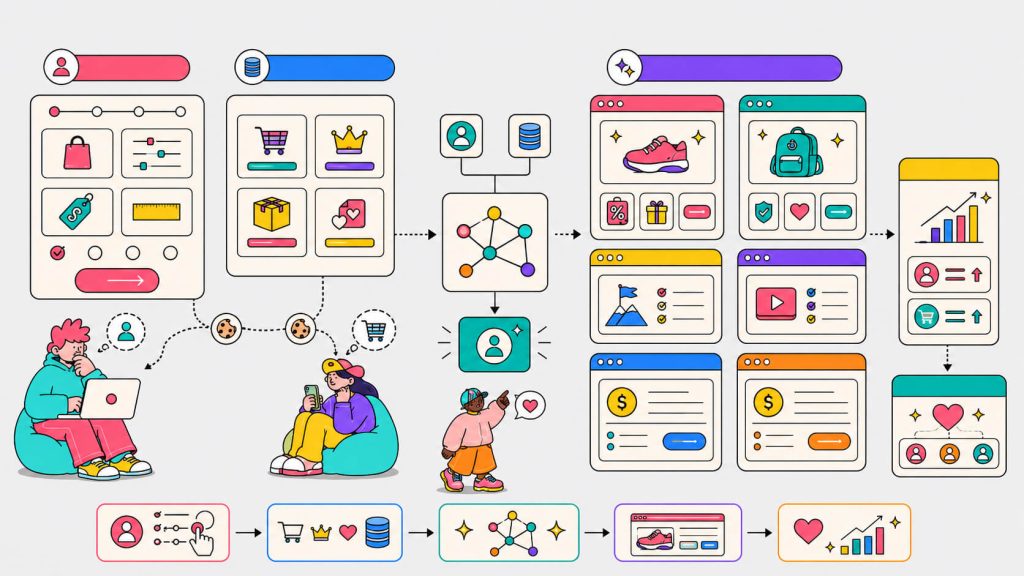
CROLabs’ Audience Personalization tool lets you build and test these variations without custom code for every segment, which speeds up how fast you can drive conversions from each experiment.
Conclusion
Website personalization isn’t optional at this point, and it doesn’t need a cookie to work. However, you must keep in mind that getting cookieless personalization right takes the same discipline as any conversion rate optimization program.
You still need to know where visitors drop off before deciding what to personalize, which is why pairing a personalization tool with a real look at bounce rate matters just as much as the personalization itself. If you’re comparing platforms, our roundup of website personalization tools built for smaller teams and our broader breakdown of website personalization strategies are both solid next steps.
But if you want some quick direction, CROLabs gives you the testing and personalization tools to run this kind of program without a developer on standby for every change. Start a free trial and see what your own visitor data can do once you put it to work.
FAQ
Is cookieless personalization as effective as cookie-based personalization?
In a lot of cases, yes, and sometimes it performs better. First-party and zero-party data tend to be more accurate than inferred cross-site behavior, since they come directly from how someone behaves on your site or what they tell you themselves. The tradeoff is a smaller dataset early on, though it grows fast once you’re collecting it consistently.
Do I need a customer data platform to run cookieless personalization?
No. A CDP helps once you’re operating at scale, but a lot of website personalization runs through your existing analytics tool, CRM, and a testing platform like CROLabs. Start with what you already have and add tooling once the data volume justifies it.
Will third-party cookies come back?
Chrome still allows them today, but Safari, Firefox, and Brave block them by default, and Google shut down most of the Privacy Sandbox APIs built to replace them. Betting a personalization strategy on cookies sticking around indefinitely isn’t a safe assumption for 2026 and beyond.
How long does it take to see results from cookieless personalization?
It depends on traffic volume, but most teams see measurable shifts in conversion rate within a few weeks of launching their first experiments. Sometimes sooner, if they’re already running A/B tests and can plug personalization directly into that workflow.
Does cookieless personalization work for websites with lower traffic?
Yes, though the tactics shift a bit. Contextual and zero-party data personalization work well even at low traffic volumes because they don’t require a large behavioral dataset to function. Behavioral personalization built on pattern recognition across thousands of sessions takes longer to pay off for smaller sites. example) rather than a narrow one that might only see a handful of visitors a week.
What tools do I actually need to get started?
At minimum: an analytics tool to see where visitors drop off, and a personalization or CRO platform that lets you build and target variants without a developer. CROLabs combines both, along with A/B testing and conversion tracking, in one platform.