Updated Oct 2026
Evenflo is a company that sells car seats and strollers. One time, a director at its parent company told Modern Retail that the options look the same in product thumbnails. To help shoppers sort through them, Evenflo built a quiz that asks about a family’s situation before recommending anything. According to that 2022 report, 85% of the people who start the quiz finish it, and it takes a little over three minutes.
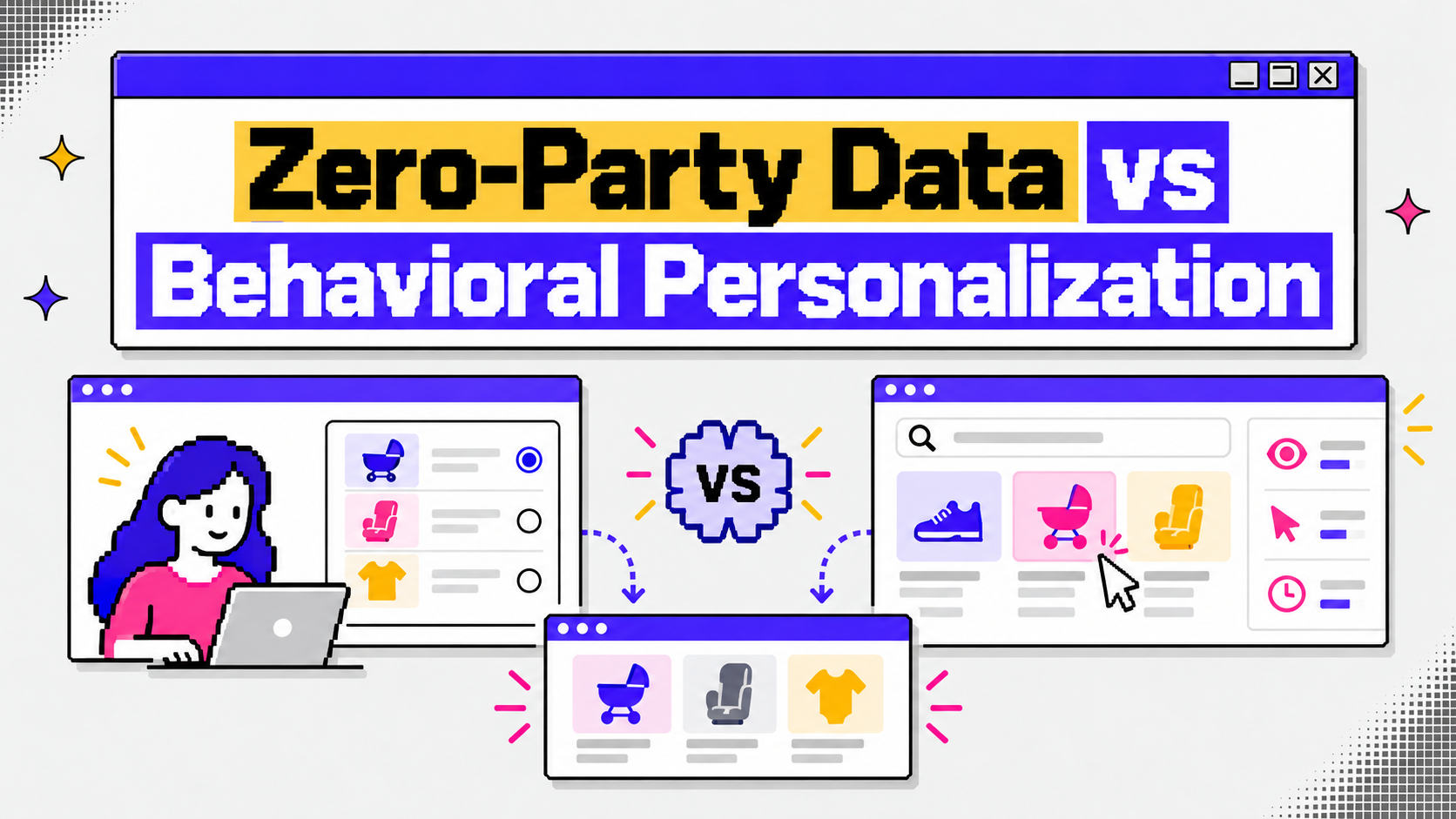
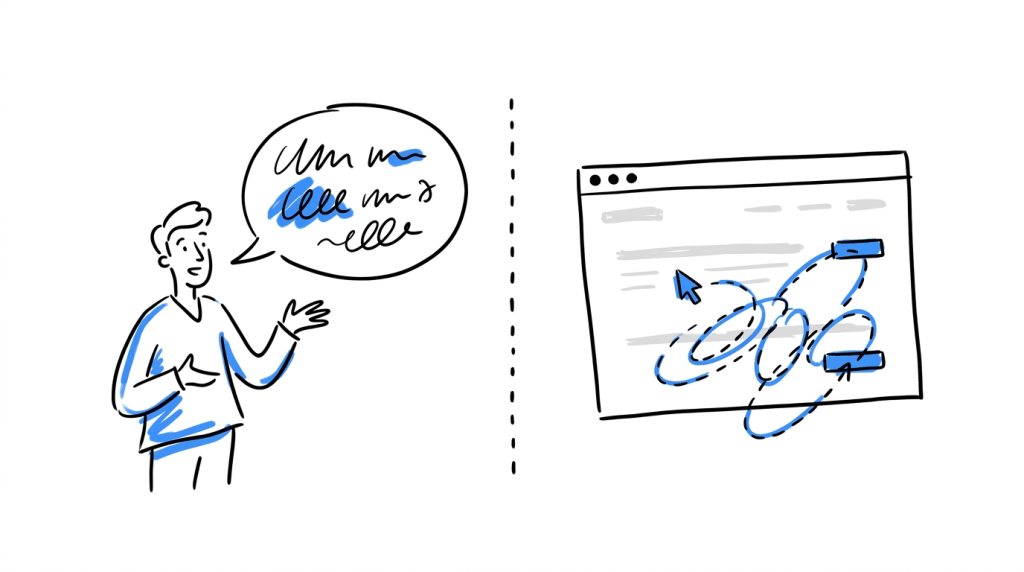
A completion rate like that says something about how willing visitors are to describe their needs when the form gives them something useful back. A site learns about the same visitor in a second way, by recording what that person clicks and how long each page holds their attention. The first method produces zero-party data and the second produces the signals behind behavioral personalization, and a CRO team has to decide how much weight each one gets on a given page.
This article covers what each signal tells you, what published tests report for each, and what research says about visitor attitudes toward both. It closes with a testing plan, since the final answer for your site comes from your own traffic.
On This Page
What Zero-Party Data and Behavioral Personalization Mean
Forrester Research coined the term zero-party data and defines it as information a customer intentionally and proactively shares with a brand, according to Salesforce’s overview. Behavioral personalization starts from observation. The site records activity such as pages opened, products added to the cart, scroll depth and the campaign that brought the visitor in, and then adjusts what that person sees next. Salesforce files that observed activity under first-party data.
| Behavioral personalization | Zero-party data | |
|---|---|---|
| The brand’s position | “We think we know what you want.” | “You told us what you want.” |
| Where the signal comes from | Activity on the site and in the visitor’s history with the brand | Answers the visitor chooses to give |
| When it becomes available | After the visitor generates activity | The moment the visitor answers |
| Traffic history needed | Yes | No |
| Main weak spot | Shows what a visitor did and leaves the reason unknown | Describes one day and needs a reason for the visitor to answer |
Common Ways Sites Collect Zero-Party Data
- Quizzes: short question sequences that end in a recommendation.
- Preference centers: pages where subscribers choose which topics they hear about and how often.
- Onboarding questions: one or two prompts at signup, such as role or goal.
- Product finders: filters that narrow a catalog using the shopper’s stated needs.
- Explicit use-case selection: a button or card where the visitor states what they plan to do with the product.
Common Behavioral Signals
- Browsing patterns: the categories and products a visitor returns to.
- Engagement on a page: time spent and scroll depth on a section.
- Cart and purchase history: what the visitor added, bought or left behind.
- Traffic source and device: the referrer, campaign and screen type attached to the visit.
What Published Tests Show About Zero-Party Data
The examples below come from a stroller brand, a beauty brand and a software company. Each result was reported by the company or by a vendor that worked with it.
Evenflo: A Quiz for Products That Look Identical
Evenflo’s director of consumer demand generation said the quiz grew out of a need to help shoppers who face near-identical options online. Modern Retail reported that the brand also treats the quiz as a response to iOS14 privacy changes and the expected loss of third-party cookies, since answers arrive directly from the shopper. Quiz takers show a 38% higher overall conversion rate than other visitors, according to the same report.
We would not read that 38% as the effect of the quiz alone. People who choose to take a quiz arrive with more motivation than people who do not, so the figure blends the quiz with the shoppers who opted in. The testing section below shows how to separate the two.
florence by mills: Finding Out Who the Product Is For
The beauty brand florence by mills found that parents bought many of its products for younger relatives, so the buyer and the person who would use the product were different people. After adding a product recommendation quiz built with Octane AI, the brand reported a doubled site conversion rate, 23,000 new email subscribers, and a quiz that accounted for 16% of all store sales in one month. Those figures come from the vendor’s case study.
Guru: Asking for a Use Case at Signup
Guru, a company wiki product, put a use-case question on its signup flow as an optional field. Too few new users filled it in, so the team inferred use case from job role, which users did provide, and tested role-based onboarding messages on its three most-selected roles. Because the sample was small, Guru sent 80% of each role group the personalized flow and 20% the generic one. Candu’s write-up reports a 71% lift in activation and a 51% lift in conversion, and it notes that Guru planned to make the use-case field required.
What Published Tests Show About Behavioral Personalization
LC Waikiki: Recommendations Built From Browsing Activity
LC Waikiki, one of Europe’s largest retailers, was unhappy with recommendation engines that returned generic suggestions. It switched to Insider’s machine-learning recommender, which reads user behavior, and used built-in A/B/n testing to compare the results with a control group. The retailer reported an 11.31% uplift in conversion rate, according to Insider’s case study.
Fashion Bunker: A Flat Result That Held a Segment Win
Fashion Bunker tested three messaging variations for personalized recommendation slots on its product pages. The overall results across all traffic showed no clear winner. Analyzing individual segments then showed that first-time visitors converted at a statistically significant higher rate, which the retailer described as making that group 16% more likely to buy. Retail TouchPoints covered the test in 2019.
The Say-Do Gap: When Answers and Clicks Disagree
Let’s say a running shoe store asks visitors which terrain they run on. A visitor answers trail, and then spends four minutes reading about road shoes. Both records are accurate, and they point in different directions.
One treatment honors the answer for the whole session, while another follows the clicks and keeps the answer as background. Splitting traffic between them shows which treatment visitors reward with more purchases, and visitors whose answers and activity disagree make a useful group to study on their own.
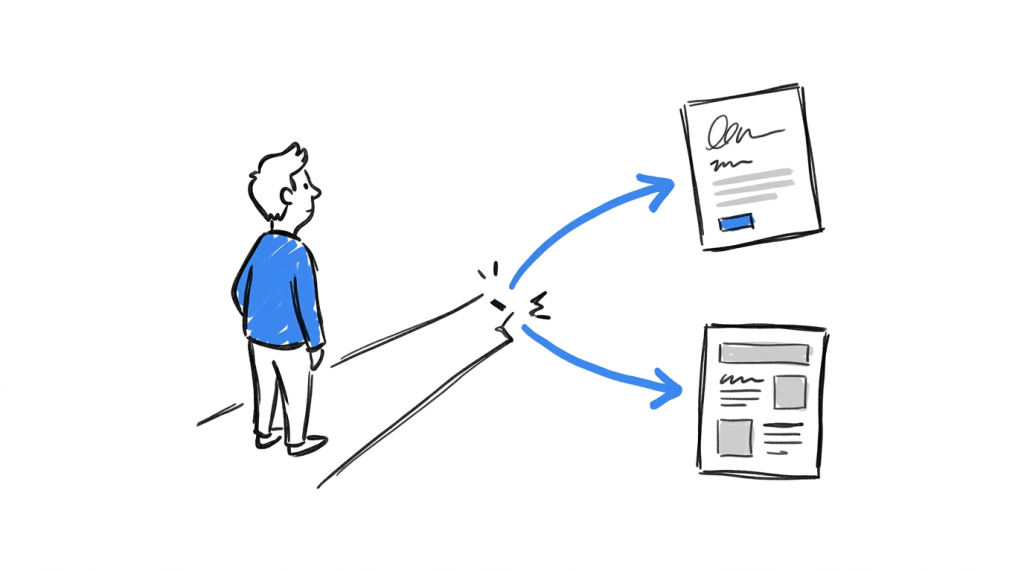
Gift buying produces the same conflict on a larger scale. A parent browsing a beauty site generates activity that describes the parent, and florence by mills found that many of its buyers were parents shopping for someone else. A quiz gave the brand a way to hear about the recipient from the buyer.
Visitor attitudes show a similar split. In Clutch’s January 2026 survey of more than 400 U.S. consumers, 62% found ads that follow them “creepy,” and 43% said they would share more data in exchange for incentives. The sample is small, at just over 400 respondents.
Which Produces Better Personalization Decisions?
The better signal depends on the decision the page is making. The table matches six common decisions to the signal that the published examples support.
| Decision the page makes | Stronger signal | Supporting example |
| Which product to recommend among near-identical options | Zero-party data | Evenflo’s stroller and car seat quiz |
| Who the product is for when buyer and user differ | Zero-party data | florence by mills |
| Which onboarding path a new B2B user receives | Zero-party data, or job role when the field is skipped | Guru |
| Which items to show a visitor with a purchase or browsing history | Behavioral signals | LC Waikiki |
| How to message first-time visitors | Behavioral signals, tested by segment | Fashion Bunker |
| What to show an anonymous visitor on the first page view | Referrer and device, or one short question | Not yet tested in the examples above |
Lead with zero-party data when:
- A catalog has many options that look alike to a first-time visitor.
- The buyer and the user are different people.
- One product serves several distinct use cases, each needing its own onboarding.
- The site has little traffic history for behavioral rules to draw on.
Lead with behavioral signals when:
- Visitors return frequently enough to build a history.
- The page has no natural spot for a question, as with an article or a checkout step.
- An optional field has gone mostly unanswered, as happened with Guru’s use-case question.
- Traffic is high enough to compare several variants and read segments.
Using Both Together
Guru used both. Its first phase relied on behavior: a user who had already created cards received an in-app message, and a user who had graded cards began receiving emails about integrations. Its second phase layered signup data on top by tailoring messages to the job role. Answers supply a starting point on day one, and activity adjusts the experience on each visit after that, since an answer describes the visitor on the day it was typed.
Turn Visitor Signals Into Better Experiences
You don’t have to choose between asking visitors what they want and learning from what they do. CROLabs lets you test both approaches, personalize experiences for different audiences, and see which changes actually improve conversions.
The Price of a Question: What Visitors Expect Back
Visitors who answer a question expect something in return, and the exchange has to be visible. Forrester analyst Stephanie Liu told Modern Retail that the value exchange needs to be obvious to the shopper, and she named loyalty points and exclusive offers as ways to supply it. Consultant Carly Sutherland suggested that brands ask whether shoppers will enjoy taking part and whether they get something back for the minutes they give.
Clutch’s survey puts numbers beside that advice. Email was the information 65% of respondents felt comfortable sharing, and 43% would share more for incentives.
Four design choices follow from that:
- Ask only what changes the page. A question whose answer alters nothing the next visitor sees can be removed.
- State the benefit before the first question. A line such as “Answer four questions to see the right car seat” gives the visitor a reason to begin.
- Place the question where the visitor is already choosing. A category page with dozens of near-identical products fits better than a homepage.
- Return the result on the same screen. Evenflo’s quiz ends in a product recommendation, which pays the visitor back immediately.
How to Test Both Approaches
Because the title question is empirical, a test on your own site gives the answer that matters. The plan below runs in order, starting with the cheapest comparison.
Test the Question First
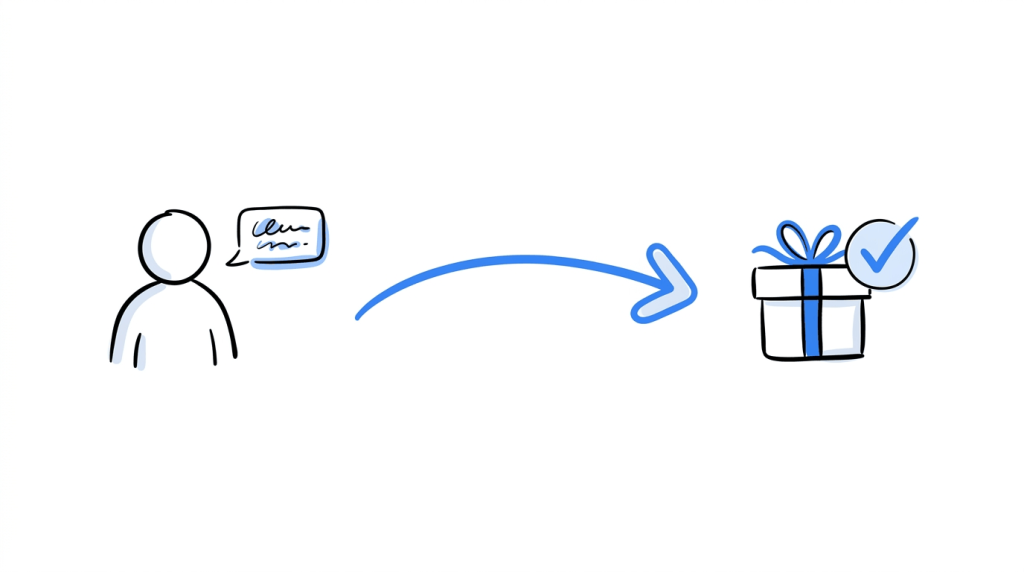
Randomize visitors before the question appears. One group sees the current page and the other sees the page with the question block, and both groups count in full whether or not anyone answers. Measuring only the people who answer blends the effect of the question with the motivation of the people who chose to respond, which is the issue with Evenflo’s 38% figure.
Track these metrics for each group:
- Question start rate
- Completion rate
- Conversion rate per visitor who entered the test
- Revenue per visitor or average order value
- Activation rate, for software products
Test the Personalization Logic
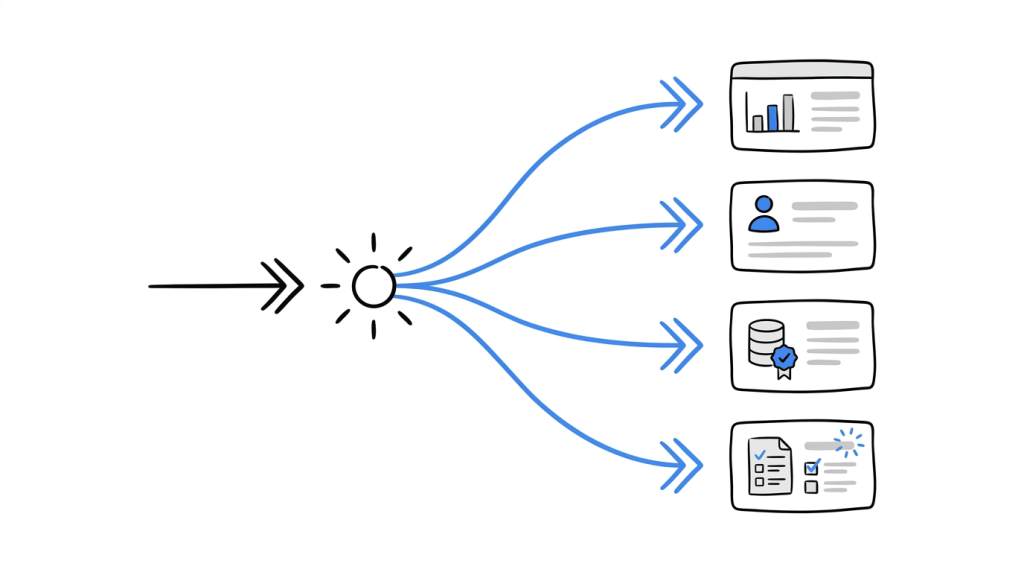
Once answers or activity start choosing content, the groups that qualify for each experience stop being equivalent. Researchers at ASOS describe the problem in a paper on online experiments for personalised strategies. Visitors qualify for a strategy through their own behavior, which breaks the assumption of statistically equivalent groups, and pre-allocating visitors to control and exposed groups before they qualify restores that equivalence at the cost of test power. The practical version for most sites assigns every visitor to a test arm on arrival and then applies the personalization rule inside the arm.
Compare the Signals Head to Head
| Arm | What the visitor sees | Signal used |
| Control | The default page | None |
| Behavioral | Content chosen by browsing activity, referrer or device | Observed |
| Zero-party | Content chosen by quiz or onboarding answers | Stated |
| Combined | Answers as the starting point, with activity adjusting from there | Both |
Four arms split traffic four ways, so each arm needs enough visitors to reach the sample size you set before launch. A smaller site can run two comparisons in sequence. The first pits the control against the zero-party arm, and the second pits the winner against the behavioral arm.
Keep a Small Holdout
A global holdout sets aside a small share of traffic as a persistent control that sees none of the personalization. Optimizely’s documentation on global holdouts describes the idea and sets the share at up to 5%. The holdout reports what the whole program adds across every test, which individual test wins cannot show when they overlap.
Plan Segment Reads Before Launch
Fashion Bunker’s overall test showed no winner, and the first-time visitor segment still showed a statistically significant gain. Choose the segments before launch, such as first-time and returning visitors, device type and referrer. A segment win found after the fact belongs in a follow-up test before anyone treats it as a result.
Where CROLabs Fits
The Visual Editor builds the question block and each variant without a developer. A/B Testing splits the traffic and measures each arm, and Audience Personalization targets variants by audience, such as referrer or device. Conversion Tracking reports completion and revenue per visitor. The AI Advisor flags the pages where visitors leave, which helps pick the first page to test. For background on the testing method itself, see CROLabs’ guide to what A/B testing is.
Privacy and Consent for Both Signals
Both approaches handle personal data, so the same ground rules apply. The Complaion GDPR guide summarizes two that matter here. Purpose limitation means data collected for one purpose cannot be reused for an incompatible one, so an email gathered for an order confirmation needs further consent before it joins a promotional newsletter. Data minimization means collecting only what the stated purpose requires.
For a quiz, that means telling the visitor on the quiz screen how the answers will be used and asking only the questions the recommendation needs. For behavioral tracking, the same guide notes that a cookie banner must let visitors accept or reject before non-technical cookies run, and that Italy’s data protection authority said in 2021 that scrolling does not count as consent. Rules differ by country and by use, so a legal review of the final program is worth scheduling. CROLabs also covers the topic in its post on GDPR-compliant marketing tools.
Conclusion
Zero-party data answers questions about intent and context, such as who a product is for and what a new user wants to do first. Behavioral signals answer questions about interest and timing, such as which items a returning visitor keeps viewing. The decision table above matches each type of question to a signal, and the test plan checks that match on your own traffic.
For a first experiment, we would pick one page where visitors face many similar options, add a single question with a visible payoff, randomize before the question appears and keep a small holdout. A second test can then add behavioral rules on top and show whether the combined arm beats either signal alone.
Know What’s Working Before You Scale
Personalization shouldn’t be based on assumptions. CROLabs helps you test different experiences, understand how visitors respond, and identify the changes worth keeping.
FAQs
What is the difference between zero-party data and first-party data?
Salesforce draws the line at how the data arrives. First-party data is observed customer behavior such as website clicks, and zero-party data is what the customer states about preferences and intentions. Both belong to the brand and come directly from its own channels.
Is zero-party data more accurate than behavioral data?
Accuracy depends on the decision. A quiz answer states intent and context in the visitor’s own words and stays fixed until the visitor changes it. Behavioral records update with every visit and say nothing about why the visitor acted.
How many questions should a quiz or onboarding flow ask?
Evenflo’s quiz takes a little over three minutes, and 85% of starters finish it. Guru planned to remove a templates section from signup so that a required use-case question would not make the flow feel long. Begin with the fewest questions that change the recommendation, and add one at a time while watching the completion rate.
Can a small site use behavioral personalization?
Behavioral rules need visitors who generate activity, and a site with low traffic has few records to work from. Referrer and device arrive with the first page view, so those two signals work from the start, and a single question can supply intent.
Does zero-party data fall under GDPR?
Yes, when the answers identify a person directly or indirectly. The Complaion guide explains that the regulation covers such information and requires a legal basis, such as consent or a contract, along with a privacy notice before collection begins.
How long should a personalization test run?
It runs until it reaches the sample size set before launch. Stopping when a chart first looks favorable raises the chance of a false win. CROLabs’ own guidance on A/B tests, in its website personalization examples post, advises letting a test run long enough to reach significance before calling a winner.
Can both signals run on the same page?
Yes. Guru combined activity-based message timing with role-based content, and the four-arm test above includes a combined arm for the same reason. Test the combination against each signal alone to confirm it earns the added setup.