Updated Sep 2026
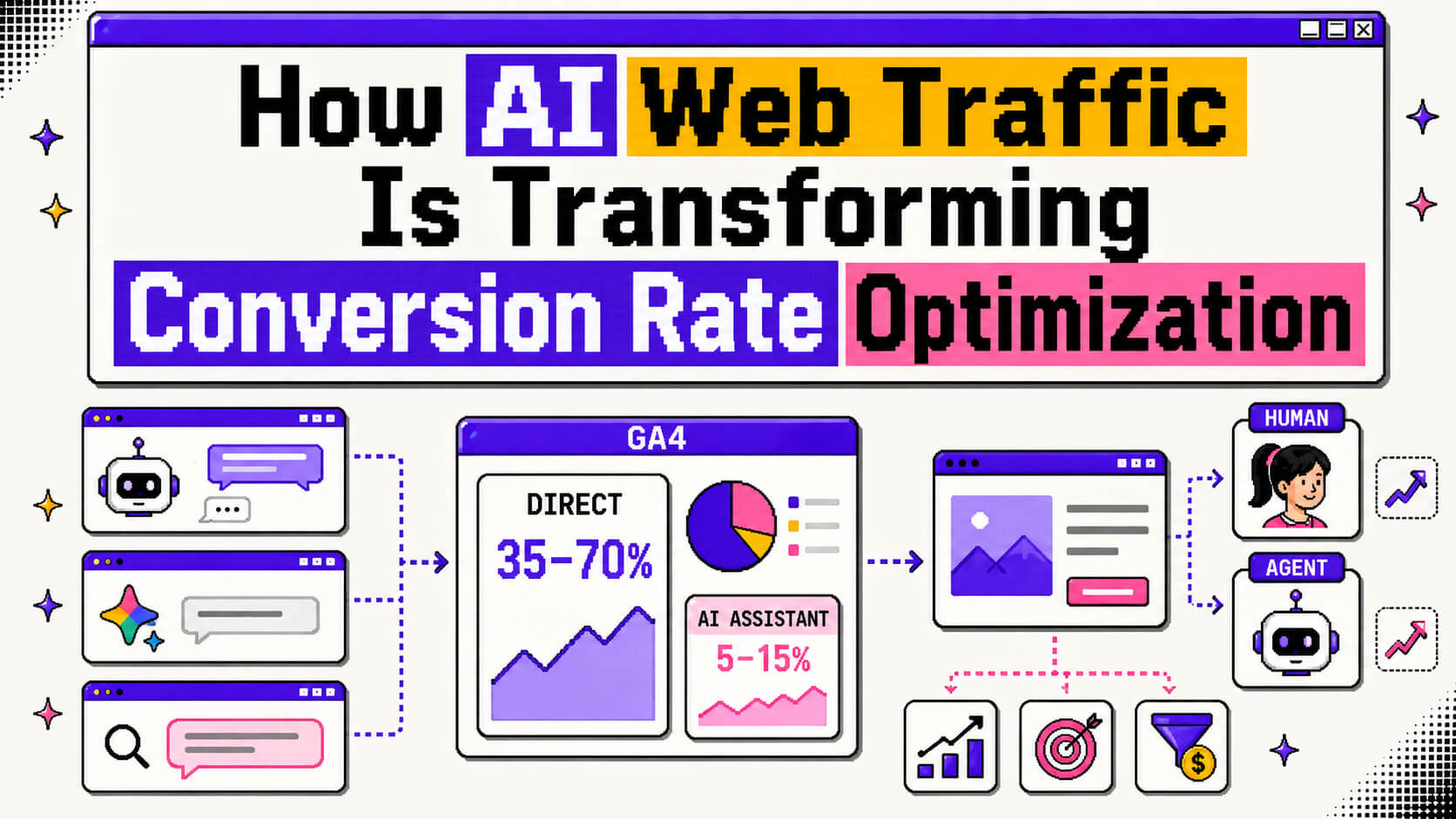
In your Google Analytics 4 (GA4) report, a session marked as “direct” probably wasn’t initiated by someone manually entering your URL from memory. It may have originated from ChatGPT.
Most AI chat interfaces don’t include a referrer string, unlike Google search results. So even though Google introduced an automatic “AI Assistant” channel in GA4, between 35% and 70% of AI-referred visits won’t be recorded in this channel. Instead, it’ll likely be attributed to “direct”.
AI is not just altering the ways people reach your site, it’s also changing their expectations upon arrival, and in an increasing number of instances, whether the “visitor” is actually a human.
If you’re responsible for conversion rate optimization or simply aiming to get more value from your existing traffic, here’s what’s really driving results and how to act on it.
On This Page
What Counts as AI Web Traffic
AI web traffic is often used loosely, so it’s helpful to distinguish what’s truly happening beneath it.
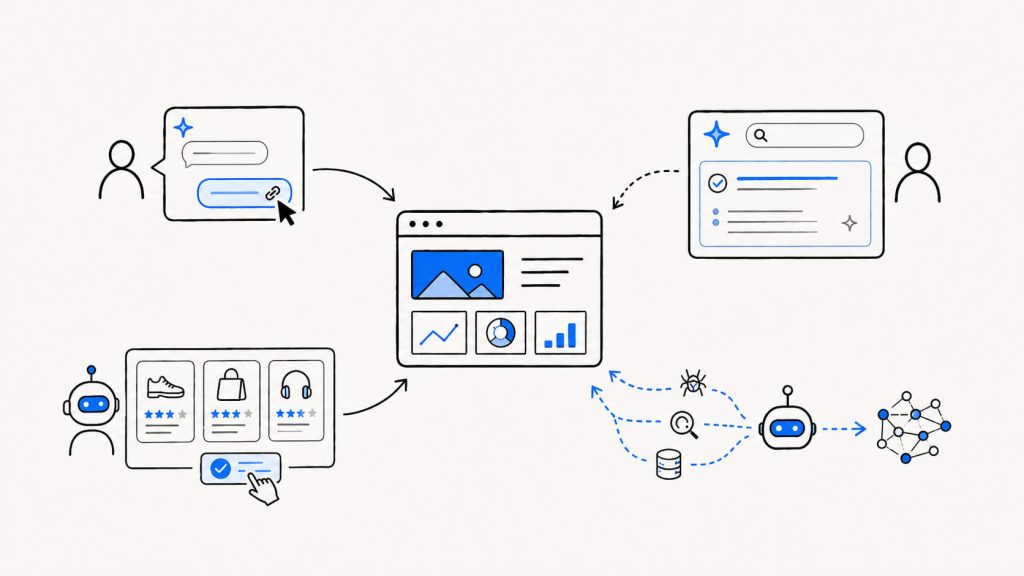
- AI referral traffic: This is when someone asks ChatGPT, Gemini, Perplexity, or Claude a question. They then get a recommendation and click through to your site.
- Zero-click AI search: Google’s AI Overviews and AI Mode answer the question directly in the results page, meaning the person never visits anyone’s website at all (yours included).
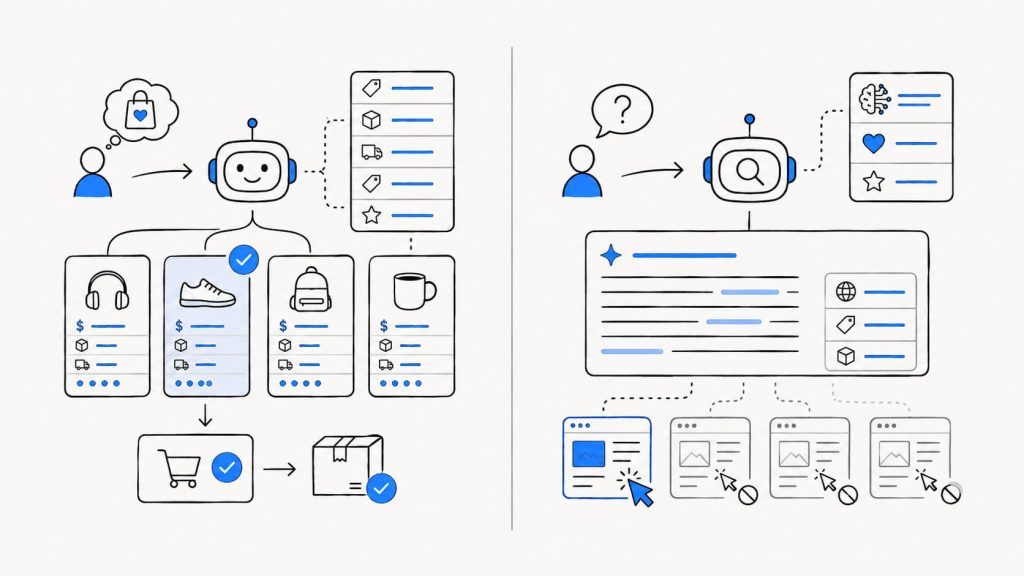
- Agentic commerce: An AI agent researches, compares, and sometimes purchases on a person’s behalf. It does this by reading your product data instead of your homepage.
- AI crawler traffic: Bots from OpenAI, Anthropic, Google, and others read your pages to train models or answer live queries, often without any human visitor attached to the session at all.
What We Know About AI Traffic And How It’s Transforming CRO
Every type of AI traffic that we listed above is changing a different part of conversion rate optimization.
Let’s look at what we know so far about AI traffic and how it’s changing CRO.
a. The Traffic Is Tiny, and It’s Growing Faster Than Nearly Everything Else
AI referral traffic still makes up a sliver of total web traffic. Contentsquare’s 2026 benchmark data puts it at roughly 0.2% of visits across the sites it tracks, even after growing 632% year over year.
SE Ranking’s analysis of over 100,000 domains found the same pattern from a different angle: AI-driven traffic to websites rose 16x between 2024 and 2026, and it’s still a rounding error next to organic search for most industries. IT and software sites are the exception, with AI referrals already running closer to 2.8% of total visits, according to Demand Local’s industry breakdown.
Now, these small numbers may make it easy to shrug AI traffic off (and a lot of teams have), but keep reading to understand why that’s a mistake.
b. AI Visitors Convert Differently Than Everyone Else
As you’ll see below, volume isn’t the interesting part of this story, quality is.
Adobe Analytics tracked over a trillion visits to US retail sites and found that by March 2026, traffic referred by AI assistants was converting 42% better than every other channel combined, a full reversal from a year earlier, when that same traffic converted 38% worse. AI-referred shoppers were also spending 48% more time on-site, viewing 13% more pages, and generating 37% more revenue per visit than everyone else. That swing happened in twelve months.
The same pattern shows up outside retail. Data cited by Cognizo found ChatGPT-referred ecommerce traffic converting 31% higher than non-branded organic search, and one retailer saw AI-driven sales grow 20x even though AI referrals made up roughly one in fifty visits.
There’s a reasonable explanation for this. Someone who asks an AI assistant a shopping question has usually already done the comparison, the reading, and the narrowing down before they ever click a link.
To sum it up, the AI-referred visit to your site is closer to a final step than a first impression, which is a very different visitor than someone who typed a vague search term and is still deciding what they even want.
c. The Attribution Gap Nobody’s Fixed Yet
As we mentioned before, a lot of that high-converting AI traffic never gets counted as AI traffic in the first place.
Demand Local’s research found that visible AI referral traffic (the kind your analytics tool can actually label correctly) converts at around 1.66% for sign-ups, compared to 0.15% for standard organic search. But “dark” AI traffic (sessions that started with an AI assistant and got stripped of their referrer along the way) converted at over 10%. That traffic gets logged as direct or organic, leaving your reporting to quietly credit the wrong channel for some of your best-converting visitors.
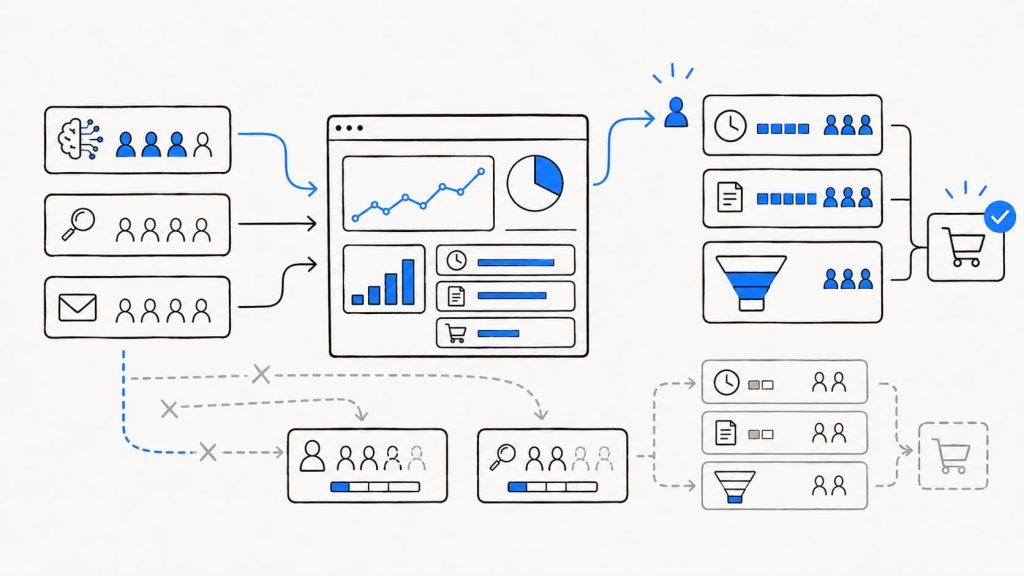
This means that if you’re running experiments or building personalization rules off a dataset that’s already misclassifying a chunk of your highest-intent traffic, the results you’re optimizing toward aren’t fully accurate.
Before adjusting anything else in your CRO program, you should audit how many of your “direct” sessions actually behave like people arriving mid-decision rather than people who already knew exactly where they were going. CROLabs’ analytics and heatmap tools can help separate that pattern out from genuine direct traffic once you know to look for it.
AI traffic may be hiding in your “direct” traffic
If you don’t know where visitors are coming from, it’s difficult to know what’s actually affecting your conversion rate. Use CROLabs to identify where visitors are dropping off and uncover the pages that deserve closer attention.
Cancel anytime.
d. Personalization Finally Has Data It Can Trust
When people discuss AI and CRO, personalization is often the first example that comes to mind. Even though it’s a reasonable one, it doesn’t capture everything.
Personalized pages already convert dramatically better than static ones. Sites showing every visitor the same page convert at around 2.9% on average, compared to roughly 19% for sites that personalize what visitors see, a gap we’ve covered in more detail here.
What’s changed recently isn’t the case for personalization, rather it’s what personalization can be built on. Third-party cookies, which are (or used to be) the backbone of most personalization engines, are quietly falling apart.
Safari and Firefox already block them by default while Chrome leaves the choice to a privacy setting that few users ever adjust. Google also shut down most of the Privacy Sandbox tools that were supposed to replace them. That leaves first-party behavior, zero-party input (what someone tells you directly through a quiz or preference center), and contextual signals like location or referring campaign as the real foundation going forward.
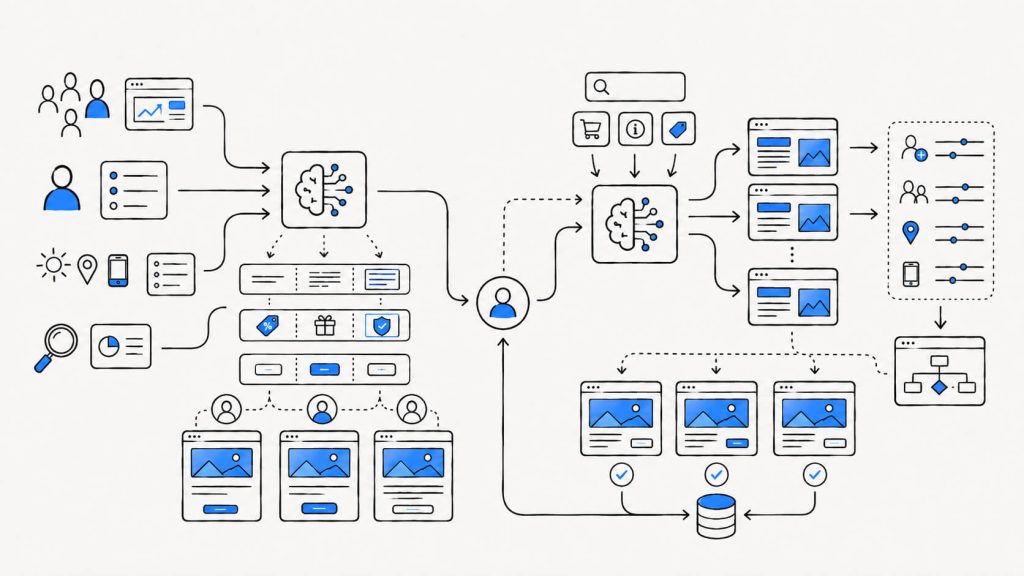
Now, processing all these (i.e a visitor’s on-site behavior, the campaign that brought them in, and their device and location in real time) then deciding what headline or offer to show isn’t something a rules-based segmentation system can do fast enough to matter. But AI is what makes this foundation usable at scale.
AI has made privacy-respecting personalization fast enough to run on every visit instead of a handful of predefined segments. Ad-to-page personalization, where the page content adapts to match the specific ad or campaign someone clicked, is one of the more direct ways this shows up in practice.
e. Paid Search Handed More of the Decision to AI Too
Personalization isn’t the only place AI has taken over a job a human used to do manually. Google’s AI Max for Search now writes ad copy and picks which landing page a visitor sees, sometimes without anyone reviewing the pairing before it goes live.
We wrote about the mechanics of this in more detail, but the short version is this: your message match used to depend on one ad matched to one page you chose. Now it depends on the quality of every page across your site that AI Max could plausibly route traffic to.
That’s a bigger surface to get right than most CRO teams are used to auditing. A sharp pricing page next to a half-finished integrations page used to be a minor inconsistency. Under AI Max, either one could become the destination for paid traffic tomorrow, whether it was built for that job or not.
f. A Growing Slice of Web Visitors Are Now AI Agents
Some traffic skips your landing page’s design entirely, no matter how well it converts humans.
AI shopping agents can now research, compare, and in some cases purchase products directly, pulling data from your site’s structured markup and backend systems instead of scrolling through your homepage.
Most of this is powered by three protocols, and they are OpenAI and Stripe’s Agentic Commerce Protocol (ACP), Google’s Universal Commerce Protocol (UCP), and Anthropic’s Model Context Protocol (MCP). McKinsey estimates AI agents could influence $3 to $5 trillion in global retail commerce by 2030.
In our piece on agentic commerce, we deeply explored what this means for CRO specifically, including what an agent actually reads on your page versus what a human sees. The summary of it is that a beautifully designed page can lose a sale to a competitor with messier design and cleaner structured data. That’s because the system comparing them never rendered either page visually, instead it read the markup underneath both.
g. Search Results Are Answering Questions Before Anyone Clicks
Google’s AI Overviews now appear on close to half of all searches and cut organic click-through rates by roughly 61%, according to data compiled by Stacc. Google’s AI Mode takes it further. About 75% of AI Mode sessions end without the person visiting an external site at all.
However, brands that do get cited inside an AI answer see about 35% more organic clicks than uncited competitors, which means getting mentioned inside the answer is starting to matter as much as ranking for the click that follows it.
If a growing share of the buying decision happens inside an AI answer before anyone reaches your site, then the funnel doesn’t start at the landing page anymore. It starts wherever the AI model formed its opinion of you.
How To Adapt Your CRO Strategy
So what do you actually do about AI’s (increasing) influence on your conversion rate? You simply widen your existing CRO program or strategy.
A few places to start are:
a. Fix your AI traffic attribution first
Before testing anything, find out how much of your “direct” and “organic” traffic is actually AI-referred. That’s the dataset every other decision downstream depends on.
For now, you can only uncover a rough estimate of what this data actually is, but that’s better than nothing. You can get this estimate by analyzing the behavioral patterns of your website visitors.
If you have visitors that move like they know exactly what they came for, chances are they’re an AI-referred visitor.
b. Treat AI-referred sessions as their own segment
Don’t place AI traffic as a subset of organic. AI-referred visitors arrive with different intent and behave differently once they land, so folding them into a generic bucket hides the signal you’d actually want to act on.
c. Audit your structured data across the whole site
Since AI systems (like AI Max) analyze every page on your website to get the one that matches a query the most, don’t focus your auditing on only the pages you actively promote.
AI Max, shopping agents, and AI Overviews all read markup before they read design, and Adobe found that around a third of retailer homepage content is currently invisible to AI models entirely.
d. Widen your testing scope
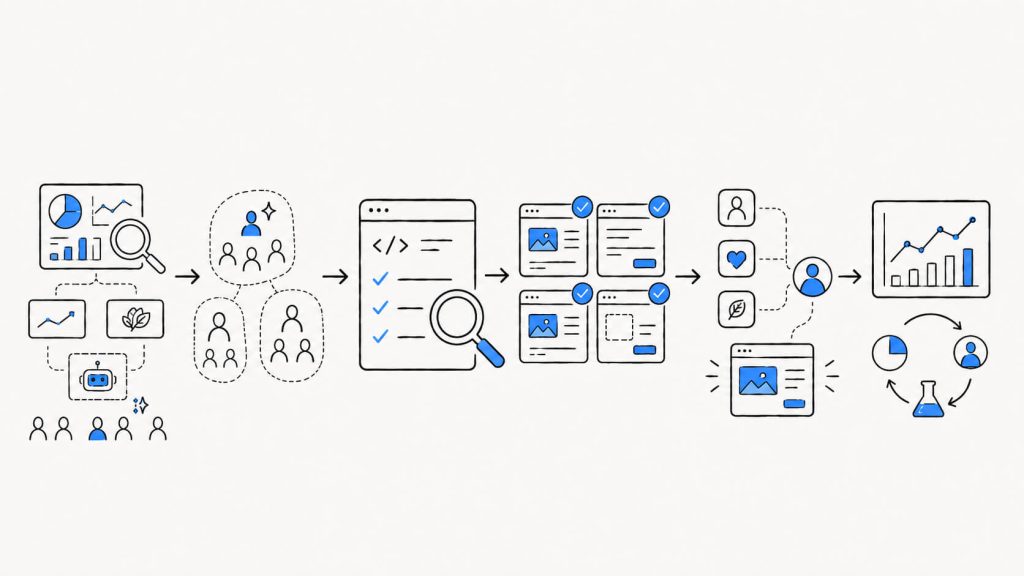
Again, AI systems are routing traffic to pages you didn’t originally build for that purpose. For that reason, A/B testing needs to cover more of your site than the handful of pages that used to get all the attention.
if you’re not sure where to expand first, check out our list of testing ideas to get a decent starting point.
Not sure what to test first?
AI traffic is changing where CRO teams need to look, but you don’t have to audit every page manually. CROLabs helps you identify conversion issues and prioritize opportunities worth testing.
Cancel anytime.
e. Move personalization off third-party cookies now
Don’t wait until Chrome finally forces the issue. Our guide to website personalization strategies walks through the first-party and contextual approaches that hold up regardless of what any browser vendor decides next.
Where This Leaves CRO
Conversion rate optimization used to mean getting a human to a page and giving them a reason to act. Now, there’s an added layer of agentic AI to this.
However, someone still has to trust an AI’s recommendation enough to click it or delegate a purchase to it in the first place, and headlines, trust signals, and page design still shape that trust.
Getting a clearer read on which of your pages are ready for either kind of visitor doesn’t require guessing. Tools like CROLabs’ CRO Advisor exist specifically to flag what’s costing you conversions before you have to find out the hard way, whether the visitor reading your page has a pulse or not.
FAQs
What is AI referral traffic?
AI referral traffic is any visit that starts with a person asking an AI assistant like ChatGPT, Gemini, Perplexity, or Claude a question and clicking through to a site the assistant recommended. It’s separate from AI Overviews (which often keep people on Google’s results page) and from AI crawler traffic (bots reading pages without a human attached).
Does AI traffic actually convert better than other channels?
In the data available so far, yes, and by a wide margin in some industries. Adobe found AI-referred retail traffic converting 42% better than non-AI channels as of March 2026. The likely reason is that people arrive already having done much of their comparison shopping inside the AI conversation itself.
Why does my analytics tool show AI traffic as “direct”?
Most AI chat interfaces don’t pass a standard referrer header the way a search engine does, so analytics platforms like GA4 often can’t trace the session back to its source. That traffic gets grouped with genuine direct visits unless you specifically dig into landing page and behavior patterns to separate it out.
Should I change my personalization strategy because of AI traffic?
Mostly, yes, though for a broader reason than AI traffic alone. Third-party cookies are already unreliable regardless of what’s sending you traffic, so shifting to first-party, zero-party, and contextual personalization matters either way. AI just makes running that kind of personalization fast enough to work at scale.