Updated Sep 2026
Sometimes, we view conversion rate optimization as a checklist with three or more items. It’s seen as just changing the button color or adding a testimonial or shortening the form. Doing these things occasionally helps, but skipping the part that decides whether they’re worth doing at all is where a lot of CRO programs quietly stall.
That part is the real work and it’s more of a diagnosis. All you have to do is find the specific thing(s) breaking trust or clarity for your visitors, test whether fixing it moves a number, and repeat until the obvious problems run out.
What breaks this loop is rarely a bad test idea. More often, it’s the process around the test, like a personalization effort built on a guess instead of data or a dashboard reporting a story that isn’t true.
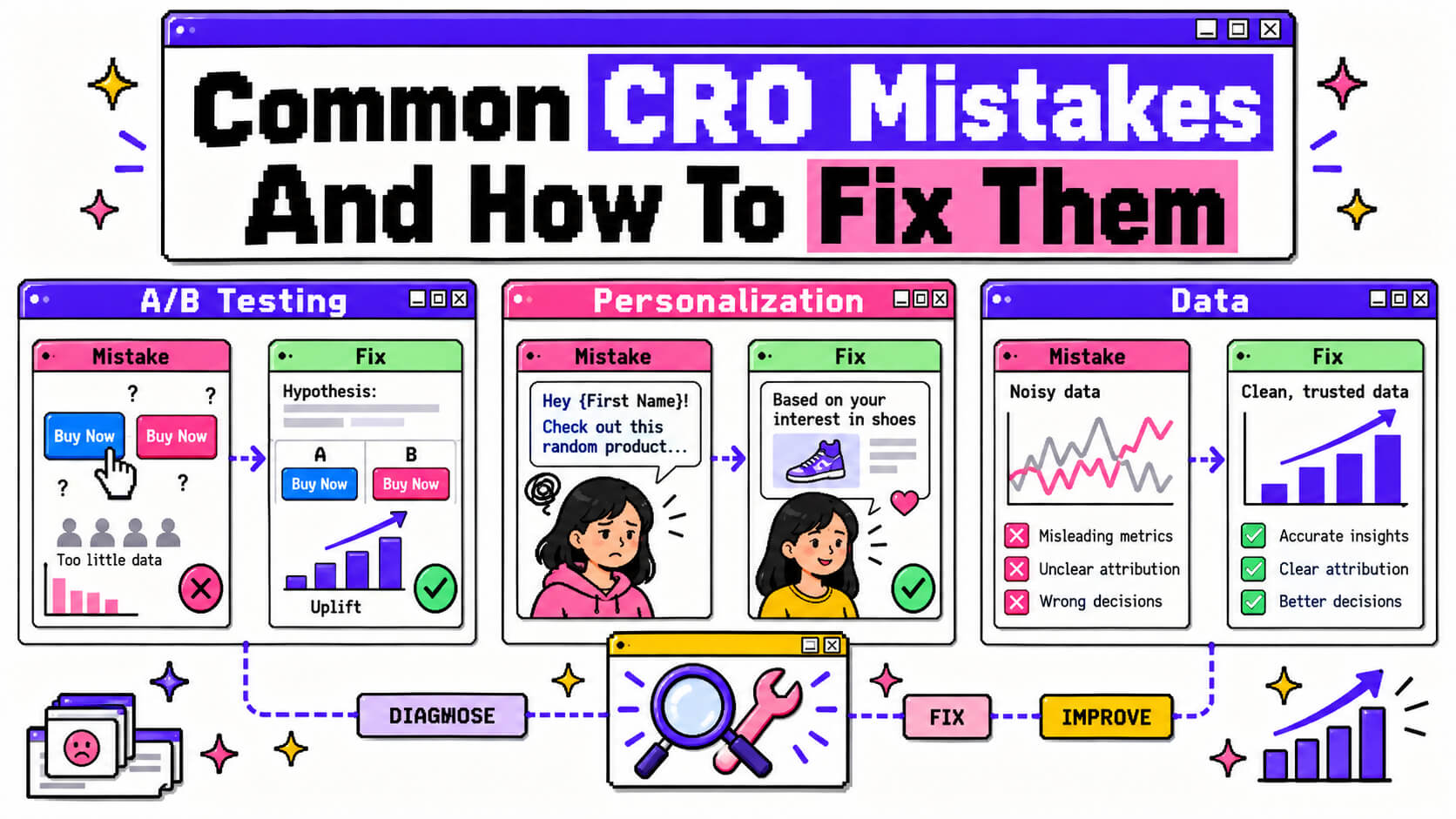
Below is where these mistakes tend to show up. We grouped them by the part of CRO they belong to. In this article, the categories are A/B testing, personalization, and the data holding both together.
On This Page
Common CRO Mistakes And How To Fix Them
| Category | Mistake | Quick Fix |
| A/B Testing | Ending tests before they reach significance | Set sample size and duration before launch, then leave it alone |
| A/B Testing | Testing without a hypothesis | Base tests on your own behavior data, not a “best practices” list |
| A/B Testing | Cramming too many changes into one test | Isolate the variable, or run a proper multivariate test |
| Personalization | Personalizing off assumptions instead of behavior | Build rules from what visitors do, not who you assume they are |
| Personalization | Treating every visitor like the same segment | Move toward per-visitor rules as traffic allows |
| Personalization | Letting ads promise one thing, pages deliver another | Mirror ad language in the landing page headline |
| Data & Analytics | Judging everything by one blended conversion rate | Track the funnel step by step, segmented by device and source |
| Data & Analytics | Not checking where traffic actually originates | Audit for AI and dark traffic before trusting channel reports |
| Data & Analytics | Testing before auditing anything | Run a structured audit first, then build your test roadmap |
A/B Testing Mistakes
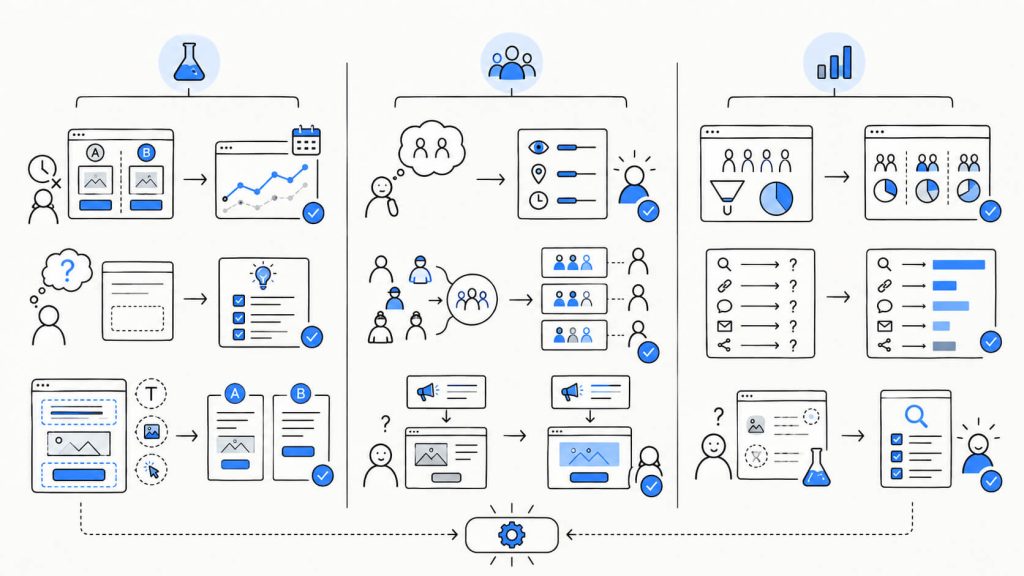
Testing is the backbone of most CRO programs and it’s also where the most expensive mistakes hide. It’s easy to miss these mistakes because a broken test doesn’t look broken, it just looks like a normal test result.
1. Ending A/B Tests Before They Reach Significance
This is the most common way testing programs generate false wins. Sometimes, a variant pulls ahead within the first day or two and the dashboard shows a strong lead. This moves someone to hit stop and ship the winner.
However, the math doesn’t support that decision. Heap ran into this on its own homepage. A headline variant looked like a clear winner a few hours in and the team picked it, only to later find out that the test had kept running on part of their traffic by accident. A few thousand visitors later, the two headlines were statistically identical.
In Heap’s own breakdown of the problem, checking a test repeatedly and stopping the moment it looks significant pushes the expected 5% false positive rate up past 60%.
Fix: Decide your sample size or test duration before you launch, based on your traffic and current conversion rate, not on how the results look halfway through. CROLabs’ guide to how A/B testing works covers how to set that number before you start.
2. Running Tests Without A Data-Backed Hypothesis
Most of the test ideas online include a list of the common and trusted experiments you can start with, like move the CTA, change the button color, or add urgency copy above the form.
Truly these tactics work, but copying a tactic that worked on someone else’s website skips the step where you check whether that same friction exists on yours. Different audiences bounce for different reasons, and a headline test that lifted conversions for one SaaS company or ecommerce brand can do nothing for another.
Fix: Build the hypothesis from your own site’s behavior data first. You can get these behavioral data from heatmaps, session recordings, and drop-off points in your funnel. You can access these features using CRO tools like CROLabs.
You can also check out this list of A/B testing ideas and a breakdown of different types of CRO tests. They’re useful starting points and you can treat them as a menu to check against your own data rather than a checklist to run in order.
3. Cramming Too Many Changes Into One Test
Changing the headline, the hero image, and the CTA copy in the same variant feels efficient. But it also means that if the variant wins, you have no way to know which change did the work, and if you want to reuse that win anywhere else on the site, you’re guessing.
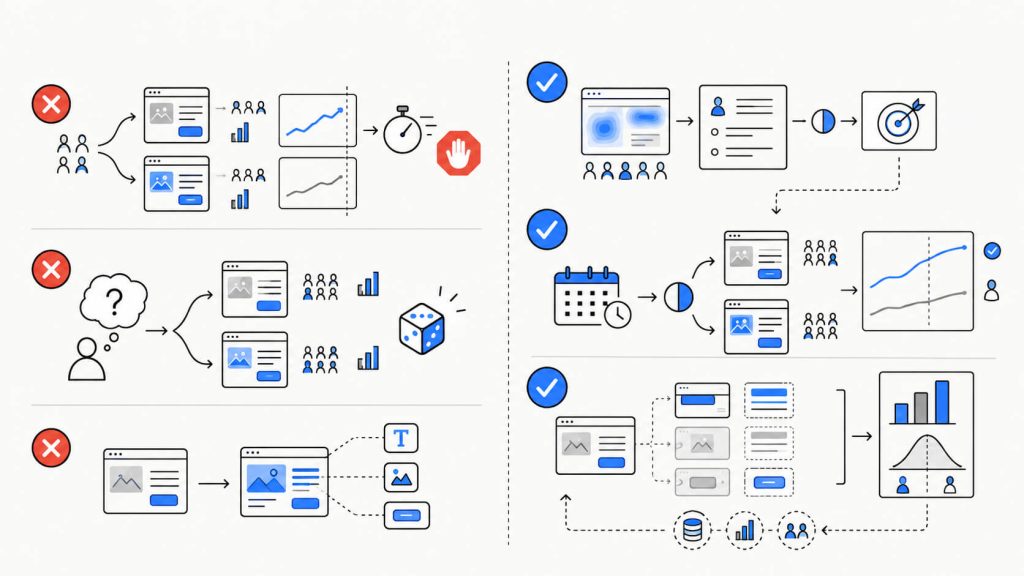
This tactic of cramming too many changes in one test gets confused with multivariate testing. That’s a real methodology for testing combinations of elements, and one that needs enough traffic to reach significance across every combination.
Fix: Change one variable per test unless you have the traffic to run a proper multivariate experiment. CROLabs breaks down when to use A/B testing versus multivariate testing and how much traffic each one needs.
Personalization Mistakes
Personalization sits on a narrow line between feeling understood and feeling watched, and a lot of what goes wrong in CRO personalization programs comes down to misjudging which side of that line a specific piece of data puts you on.
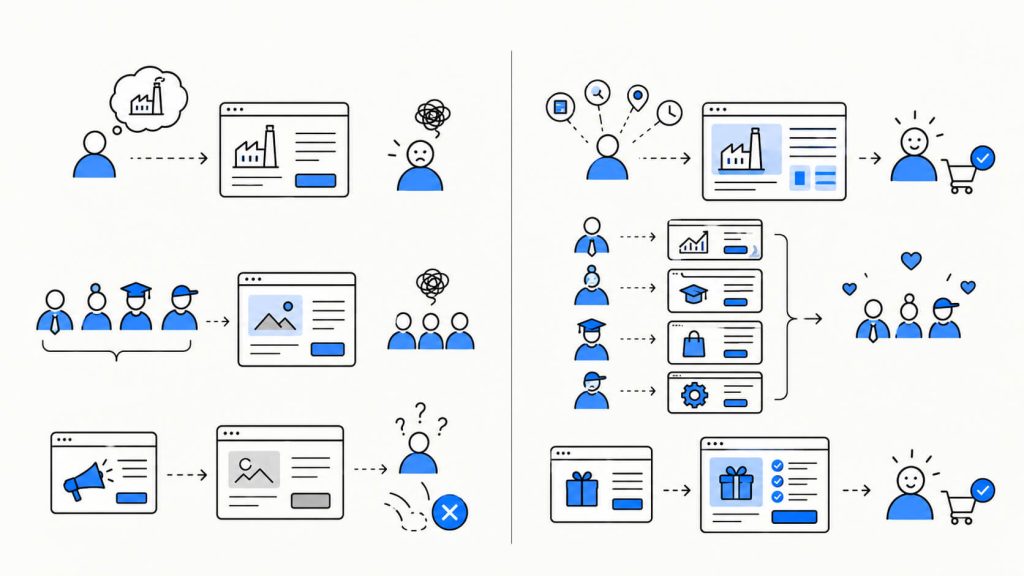
1. Personalizing Off Assumptions Instead Of Behavior
The most extreme cautionary tale here is Target’s 2012 pregnancy-prediction program. A shift in a teenager’s shopping pattern (unscented lotion, certain vitamins) triggered coupons for baby products mailed to her house before she’d told her family she was pregnant.
The backlash centered on how invasive the outreach felt to someone who hadn’t opted into that level of scrutiny. In a retrospective on the incident, CX Dive quoted a customer-experience executive summarizing what marketers took from it: people’s comfort with personalization tracks whether it feels aimed at their benefit or at squeezing more revenue out of them.
You don’t need pregnancy-level data to hit the same wall on a smaller scale. Personalizing a homepage around an assumed industry, company size, or use case, without evidence the assumption holds for the visitor looking at the page, produces a milder version of the same mismatch. It shows up as a bounce instead of a phone call to customer service.
Fix: Base personalized messaging on what a visitor has done (pages viewed, source they arrived from, product they searched for) rather than an inferred profile. We have a full breakdown of why personalization doesn’t always mean better, with more on where that assumption gap tends to open up.
2. Treating Every Visitor Like They’re In The Same Segment
Segment-based personalization groups visitors into broad buckets (enterprise vs. SMB, US vs. international) and shows each bucket the same variant.
It’s a real improvement over showing everyone the same page, though it’s still a coarse tool, since two visitors in the same segment can have different intent and the segment-level version treats them as identical anyway.
The alternative is per-visitor personalization, using signals like the specific page someone landed on or their behavior in the current session, rather than a bucket assigned at signup. It costs more to set up. For sites with enough traffic to support it, it closes the gap segment-based personalization leaves open.
Fix: Start with segment-based personalization if your traffic doesn’t support per-visitor rules yet, and revisit that as traffic grows.
3. Letting Your Ad Promise One Thing And Your Landing Page Deliver Another
A visitor clicks an ad promising something specific (like a free trial, a discount, or a named feature) and lands on a page talking about something more general. That gap between what was promised and what showed up costs conversions before the visitor even evaluates whether the product fits.
Disruptive Advertising, a PPC agency that has run message-match tests across a large number of client accounts, documented this pattern directly: aligning ad copy with the landing page headline, without touching the offer, targeting, or design, produced a measurable lift in conversion rate on its own.
The mechanism is simple. A visitor who sees the same language they clicked on doesn’t spend a moment wondering if they landed in the wrong place.
Fix: Pull the exact phrase from your highest-spend ad and put it in your landing page’s H1. Running multiple campaigns into the same generic page is a sign you need ad-to-page personalization instead. Our guide to boosting landing page conversion rate covers this alongside other above-the-fold fixes.
Data & Analytics Mistakes
None of the fixes above work if the data underneath them is telling a false story. This is where otherwise well-run testing and personalization programs go wrong.
1. Judging Everything By One Blended Conversion Rate
Overall conversion rate is easy to report and hard to act on. It blends mobile and desktop, new and returning visitors, and every traffic source into one number, so a real problem on one segment gets buried under strong performance somewhere else in the blend.
Unbounce’s guide to CRO analytics lays out a clearer approach: build funnel reports that show conversion at each step (landing page, pricing section, checkout, confirmation) instead of only the start and the end. A steep drop between two specific steps points directly at what to fix. A single blended rate tells you something is off without saying where.
Fix: Break your funnel into individual steps and watch each one separately, segmented at minimum by device and traffic source. CROLabs’ guide on reducing bounce rate is a good starting point if the first drop-off in your funnel happens before visitors even engage with the page.
2. Not Checking Where Your Traffic Actually Originates
Google Analytics 4 quietly misclassifies a growing share of sessions as direct traffic. Some of that “direct” traffic is referrals from AI tools and chat assistants that don’t pass a standard referrer. This means your channel data can be wrong in ways that skew which pages, campaigns, or segments you trust when deciding what to test next.
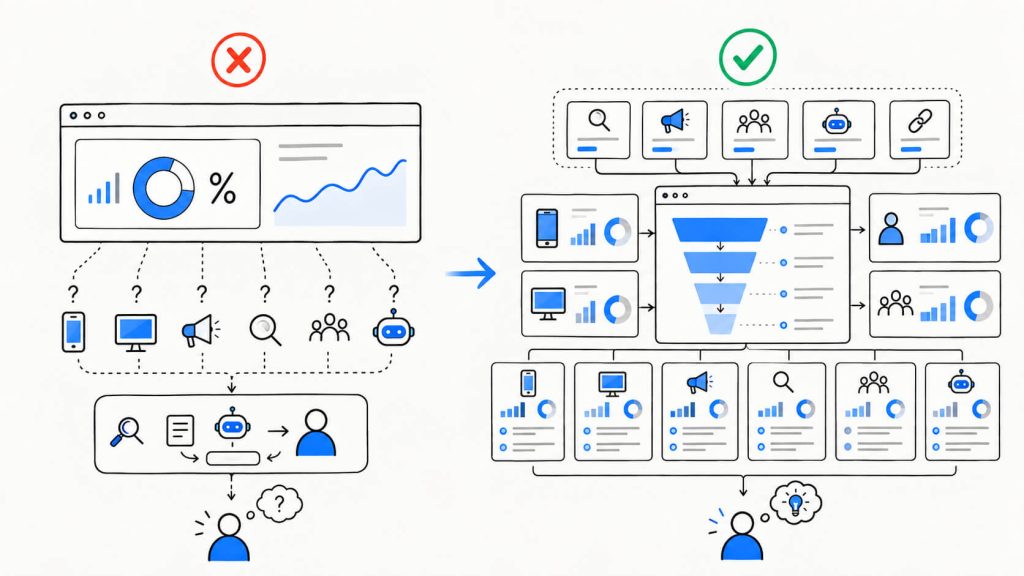
Fix: Audit your traffic sources for AI and dark traffic before drawing conclusions from channel-level reports, and be careful about testing decisions that lean on a “direct” traffic segment that’s often larger and messier than it looks. CROLabs’ breakdown of how AI traffic is changing CRO covers what to look for.
3. Testing Before You’ve Audited Anything
Jumping straight to test ideas without reviewing the page first causes you to miss the step that tells you where the real friction is.
A test built on a hunch has no real basis for predicting the outcome, but a test built on what a structured audit found, broken forms, confusing navigation, missing trust signals, starts from a much stronger position.
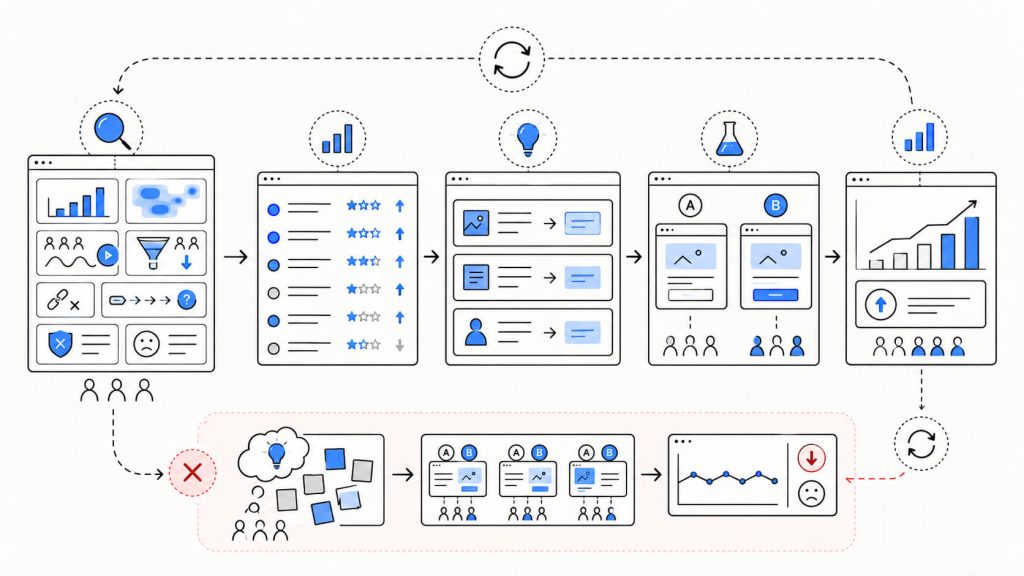
Fix: Run a CRO audit or UX audit before building your test roadmap, not after your first few tests come back flat.
Conclusion
CRO mistakes tend to repeat the same underlying error, which is skipping the step that connects a change to evidence about real visitors. That’s true for almost every mistake, whether it shows up in a test stopped too early, a personalization rule built on an assumption, or a dashboard reporting a number that hides more than it reveals.
Tools like CROLabs handle a lot of that groundwork needed to fix these errors directly. You can go from flagging where visitors actually drop off to running tests without needing a developer for every variant.
If you want a second set of eyes on where your site is losing conversions, CROLabs’ free trial includes an audit of your own pages.
See where your website is losing conversions
From unclear messaging to funnel drop-offs, the biggest CRO opportunities are often hiding in your visitor data. CROLabs gives you the tools to find those problems, test solutions, and personalize experiences without waiting on a developer.
Cancel anytime.
FAQ
What’s the most common CRO mistake teams make?
Stopping A/B tests as soon as they look like they’ve hit significance shows up most often, mostly because testing tools make it easy to check results constantly and hard to resist acting on an early lead. It produces false winners far more often than the dashboard lets on.
How long should an A/B test run before I trust the result?
Long enough to hit the sample size you calculated from your traffic and current conversion rate before the test started. As a general floor, most testing tools recommend at least two full weeks to account for day-of-week and seasonal swings in visitor behavior, on top of hitting that required sample size.
Is personalization worth it for a small website?
Segment-based personalization works with modest traffic, since you’re only splitting visitors into a handful of groups. Per-visitor personalization needs more volume to generate reliable signals. Starting with a small number of high-confidence segments, instead of personalizing everything at once, tends to work better for smaller sites.
How often should I audit my website for conversion issues?
A full CRO or UX audit once or twice a year covers most sites, with lighter reviews after any major redesign, new campaign launch, or noticeable shift in traffic sources. Waiting for the conversion rate to drop before auditing means you’re already behind on it.
Do I need a developer to fix these mistakes?
Not for most of them. Adjusting a test’s duration, rewriting a headline to match ad copy, or building a segment rule are changes a marketer can make directly in a no-code visual editor. CROLabs is built around that exact workflow, so testing and personalization changes don’t have to wait in a developer’s backlog.